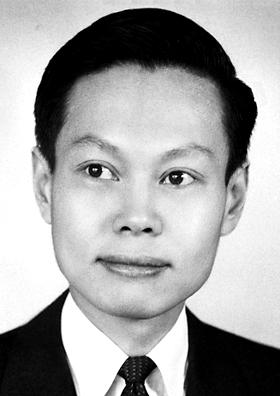
格物

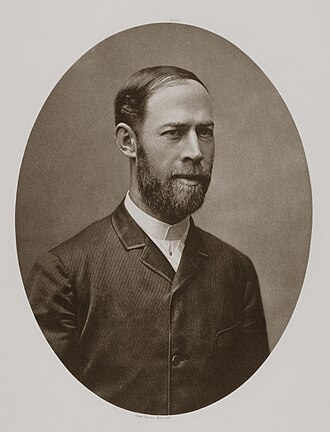
图:作者不详 · Public domain · Wikimedia Commons
- 出生
- 1855 年 11 月 7 日,戈勒姆
- 逝世
- 1938 年 11 月 20 日,剑桥
- 国籍
- 美国
- 学科
- 物理学、博物与综合
- 职业
- 物理学家、大学教师
- 母校
- 约翰·霍普金斯大学、鲍登学院
- 工作单位
- 哈佛大学
研究领域
主要贡献
以他 / 她命名
师承
博士导师1
来自 Wikidata 的「博士导师」「师从」「博士生」「学生」记录,可能不全。
所获奖项(1)
- 1937奥斯特奖章
学会与院士
百科正文
生平
霍尔出生于美国缅因州的戈勒姆 (缅因州),并于1875年在该州不伦瑞克的鲍登学院毕业,获得大学学士学位。尔后,他在约翰·霍普金斯大学进行实验研究,并于1880年获得博士学位学位。
霍尔在1879年发现霍尔效应,而当时他正在撰写他的物理学博士论文。霍尔进行了较为粗略的定量实验。他将下方紧紧附有一层黄铜的金箔固定于玻璃皿中,金箔的两端接入直流电源,另外两端附近放置磁体两极。然后,他将金箔与黄铜中间一点分别接入电流计两端。由于我们对电流所流经的薄片状导体或半导体材料(霍尔元件)垂直施加磁场,这使得元件两侧产生电势差,而该电势差被称作霍尔电压。至于霍尔电压与电流的比值则被称为霍尔电阻,是材料中元素的特性之一。 1880年,霍尔的实验结果在《美国科学杂志》以及《哲学杂志》以博士论文的形式发表。
霍尔于1895年被任命为哈佛大学的物理学教授,并于1921年退休,尔后在1938年于美国马萨诸塞州的剑桥去世。他所发现的霍尔效应可以用于磁场感测,并已被多种仪器所使用。另外,在大的磁场强度和低温的环境下,人们可以观察到量子霍尔效应,也就是量子化的霍尔电阻。这被作为当今公认的电阻标准。
以上内容摘自维基百科「埃德温·霍尔」,按 CC BY-SA 4.0 使用,去掉了参考文献、外部链接等尾部小节,公式改写成了纯文本。全文、配图和出处见原文。
英文维基百科补充中文条目比较短,下面是英文条目「Edwin Hall」的原文
Edwin Herbert Hall (November 7, 1855 – November 20, 1938) was an American physicist who discovered the Hall effect. He also conducted thermoelectric research and wrote numerous physics textbooks and laboratory manuals.
Education and career
Born in Gorham, Maine, to his parents Joshua Emery Hall and Lucy Ann Hilborn Hall. Hall started his undergraduate education at Bowdoin University at the age of 15 and graduated top of his class at 19, with a Bachelor of Arts degree. He was the Principal of Gould Academy (1875–76) and the Principal of Brunswick High School (1876–77). He did his graduate schooling and research, and earned his Ph.D. in 1880 at the Johns Hopkins University where his seminal experiments were performed.
Hall was appointed a professor of physics at Harvard University in 1895, and succeeded John Trowbridge to the Rumford Chair of Physics in 1914. During the 1919 Boston police strike, Hall briefly volunteered as a strikebreaking police officer. After returning to the Physics Department, Hall retired in 1921 and died in Cambridge, Massachusetts, in 1938.
Hall effect
The Hall effect was discovered by Hall in 1879, while working on his doctoral thesis in physics under the supervision of Henry Augustus Rowland. Hall's experiments in electromagnetics consisted of exposing thin gold leaf (and, later, using various other materials) on a glass plate and tapping off the gold leaf at points down its length. The effect is a potential difference (Hall voltage) on opposite sides of a thin sheet of conducting or semiconducting material (the Hall element) through which an electric current is flowing. This was created by a magnetic field applied perpendicular to the Hall element. The ratio of the voltage created to the amount of current is known as the Hall resistance and is a characteristic of the material in the element. In 1880, Hall's experimentation was published as a doctoral thesis in the American Journal of Science and in the Philosophical Magazine.
Hall-effect sensors use his Hall effect to detect the magnetic field. Hundreds of millions are sold every year and are present in a large number of devices, including high-efficiency electric propulsion systems on spacecraft.
In the presence of large magnetic field strength and low temperature, one can observe the quantum Hall effect, the quantization of the Hall resistance. In 1990, it became a calibration standard for electrical resistance due to its low uncertainty (see Quantum Hall effect § Applications).
以上内容摘自英文维基百科「Edwin Hall」,按 CC BY-SA 4.0 使用,去掉了参考文献、外部链接等尾部小节,公式改写成了纯文本。全文、配图和出处见原文。
同一学科、同时代的科学家

同一学科的科学家
更多 ›