格物
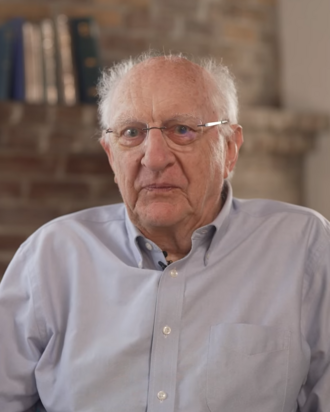
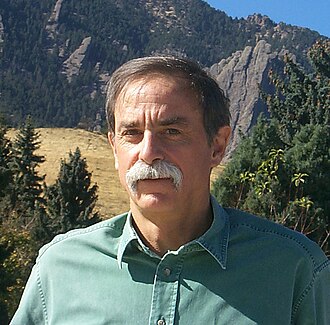
图:UC Berkeley · CC BY 4.0 · Wikimedia Commons
约翰·克拉克1942—
John Clarke
物理学家, 英国
约翰·克拉克,英国量子物理学家,现任加州大学伯克利分校实验物理学教授。2025年,克拉克与米歇尔·H·德沃雷、约翰·M·马蒂尼因发现电路中的宏观量子力学隧道效应和能量量子化,被授予诺贝尔物理学奖。
摘自维基百科「约翰·克拉克 (物理学家)」,CC BY-SA 4.0
- 出生
- 1942 年 2 月 10 日,剑桥
- 国籍
- 英国
- 学科
- 物理学、博物与综合
- 职业
- 物理学家、材料学者
- 母语 / 工作语言
- 英语
- 母校
- 剑桥大学
- 工作单位
- 加州大学伯克利分校、劳伦斯伯克利国家实验室
师承
博士导师1
博士生1
来自 Wikidata 的「博士导师」「师从」「博士生」「学生」记录,可能不全。
所获奖项(9)
- 1987弗里茨·伦敦奖
- 1998约瑟·凯特利奖
- 1999科姆斯托克物理学奖
- 2004休斯奖章
- 2025诺贝尔物理学奖
- —古根海姆学者奖
- —英国皇家学会院士
- —美国科学促进会会士
- —美国文理科学院院士
学会与院士
百科正文
生平
克拉克分别于1964年和1968年获得剑桥大学颁发的物理理学学士、硕士和博士学位。
克拉克在超导现象和超导电子学领域做出了重要贡献,尤其是在超导量子干涉仪(SQUID)的研发和应用方面,该仪器是一种超灵敏的磁通量探测器。他还致力于将SQUID配置为量子噪声限制放大器,用于寻找暗物质的可能组成部分轴子。
荣誉记录
- 阿尔弗雷德·斯隆奖(1970–1972年)
- 古根海姆奖(1977–1978年)
- 皇家学会院士(1986年)
- 约瑟夫·F·吉时利测量科学进步奖(1998年)
- 科姆斯托克物理奖(1999年)
- 休斯奖章(2004年)
- 美国国家科学院外籍院士(2012年)
- 美国哲学学会会士(2017年)
- 墨子量子奖(2021年)
- 诺贝尔物理学奖(2025年)
以上内容摘自维基百科「约翰·克拉克 (物理学家)」,按 CC BY-SA 4.0 使用,去掉了参考文献、外部链接等尾部小节,公式改写成了纯文本。全文、配图和出处见原文。
英文维基百科补充中文条目比较短,下面是英文条目「John Clarke (physicist)」的原文
John Clarke (born 10 February 1942) is a British experimental physicist and Professor Emeritus at the University of California, Berkeley. He is known for his various works on measurement devices based on superconductivity. Steven Girvin has called Clarke "the godfather of superconducting electronics."
In the 1980s, Clarke led a research team that included John M. Martinis and Michel Devoret. Their discoveries in macroscopic quantum phenomena using the Josephson effect earned them the Nobel Prize in Physics in 2025.
Education and career
John Clarke was born on 10 February 1942 in Cambridge, England. He attended The Perse School, before going to study Natural Sciences at Christ's College, Cambridge, where he graduated with a Bachelor of Arts in 1964.
In 1965, Clarke became one of the first students to enter the newly-founded Darwin College, Cambridge, and was the first president of the Darwin College students' association. While conducting his doctoral work under Brian Pippard, Clarke developed a very sensitive voltmeter, which he later called "SLUG" (Superconducting Low-inductance Undulatory Galvanometer). He obtained a Doctor of Philosophy in 1968. Clarke has said at various times that his work was influenced by Nobel laureate Brian Josephson, who predicted the Josephson effect in 1962 and was also a previous student of Pippard.
After completing his doctorate, Clarke gained a postdoctoral research position at the University of California, Berkeley, and subsequently worked at Berkeley for his whole academic career, as Assistant Professor (1969), Associate Professor (1971), and as Professor of Physics (1973–2010). In 1969, Clarke also joined Lawrence Berkeley National Laboratory, eventually retiring as a faculty senior scientist in the Materials Sciences Division in 2010.
Clarke's association with the University of Cambridge continued, after he moved to the United States. In 1972, he was elected a Fellow of Christ's College; in 1989, he was a visiting fellow at Clare Hall, Cambridge, and in 1998 was elected a by-fellow of Churchill College, Cambridge. Clarke was awarded a Doctor of Science from the University of Cambridge in 2003. He was elected an Honorary Fellow of Christ's College in 1997, and of Darwin College in 2023.
Research
Clarke's research focuses on superconductivity and superconducting electronics, particularly in the development and application of superconducting quantum interference devices (SQUIDs), which are ultrasensitive detectors of magnetic flux.
In 1985, Clarke, John M. Martinis (his PhD student), and Michel Devoret (a postdoctoral researcher at the time) demonstrated the quantum behaviour of a Josephson junction. They showed that at low temperature, a macroscopic electronic state associated with superconductors underwent quantum tunnelling at zero voltage. The same year, by sending microwave pulses of the system, the resonances showed quantised energy levels. This experiment was the first evidence of circuit quantum electrodynamics, that would become later the basis for superconducting quantum computing. The work, which was recognized with the Nobel Prize in Physics in 2025, was largely funded by the Office of Basic Energy Sciences in the United States Department of Energy.
Clarke has also worked in the application of SQUIDs configured as quantum-noise limited amplifiers to search for the axion, a possible component of dark matter.
Recognition
Clarke obtained an Alfred P. Sloan fellowship (1970) and a Guggenheim Fellowship (1977).
以上内容摘自英文维基百科「John Clarke (physicist)」,按 CC BY-SA 4.0 使用,去掉了参考文献、外部链接等尾部小节,公式改写成了纯文本。全文、配图和出处见原文。
同年获同一奖项
同一学科、同时代的科学家




同一学科的科学家
更多 ›