格物
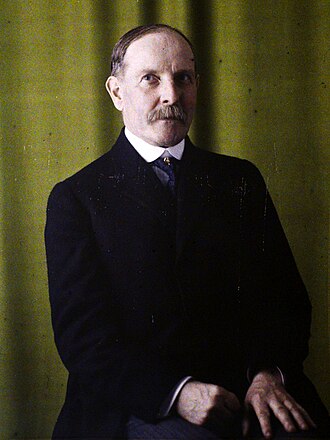
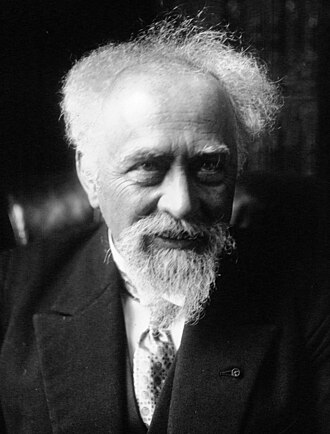
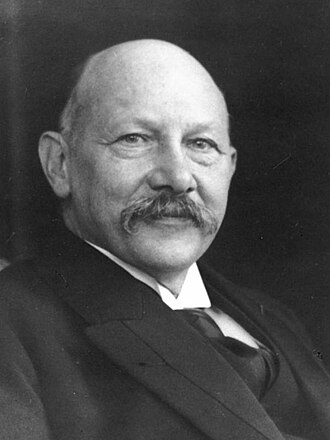
图:Auguste Léon · Public domain · Wikimedia Commons
阿瑟·E·肯内利1861—1939
Arthur E. Kennelly
American electrical engineer (1861–1939)
Arthur Edwin Kennelly was an American electrical engineer and mathematician.
摘自英文维基百科「Arthur E. Kennelly」(英文维基百科,暂无中文条目),CC BY-SA 4.0
- 出生
- 1861 年 12 月 17 日,科拉巴
- 逝世
- 1939 年 6 月 18 日,波士顿
- 国籍
- 美国
- 学科
- 物理学、数学、工程与发明、博物与综合
- 职业
- 数学家、工程师、物理学家
- 母语 / 工作语言
- 英语
- 母校
- 大学学院公学
- 工作单位
- 哈佛大学
主要贡献
以他 / 她命名
师承
来自 Wikidata 的「博士导师」「师从」「博士生」「学生」记录,可能不全。
所获奖项(4)
- 1918霍华德N.波茨勋章
- 1922honorary doctor of the University of Toulouse
- 1932IEEE 荣誉奖章
- 1933IEEE爱迪生奖章
学会与院士
百科正文
本条目暂无中文维基百科条目,下面是英文维基百科原文。
Biography
Early life
Arthur Edwin Kennelly was born on December 17, 1861, in Colaba, Bombay Presidency, British Raj, the son of Catherine (née Heycock) and David Joseph Kennelly. His father was from Cork, Ireland, while his mother was from Leeds, England. His mother died in 1864, when he was three-years-old. In 1868, Arthur and his father left Bombay and moved to England, where he was educated at University College School.
Career and research
Kennelly joined Thomas Edison's West Orange Laboratory in December 1887, staying until March 1894. While there, he had a role in the war of currents, assisting anti-alternating current crusader Harold P. Brown in developing a demonstration to show how alternating current was more dangerous than direct current as well as a further test to determine the type of electricity that should be used in the electric chair, convincing officials that it should be alternating current.
Kennelly then formed a consulting firm in electrical engineering with Edwin Houston. Together they wrote Alternating Electric Currents (1895), Electrical Engineering leaflets (1896), and Electric arc lighting (1902). In 1893, during his research in electrical engineering, he presented a paper on impedance to the American Institute of Electrical Engineers (AIEE). He researched the use of complex numbers as applied to Ohm's law in alternating current circuit theory. In 1902, he investigated the electrical properties of the upper atmosphere's radio spectrum, resulting in the concept of the Kennelly–Heaviside layer. The same year, he was given the entire engineering charge of the expedition which laid Mexican submarine cables on the route Vera Cruz–Frontera–Campeche. He also served as inspector for the Mexican Government during the manufacture of the cable. He was a professor of electrical engineering at Harvard University (1902–1930) and jointly at the Massachusetts Institute of Technology (1913–1924). One of his students at MIT was Vannevar Bush.
In 1911 and 1912, Kennelly advanced applied mathematics by communicating the theory of the hyperbolic angle and hyperbolic functions, first in a course at the University of London and then in a published book.
Kennelly was an active participant in professional organizations such as the Society for the Promotion of the Metric System of Weights and Measures, the Illuminating Engineering Society and the US National Committee of the International Electrotechnical Commission, and also served as the president of both the AIEE and the Institute of Radio Engineers (IRE) during 1898–1900 and 1916, respectively. He was an Invited Speaker of the International Congress of Mathematicians in 1924 in Toronto.
While Kennelly himself does not appear to have been a significant athlete, he applied his engineering expertise to his avocation: analyzing endurance sports records of horses and humans. He noticed that time vs. distance plots of such sports records formed nearly a straight line when plotted on log-log graph paper. Kennelly thus preceded by 75 years Peter Riegel, who also—apparently independently—noticed this same power law, called by Riegel the "endurance equation". Due to the relatively crude (by today's standards) data available, Kennelly's "Law of Fatigue" utilized the same exponent 9/8 = 1.125 for all of his datasets, whereas Riegel noticed that these exponents differed by sport and by individual.
Kennelly died on June 18, 1939, in Boston, Massachusetts, at the age of 77.
以上内容摘自英文维基百科「Arthur E. Kennelly」,按 CC BY-SA 4.0 使用,去掉了参考文献、外部链接等尾部小节,公式改写成了纯文本。全文、配图和出处见原文。
同一学科、同时代的科学家
同一学科的科学家
更多 ›