格物

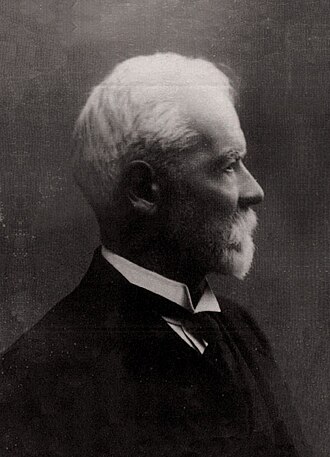
图:Marcus Friedrich Kleinert (1694-1742) · Public domain · Wikimedia Commons
- 出生
- 1687 年 1 月 27 日,海布
- 逝世
- 1753 年 8 月 19 日,维尔茨堡
- 国籍
- 波希米亚王国
- 学科
- 工程与发明
- 职业
- 建筑师、工程师、教师、承建商
- 母语 / 工作语言
- 德语
主要贡献
代表成就
百科正文
生平
推测1687年1月30日生于波希米亚王国的艾格,现在被称为海布。在家中排行第七。
1712年诺伊曼到维尔兹堡炮兵服务队,受到当时的采邑主教──统治领域广及意大利,法国及荷兰的约翰·菲力普·冯·匈保的支持,开始他的建筑生涯。
1753年8月19日逝世于维尔茨堡,享年六十六岁,葬于圣母礼拜堂。
以上内容摘自维基百科「巴爾塔薩·諾伊曼」,按 CC BY-SA 4.0 使用,去掉了参考文献、外部链接等尾部小节,公式改写成了纯文本。全文、配图和出处见原文。
英文维基百科补充中文条目比较短,下面是英文条目「Balthasar Neumann」的原文
Johann Balthasar Neumann (; c. 27 January 1687 – 19 August 1753), usually known as Balthasar Neumann, was a German architect and military engineer and one of the most important designers of late Baroque architecture in Central Europe. He developed a distinctive architectural style integrating Austrian, Bohemian, Italian, and French influences.
His most notable works include the Würzburg Residence, described by UNESCO as one of the most important palaces of the High Baroque period, and the Basilica of the Fourteen Holy Helpers (Vierzehnheiligen), widely regarded as a masterpiece of German Baroque architecture.
Early life
Neumann is believed to have been born on 27 January 1687 in Eger, Kingdom of Bohemia (now Cheb, Czech Republic), the seventh of nine children of the cloth-maker Hans Christoph Neumann (d. 1713) and his wife Rosina (1645–1707). He was baptized on 30 January 1687.
He initially apprenticed at a bell and gun foundry in Eger. After travelling as a journeyman, he arrived in Würzburg in 1711. In 1712 he began studying geometry, architecture and land surveying, and entered military service in the Würzburg artillery, where he remained until his death, ultimately attaining the rank of colonel.
Among his early technical works were measurement instruments (1712, now in the Deutsches Museum, Munich; 1713, Mainfränkisches Museum, Würzburg), a map of Würzburg (1715; copy in the Bavarian War Archive, Munich), and drawings for a new abbey at Ebrach (1716, now lost).
Early commissions
Neumann's career as an architect took off under Johann Philipp Franz von Schönborn, Prince-Bishop of Würzburg, who asked the young engineer in 1719 to plan, and in 1720 to lead construction of, his new palace, the Würzburg Residence. Although other architects participated, Neumann was able to give the project his personal imprint, which became his life's work.
Neumann’s second major commission for the Prince-Bishop was the Schönborn Chapel (Schönbornkapelle) of Würzburg Cathedral, begun in 1721. In 1723 he travelled to France, where he studied contemporary architectural developments. In Paris and Versailles he met the royal architects Germain Boffrand and Robert de Cotte, consulting them on aspects of the Würzburg projects.
Patronage under the Schönborns
Under Prince-Bishop Christoph Franz von Hutten (1673–1729), Neumann received fewer commissions in Würzburg and increasingly worked for monastic patrons. His church at Münsterschwarzach Abbey (begun after 1727, demolished after 1821) marked an important stage in his development as a designer of ecclesiastical architecture.
Another significant project of this period was the church at Kloster Holzkirchen (1728–1730), in which Neumann combined elements of French spatial planning, Italian dynamism, and German Baroque structural traditions.
Friedrich Karl von Schönborn (1674–1746), who succeeded Hutten as Prince-Bishop and simultaneously served as Prince-Bishop of Bamberg, became Neumann’s principal patron. As Imperial Vice-Chancellor (Reichsvizekanzler), Schönborn resided at the imperial court in Vienna until 1734.
Later commissions
Neumann also worked for Damian Hugo Philipp von Schönborn (1676–1743) and Franz Georg von Schönborn (1682–1756). For the former, Prince-Bishop of Speyer, he designed the Corps de Logis of Schloss Bruchsal (begun after 1731), notable for its monumental staircase. In Bruchsal he also designed the Church of St. Peter (1740–1746), intended as the burial church of the Prince-Bishops of Speyer.
For the Elector of Trier, Neumann designed the Dikasterialgebäude of Ehrenbreitstein Fortress (1739–1748) and the summer palace Schönbornslust at Kesselheim near Koblenz (1748–1752; demolished 1806).
These commissions brought him into contact with patrons in western Germany. Among several projected works, only the staircase and New Apartments of the Augustusburg Palace (from 1743) were executed.
Death and commemoration
Neumann died in Würzburg on 19 August 1753 and was buried in the Marienkapelle there.
He was commemorated on the final series of the German 50 Deutsche Mark banknote (issued 1991–2002), which featured his portrait alongside the grand staircase of the Würzburg Residence.
Neumann is also depicted in Giovanni Battista Tiepolo’s ceiling fresco above the staircase of the Würzburg Residence, shown in a pseudo-military uniform leaning over a cannon.
以上节选摘自英文维基百科「Balthasar Neumann」,按 CC BY-SA 4.0 使用,去掉了参考文献、外部链接等尾部小节,公式改写成了纯文本。篇幅所限,较长的小节只摘了开头一部分,有的小节没有收;全文、配图和出处见原文。
同一学科、同时代的科学家
同一学科的科学家
更多 ›