格物
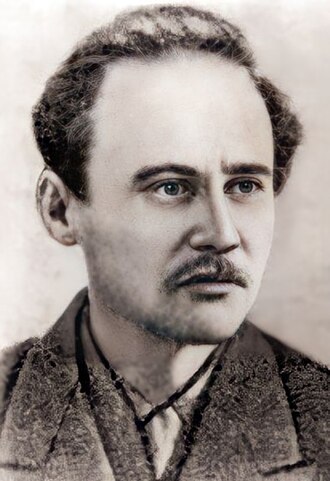
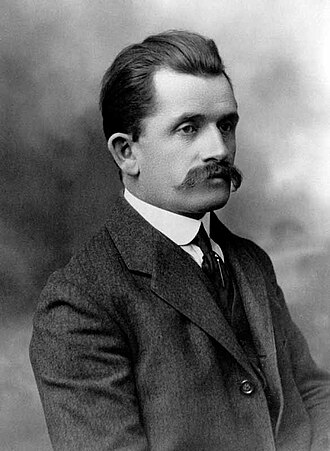
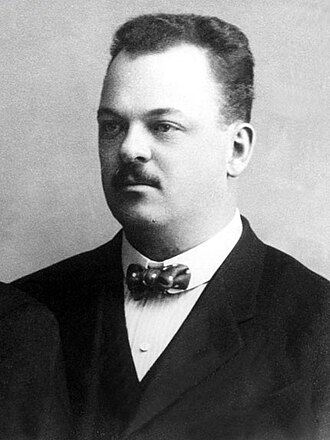
图:作者不详 · Public domain · Wikimedia Commons
- 出生
- 1887 年 8 月 23 日,里加
- 逝世
- 1933 年 3 月 28 日,基兹洛沃茨克
- 国籍
- 俄罗斯帝国、苏联
- 学科
- 工程与发明
- 职业
- 发明家、工程师、航空工程师
- 母语 / 工作语言
- 俄语、德语
- 母校
- Polytechnical Institute Riga
- 工作单位
- 莫斯科航空学院
研究领域
所获奖项(1)
- 1976International Space Hall of Fame
百科正文
生平
灿德尔生于里加,小时候爱好天文学和航天,中学时就曾亲自验证齐奥尔科夫斯基的一些计算。1905年10月里加工学院因革命而停课,他转往但泽高等技术学校,1907年回到里加工学院,1914年毕业。之后供职于橡胶工厂,1917年开始设计飞船,1924年倡议建立星际旅行研究学会。1930年调到中央航空发动机制造研究所。1932年4月成为喷气推进研究室第一课题组负责人。晚年于莫斯科航空学院授课,1933年因伤寒逝世。
工作
1908年发表《实现星际飞行的宇宙飞船》,1910年发表了对哈雷彗星的观测计算结果。工作以后开始研究宇宙温室,探讨密闭生活的可能性。1909年设想将结构材料用于火箭燃料,1917年开始设计飞船。他计算了能够平衡考虑时间和能量消耗的宇宙空间轨道。整个1920年代,他致力于为火箭技术奠定基础。在中央航空发动机制造研究所,他研制了OP-1型发动机,启发了后来的宇宙飞船液体火箭动力装置。在喷气推进研究室,灿德尔领导了OP-2型发动机、гирд-09和гирд-X型火箭的设计。
以上内容摘自维基百科「弗里德里希·灿德尔」,按 CC BY-SA 4.0 使用,去掉了参考文献、外部链接等尾部小节,公式改写成了纯文本。全文、配图和出处见原文。
英文维基百科补充中文条目比较短,下面是英文条目「Friedrich Zander」的原文
Georg Arthur Constantin Friedrich Zander (also Tsander; Russian: Фри́дрих Арту́рович Ца́ндер, romanized: Fridrikh Arturovich Tsander; Latvian: Frīdrihs Canders; 23 August [O.S. 11 August] 1887 – 28 March 1933) was a Russian and Soviet pioneer of rocketry and spaceflight, of Baltic German descent. He designed the first liquid-fueled rocket to be launched in the Soviet Union, GIRD-X, and made many important theoretical contributions to the road to space.
Biography
Zander was born in Riga, Russian Empire, into a Baltic German commoner family. His father Arthur Georg Zander was a doctor, but Friedrich Zander was fascinated by other natural sciences. Zander was enrolled in the Riga urban technical high school in 1898, for a seven-year program in which he was a top student. During this time, he became acquainted with the work of Konstantin Tsiolkovsky and space travel became his foremost scientific passion. While studying engineering at the Riga Polytechnic Institute, he carried out trajectory calculations for a flight to Mars. Mars held a special fascination for Zander, and "Forward to Mars!" (Вперед, на Марс!) became his famous motto.
He graduated with his engineering degree in 1914, moved to Moscow in 1915. He worked at the "Provodnik" rubber plant, then in 1919 worked at Aircraft Factory No. 4 ("Motor"). In 1923, he was married to A.F. Milyukova, and they had a daughter named Astra and a son named Mercury. Mercury died of scarlet fever in 1929. After several years of unemployment and intensive research on rocketry and space travel, in 1926, Zander began work at the Central Design Bureau of Aviation, and in 1930 worked at the Central Institute of Aviation Motor Construction (TsIAM).
Scientific contributions
In 1908, he made notes about the problems of interplanetary travel in which he addressed issues such as life support and became the first to suggest growing plants in greenhouses aboard a spacecraft. In 1911, he published plans for a spacecraft built using combustible alloys of aluminum in its structure that would take off like a conventional aircraft and then burn its wings for fuel as it reached the upper atmosphere and no longer needed them. In 1921, he presented his material to the Association of Inventors (AIIZ), where he met and discussed space travel with V.I. Lenin, who was attending the conference. In 1924, he published it in the journal Tekhnika i Zhizn ("Technology and Life").
1924 was a particularly active year for Zander. The year before, Hermann Oberth had published the influential theoretical work "Die Rakete zu den Planetenräumen" ("The rocket to interplanetary space"), which in turn introduced Zander and other Russian enthusiasts to the ground breaking work by Robert Goddard ("A Method of Reaching Extreme Altitudes" published in 1919). Zander took advantage of this by promoting Tsiolkovsky's work, and developing it further. Together with Vladimir Vetchinkin and members of a rocketry club at the airforce academy, he founded the Society for Studies of Interplanetary Travel. In an early publication, they would be the first to suggest using the Earth's atmosphere as a way of braking a re-entering spacecraft. The same year, Zander lodged a patent in Moscow for a winged rocket that he believed would be suitable for interplanetary flight, and in late 1924 and early 1925, he gave lectures in Moscow and other Russian cities on the possibility of interplanetary travel.
Around this time, Zander became the first to suggest the solar sail as a means of spacecraft propulsion, although Johannes Kepler had suggested a solar wind sail in the 17th century.
Tributes
The crater Tsander on the Moon is named after him.
The Latvian Academy of Sciences awards a physics and mathematics prize in his honour.
Starting 1992, the Russian Academy of Sciences awards the Tsander Prize, the highest scientific award of the Russian Academy of Sciences for "outstanding theoretical work in the field of rocket and space science".
Zander is featured on stamps of Soviet Union (1964), Latvia (2012) and Russia (2012)
Zander's family home in Riga was a museum (until the recent change in its ownership), and the street it is located on is named after him.
Мonument installed near the family home in Riga
Streets named after Zander are also in Moscow and in Kislovodsk.
以上节选摘自英文维基百科「Friedrich Zander」,按 CC BY-SA 4.0 使用,去掉了参考文献、外部链接等尾部小节,公式改写成了纯文本。篇幅所限,较长的小节只摘了开头一部分,有的小节没有收;全文、配图和出处见原文。