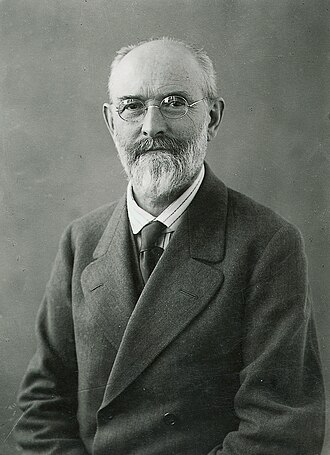
格物

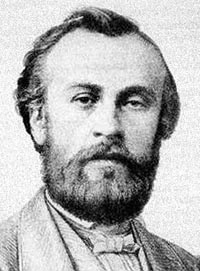
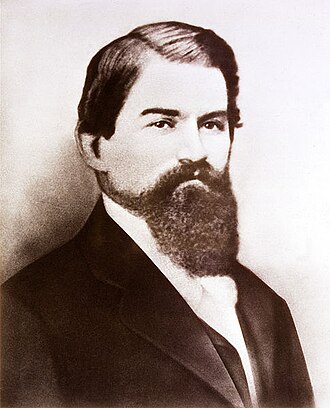
图:作者不详 · Public domain · Wikimedia Commons
- 出生
- 1814 年 1 月 23 日,伦敦
- 逝世
- 1893 年 11 月 28 日,伦敦
- 国籍
- 大不列颠及爱尔兰联合王国
- 学科
- 工程与发明
- 职业
- 探险家、美术史学家、考古学家、钱币学家
- 母语 / 工作语言
- 英语
- 母校
- 基督公学
研究领域
所获奖项(2)
- —Knight Commander of the Order of the Indian Empire
- —Companion of the Order of the Star of India
学会与院士
百科正文
大英博物馆收藏了他挖掘出土的印度与巴克特里亚的钱币及佛教典籍。
生平
1814年1月23日,卡宁厄姆诞生;其父亲是苏格兰诗人艾伦·卡宁厄姆
1833年,卡宁厄姆19岁,入伍参加印度的英国殖民政府属下的工兵团,服役直到1861年,以少将军衔退伍。
1861年,创建印度考古研究所,并出任第一任所长,至1865年。
1870年-1885年卡宁厄姆二度出任印度考古研究所所长。
1893年11月28日,卡宁厄姆在伦敦逝世,葬于伦敦万灵公墓。
以上内容摘自维基百科「亚历山大·卡宁厄姆」,按 CC BY-SA 4.0 使用,去掉了参考文献、外部链接等尾部小节,公式改写成了纯文本。全文、配图和出处见原文。
英文维基百科补充中文条目比较短,下面是英文条目「Alexander Cunningham」的原文
Major-General Sir Alexander Cunningham (23 January 1814 – 28 November 1893) was a British Army engineer with the Bengal Sappers who later took an interest in the history and archaeology of India. In 1861, he was appointed to the newly created position of archaeological surveyor to the government of India; and he founded and organised what later became the Archaeological Survey of India.
He wrote numerous books and monographs and made extensive collections of artefacts. Some of his collections were lost, but most of the gold and silver coins and a fine group of Buddhist sculptures and jewellery were bought by the British Museum in 1894. He was also the father of mathematician Allan Cunningham.
Early life and career
Cunningham was born in London on 23 January 1814 to the Scottish poet Allan Cunningham (1784–1842) and his wife Jean née Walker (1791–1864). Along with his older brother, Joseph, he received his early education at Christ's Hospital, London. Through the influence of Sir Walter Scott, both Joseph and Alexander obtained cadetships at the East India Company's Addiscombe Seminary (1829–31), followed by technical training at the Royal Engineers Estate at Chatham.
Military life
In 1841 Cunningham was made executive engineer to the king of Oudh. In 1842 he was called to serve the army in thwarting an uprising in Bundelkhand by the ruler of Jaipur. He was then posted at Nowgong in central India before he saw action at the Battle of Punniar in December 1843. He became engineer at Gwalior and was responsible for constructing an arched stone bridge over the Morar River in 1844–45.
Archaeology
Cunningham had taken a keen interest in antiquities from early on in his career. Following the activities of Jean-Baptiste Ventura (general of Ranjit Singh)—who, inspired by the French explorers in Egypt, had excavated the bases of pillars to discover large stashes of Bactrian and Roman coins—excavations became a regular activity among British antiquarians.
In 1834 he submitted to the Journal of the Asiatic Society of Bengal, an appendix to James Prinsep's article, on the relics in the Mankiala stupa.
Archaeological methodology
Cunningham relied heavily on historical and textual sources, especially the travelogues of the Chinese pilgrims Xuanzang and Faxian, to locate sites. He depended on these accounts for directions and to match written descriptions with surrounding geography. As well as locating ancient sites, Cunningham attempted to match what was written in the travelogues with the ancient ruins he encountered, allowing him to identify them.
Father of Indian archaeology
Cunningham provided the Archaeological Survey of India with much-needed organization and expertise after he left the Army in 1861. In his capacity as the first Director General, he carried out excavations in significant ancient towns, issued thirty volumes of archaeological papers, and assessed over 725 sites. He is regarded as the founder of archaeology in India because:
Numismatic interests
Cunningham assembled a large numismatic collection, but much of this was lost when the steamship he was travelling in, the Indus, was wrecked off the coast of Ceylon in November 1884. The British Museum, however, obtained most of the gold and silver coins. He had suggested to the Museum that they should use the arch from the Sanchi Stupa to mark the entrance of a new section on Indian history. He also published numerous papers in the Journal of the Asiatic Society and the Numismatic Chronicle.
Family and personal life
Two of Cunningham's brothers, Francis and Joseph, became well known for their work in British India; while another, Peter, became famous for his Handbook of London (1849). Cunningham married Alicia Maria Whish, daughter of Martin Whish, B.C.S., on 30 March 1840. The couple had two sons, Lieutenant-Colonel Allan J. C. Cunningham (1842–1928) of the Bengal and Royal Engineers, and Sir Alexander F. D. Cunningham (1852–1935) of the Indian Civil Service.
Awards and memorials
Cunningham was awarded the CSI on 20 May 1870 and CIE in 1878. In 1887, he was made a Knight Commander of the Order of the Indian Empire.
以上节选摘自英文维基百科「Alexander Cunningham」,按 CC BY-SA 4.0 使用,去掉了参考文献、外部链接等尾部小节,公式改写成了纯文本。篇幅所限,较长的小节只摘了开头一部分,有的小节没有收;全文、配图和出处见原文。