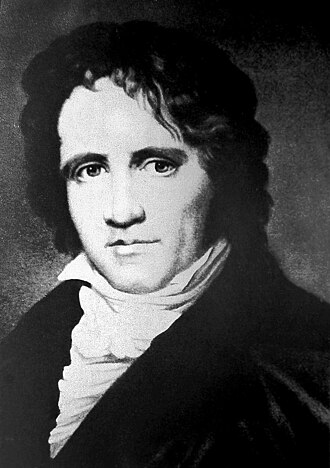
格物

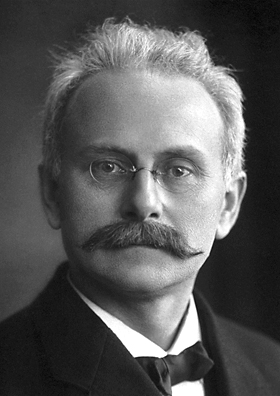
图:作者不详 · Public domain · Wikimedia Commons
拉尔夫·克勒尼希1904—1995
Ralph Kronig
German physicist noted for the discovery of particle spin and for his theory of X-ray absorption spectroscopy (1904-1995)
拉尔夫·克勒尼希,德国/美国物理学家。克勒尼希因发现粒子的自旋和x-射线吸收谱理论而知名。他提出了克勒尼希–宾尼模型,科斯特–克勒尼希转变和克喇末–克勒尼希关系。
摘自维基百科「拉尔夫·克勒尼希」,CC BY-SA 4.0
- 出生
- 1904 年 3 月 10 日,德累斯顿
- 逝世
- 1995 年 11 月 16 日,宰斯特
- 国籍
- 德国
- 学科
- 物理学、博物与综合
- 职业
- 物理学家、大学教师
- 母语 / 工作语言
- 德语、英语
- 母校
- 哥伦比亚大学
- 工作单位
- 代尔夫特理工大学(1939—1969)、格罗宁根大学
研究领域
师承
博士导师1
博士生3
来自 Wikidata 的「博士导师」「师从」「博士生」「学生」记录,可能不全。
所获奖项(2)
- 1962马克斯·普朗克奖章
- —美国物理学会会士
学会与院士
百科正文
英文维基百科补充中文条目比较短,下面是英文条目「Ralph Kronig」的原文
Ralph Kronig (10 March 1904 – 16 November 1995) was a German physicist. He is noted for the discovery of particle spin and for his theory of X-ray absorption spectroscopy. His theories include the Kronig–Penney model, the Coster–Kronig transition and the Kramers–Kronig relations.
Background
Ralph Kronig (later Ralph de Laer Kronig) was born on 10 March 1904 to German parents (Harold Theodor Kronig, Augusta de Laer) in Dresden, Germany. He died in Zeist on 16 November 1995 at the age of 91.
Kronig received his primary and high-school education in Dresden and went to New York City to study at Columbia University where he received his PhD in 1925 and subsequently became instructor (1925) and assistant professor (1927).
Early in Kronig's career he met Paul Ehrenfest who, while visiting America in 1924, advised Ralph Kronig to revisit Europe, which Kronig did later the same year. He paid visits to the important centers for theoretical-physics research in Germany and Copenhagen. It was a time of great expansion in the development of quantum mechanics, and this development was mostly happening in Europe at the time.
In January 1925, when Kronig was still a Columbia University PhD student, he first proposed the electron spin after hearing Pauli in Tübingen. Heisenberg and Pauli immediately hated the idea. They had just ruled out all imaginable actions from quantum mechanics. Pauli especially ridiculed the idea of spin, saying that "it is indeed very clever but of course has nothing to do with reality". Faced with such criticism, Kronig decided not to publish his theory and the idea of electron spin had to wait for others to take the credit. Ralph Kronig had come up with the idea of electron spin several months before George Uhlenbeck and Samuel Goudsmit. Most textbooks credit these two Dutch physicists with the discovery. Ralph Kronig did not hold a grudge against Pauli for this turn of events. In fact, Kronig and Pauli remained friends for many years into the future. They exchanged many ideas in physics through letters.
Scientific achievement
Ralph Kronig (1931, 1932), published the first theory of x-ray absorption fine structure, which contained some of the basic concepts of the modern interpretation. The Kronig-Penney model (1931) is a one-dimensional model of a crystal that shows how the electrons in a crystal are dispersed into allowed and forbidden bands by scattering from the extended linear array of atoms. His first theory (1931) of extended X-ray absorption fine structure (EXAFS) was the three-dimensional equivalent of this model. The theory showed that a photo electron traversing a crystal lattice would experience permitted and forbidden zones depending on its wavelength and, that even when the effect was averaged over all directions in the lattice, a residual structure should be observed. His theory was successful in predicting many generally observed features of the fine structure, including similar structure from similar lattices, inverse r2 dependence, correct r versus T dependence and increasing energy separation of the fine structure features with energy from the edge. The equation, which was re-derived in a more quantitative way in 1932 was simple to apply and interpret. Every experimenter found approximate agreement with the theory. There were always some absorption features close to that predicted by the possible lattice planes. However, the expected strong reflections (e. g. (100), (110), (111), etc.) did not always correlate with the most intense absorption features as intuitively expected. Still, agreement was close enough to be tantalizing and everyone tested the agreement of their measured "Kronig structure" with the simple Kronig theory. In the Kronig equation, energy positions Wn correspond to the zone boundaries, i. e. not the absorption maxima or minima, but the first rise in each fine structure maximum.
Books published by Ralph Kronig
Correspondence with Niels Bohr, 1924–1953.
Textbook of physics. Under the editorship of R. Kronig in collaboration with J. De Boer [and others] With biographical notes and tables by J. Korringa.
- The optical basis of the theory of valence / by R. de L. Kronig
- Band spectra and molecular structure / by R. de L. Kronig
- Oral history interview with Ralph de Laer Kronig, 1962 November 12
以上节选摘自英文维基百科「Ralph Kronig」,按 CC BY-SA 4.0 使用,去掉了参考文献、外部链接等尾部小节,公式改写成了纯文本。篇幅所限,较长的小节只摘了开头一部分,有的小节没有收;全文、配图和出处见原文。
同一学科、同时代的科学家


同一学科的科学家
更多 ›