格物
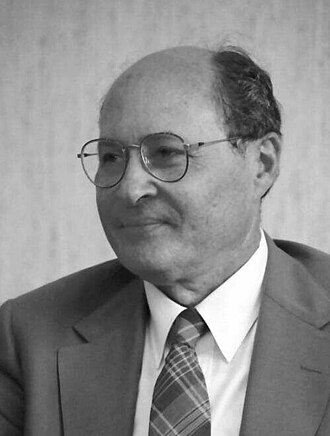
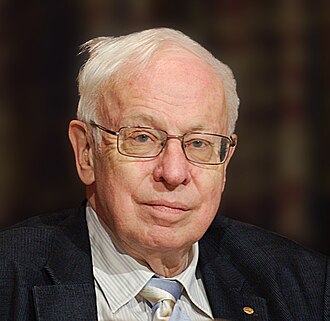
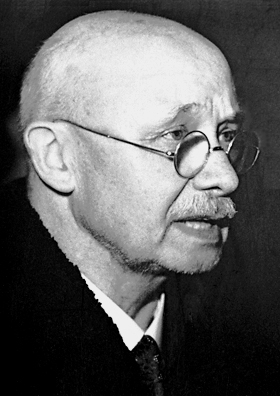
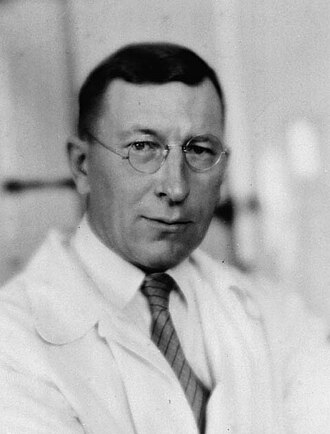
马尔康姆·格林1936—2020
Malcolm Green
British chemist (1936-2020)
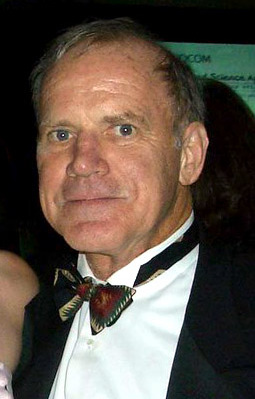
Malcolm Leslie Hodder Green was Professor of Inorganic Chemistry at the University of Oxford. He made many contributions to organometallic chemistry.
摘自英文维基百科「Malcolm Green (chemist)」(英文维基百科,暂无中文条目),CC BY-SA 4.0
- 出生
- 1936 年 4 月 16 日,依斯特利
- 逝世
- 2020 年 7 月 24 日
- 国籍
- 英国
- 学科
- 化学
- 职业
- 化学家
- 母语 / 工作语言
- 英语
- 母校
- 伦敦帝国学院、Denstone College、伦敦大学
- 工作单位
- 慕尼黑大学、哈佛大学、牛津大学
师承
博士生1
来自 Wikidata 的「博士导师」「师从」「博士生」「学生」记录,可能不全。
所获奖项(9)
- 1972科戴-摩根奖章
- 1982Tilden Prize
- 1984American Chemical Society Award in Inorganic Chemistry
- 1992Karl Ziegler Prize
- 1995戴维奖章
- 1997American Chemical Society Award in Organometallic Chemistry
- 1999Geoffrey Wilkinson Award
- —英国皇家学会院士
- —英国皇家化学学会会士
学会与院士
百科正文
本条目暂无中文维基百科条目,下面是英文维基百科原文。
Education
Born in Eastleigh, Hampshire, he was educated at Denstone College and received his Bachelor of Science degree from Acton Technical College (London University External Regulations) in 1956 and his PhD from Imperial College of Science and Technology in 1959 for research carried out under the supervision of Geoffrey Wilkinson.
Career
After his PhD, Green undertook a postdoctoral research year with Wilkinson before moving to the University of Cambridge in 1960 as Assistant Lecturer and being appointed a Fellow of Corpus Christi College, Cambridge in 1961. In 1963 he was appointed a Septcentenary Fellow of Inorganic Chemistry at Balliol College, Oxford and a Departmental Demonstrator at the University of Oxford. In 1965, he was made a Lecturer, and he was also a Royal Society Senior Research Fellow in Oxford 1979–86. In 1989, he was appointed Professor of Inorganic Chemistry and Head of the Inorganic Chemistry Laboratory at Oxford and Fellow of St Catherine's College, Oxford. In 2004, he became an Emeritus Research Professor. He was a co-founder of the Oxford Catalysts Group plc in 2006.
Green held many visiting positions including: Visiting Professor, Ecole de Chimie and Institute des Substances Naturelles, Paris (1972), Alfred P. Sloan Visiting Professor, Harvard University (1975), Sherman Fairchild Visiting Scholar at the California Institute of Technology (1981), and Walter Hieber Gastprofessor, LMU Munich, Germany (1991).
Research
Green's earliest publications described metal-hydride and metal-olefin complexes, themes that he pursued throughout his career. Many of his early contributions focused on the chemistry of molybdocene dihydride ((C5H5)2MoH2) and the related tungsten derivative. These compounds were shown to engage in many reactions related to C-H bond activation.
With Rooney, he was an active proponent of various mechanisms to explain stereochemistry in Ziegler–Natta polymerisation. He used metal vapour synthesis, especially for the preparation of early metal sandwich complexes. He and his students synthesised several examples of complexes exhibiting "agostic" bonds. The word was suggested to him by Jasper Griffin, professor of Classics at Balliol, whom Green asked for an appropriate Greek word to describe the close bonding phenomenon. This work would later lead to the so-called "modified Green-Rooney mechanism" for Ziegler–Natta catalysis, wherein agostic interactions guide the stereochemistry of the alkene insertion step. This proposal found wide acceptance. His work on metal carbide catalysts led to the corporate spin-off company Oxford Catalysts plc, which became Velocys.
Green along with Stephen G. Davies and Michael Mingos compiled a set of rules that summarise where nucleophilic additions will occur on pi ligands known as the Green–Davies–Mingos rules. His former doctoral students include Vernon C. Gibson.
Green developed the covalent bond classification (CBC) method in 1995 to describe the ligands and bonding in coordination and organometallic complexes.
Towards the end of his career Green's interests shifted to include studies of carbon nanotubes, developing methods to "uncap" (open) them, and investigating their filling with metals and with salts.
以上内容摘自英文维基百科「Malcolm Green (chemist)」,按 CC BY-SA 4.0 使用,去掉了参考文献、外部链接等尾部小节,公式改写成了纯文本。全文、配图和出处见原文。