格物

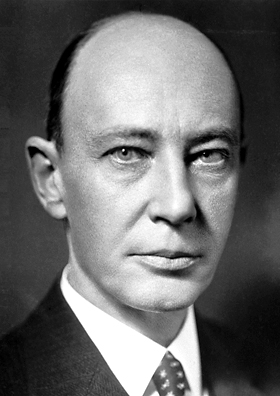
图:William Notman and Son · Public domain · Wikimedia Commons
- 出生
- 1872 年 11 月 30 日,圭尔夫
- 逝世
- 1918 年 1 月 28 日,滨海布洛涅
- 国籍
- 加拿大
- 学科
- 医学
- 职业
- 诗人、医生、医师作家、大学教师
- 母语 / 工作语言
- 英语
- 母校
- 多伦多大学(医学士,1898 年)、Guelph Collegiate Vocational Institute
- 工作单位
- 麦吉尔大学、佛蒙特大学
主要贡献
代表成就
所获奖项(3)
- 1901女王南非勋章
- 2015加拿大医学名人堂
- —Person of National Historic Significance
学会与院士
百科正文
英文维基百科补充中文条目比较短,下面是英文条目「John McCrae」的原文
Lieutenant-Colonel John McCrae (November 30, 1872 – January 28, 1918) was a Canadian poet, physician, author, artist and soldier during World War I and a surgeon during the Second Battle of Ypres, in Belgium. He is best known for writing the famous war memorial poem "In Flanders Fields". McCrae died of pneumonia near the end of the war. His famous poem is a threnody, a genre of lament.
Biography
McCrae was born in McCrae House in Guelph, Ontario to Lieutenant-Colonel David McCrae and Janet Simpson Eckford; he was the grandson of Scottish immigrants from Balmaghie, Kirkcudbrightshire. His father had served with the Guelph Home Guard during the Fenian raids, and was a member of the Guelph city council and a director of The North American Life Assurance Company. His brother, Dr. Thomas McCrae, became a professor of medicine at Johns Hopkins Medical School in Baltimore and close associate of Sir William Osler. His sister Geills married James Kilgour, a justice of the Court of King's Bench of Manitoba, and moved to Winnipeg.
McCrae attended the Guelph Collegiate Vocational Institute and graduated from the Institute at 16. He was the first Guelph student to win a scholarship to the University of Toronto.
Early military service
McCrae's father, Lt-Col. David McCrae, a Fenian Raid veteran, organized and commanded the Guelph Field Artillery from the 1870s-1890s, and in 1887, John McCrae joined his father's unit as a Bugler and then as a Gunner. He had previously joined the Guelph Highland Cadet Corps in 1886 at age 14, being awarded a prize as the best cadet in Ontario in 1887.
McCrae continued to serve in the militia in the 1890s, being appointed Quarter-Master Sergeant of the Guelph Artillery in 1891, and then Lieutenant in 1896.
In December 1899, McCrae volunteered for active service in South Africa as a Lieutenant in 'D' Battery, Canadian Field Artillery during the Second Boer War. McCrae was placed in charge of No. 2 (right) section, 'D' Battery, while his friend Edward Morrison commanded No. 1 Section.
First World War
When Britain declared war on Germany because of the latter's invasion of neutral Belgium at the beginning of the First World War (1914), Canada, as a Dominion within the British Empire, was at war as well. McCrae volunteered for service at age 41. He wrote a friend, "I am really rather afraid, but more afraid to stay at home with my conscience." He was appointed as Medical Officer and Major of the 1st Brigade, Canadian Field Artillery. He treated the wounded during the Second Battle of Ypres in 1915, from a hastily dug 8-by-8-foot (2.4 m × 2.4 m) bunker in the back of the dyke along the Yser Canal about 2 miles north of Ypres. McCrae's friend and former militia member, Lt. Alexis Helmer, was killed in the battle, and his burial inspired the poem, "In Flanders Fields", which was written on May 3, 1915.
"In Flanders Fields"
A collection of his poetry, In Flanders Fields and Other Poems (1918), was published after his death.
Though various legends have developed as to the inspiration for the poem, the most commonly held belief is that McCrae wrote "In Flanders Fields" on May 3, 1915, the day after presiding over the funeral and burial of his friend Lieutenant Alexis Helmer, who had been killed during the Second Battle of Ypres. The poem was written as he sat upon the back of a medical field ambulance near an advance dressing post at Essex Farm, just north of Ypres. The poppy, which was a central feature of the poem, grew in great numbers in the spoiled earth of the battlefields and cemeteries of Flanders.
Legacy
The Canadian Medical Association awards the John McCrae Memorial Medal to a health services member of the Canadian Armed Forces for exemplary service.
McCrae was designated a Person of National Historic Significance in 1946.
McCrae was the great-uncle of former Alberta Member of Parliament (MP) David Kilgour and of Kilgour's sister Geills Turner, who married former Canadian Prime Minister John Turner. Marie Christie Geills Kilgour (née McCrae) was the sister of John McCrae.
In 1918, Lieut. John Philip Sousa wrote the music to "In Flanders Fields, the poppies grow" words by Lieut.-Col John McCrae.
The Cloth Hall of the city of Ypres in Belgium has a permanent war museum called the "In Flanders Fields Museum", named after the poem.
以上节选摘自英文维基百科「John McCrae」,按 CC BY-SA 4.0 使用,去掉了参考文献、外部链接等尾部小节,公式改写成了纯文本。篇幅所限,较长的小节只摘了开头一部分,有的小节没有收;全文、配图和出处见原文。