格物
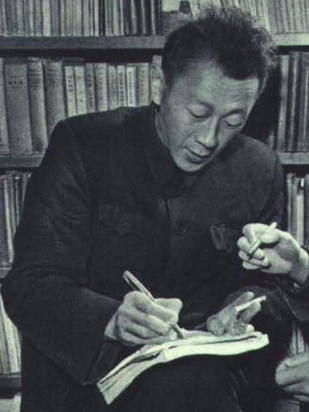
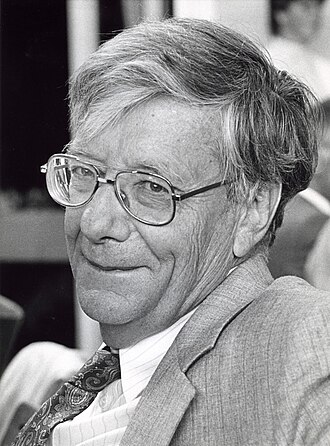
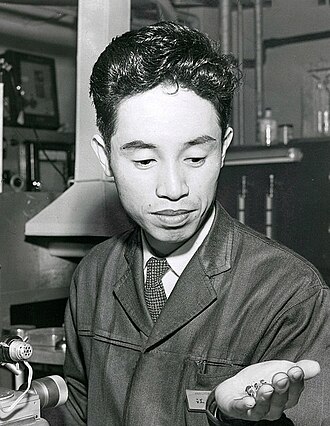
图:China Pictorial · Public domain · Wikimedia Commons
- 出生
- 1919 年 9 月 2 日,北京市
- 逝世
- 2005 年 7 月 6 日,北京市
- 国籍
- 中华人民共和国
- 学科
- 物理学、博物与综合
- 职业
- 物理学家
- 母语 / 工作语言
- 英语
- 母校
- 布里斯托尔大学、燕京大学
- 工作单位
- 北京大学
所获奖项(3)
- 1955中国科学院院士
- 1995何梁何利基金科学与技术成就奖
- 2001国家最高科学技术奖
学会与院士
百科正文
生平
黄昆出生于北京,祖籍为浙江嘉兴。1941年毕业于燕京大学物理系,获理学学士学位。1944年,获西南联合大学理学硕士学位。1945年赴英国学习。1947年,获布里斯托尔大学博士学位。此后至1951年,先后在爱丁堡大学和利物浦大学进行访问学者与博士后研究。1954年,黄昆在爱丁堡与诺贝尔物理学奖获得者马克斯·玻恩合著的《晶格动力学》出版。
1951年,黄昆回到北京,任北京大学物理系教授,文革浪潮期间被贴上黑帮的标签,北大校长周培源替他说话,明确提到了“段学复、黄昆、麻子英、刘雯等人,只是说了一些错话,犯了一些错误”,就低调过活直至1977年。之后任中国科学院半导体研究所所长至1983年。2000年,他获香港科技大学颁授理学荣誉博士学位。
科学成就
1947年提出固体中杂质缺陷导致X射线漫散射的理论,被称为“黄散射”;
1950年与里斯共同提出了多声子的辐射和无辐射跃迁的量子理论;同期佩卡尔发表了相平行的理论,被国际上称为“黄-佩卡尔理论”或“黄-里斯理论”;
1951年提出了晶体中声子与电磁波的耦合振荡模式,当时提出的方程,被称为“黄方程”。
以上内容摘自维基百科「黄昆」,按 CC BY-SA 4.0 使用,去掉了参考文献、外部链接等尾部小节,公式改写成了纯文本。全文、配图和出处见原文。
英文维基百科补充中文条目比较短,下面是英文条目「Huang Kun」的原文
Huang Kun (Chinese: 黄昆; September 2, 1919 – July 6, 2005) was a Chinese physicist and an academician of the Chinese Academy of Sciences. He was influential in the establishment of solid-state physics in China. He is known for his various contributions to solid-state physics including the Huang diffraction, early theory of polaritons, the Born–Huang approximation, the Huang–Rhys factor and the Huang–Zhu model.
He was awarded the State Preeminent Science and Technology Award (the highest science award in China) by President Jiang Zemin in 2001.
Life
Born in Jiaxing, China, in September 1919. He got a bachelor degree from Yenching University in physics. He enrolled as a graduate student at National Southwestern Associated University, other students with him included C.N. Yang. There Ta-You Wu gave Huang and Yang courses on classical and quantum mechanics. Huang carried out a thesis on atomic and molecular problems in astrophysics, supervised by professor Wu.
In 1948, he earned his PhD from the H. H. Wills Physics Lab of Bristol University in England. His supervisor was Nevill Mott. In his thesis, he worked on the effect of dissolved solute atoms to X-ray diffraction in dilute solid solution. His research was confirmed 20 years later. His theory became known as Huang diffusive scattering (HDS).
He continued his postdoctoral studies at Liverpool University, where he coauthored the book Dynamical Theory of Crystal Lattices with Max Born between 1949 and 1951. The book has become a classic work of modern physics. The Born–Huang approximation is named after them.
During his studies he also was influenced by Herbert Fröhlich. In 1950, Huang published a theory for the interaction of a crystal lattice and electrons. Later his equation led to the concept of phonon polaritons, described partially by Huang equation. The same year, with his secretary Avril Rhys, he calculated the average emitted phonons in a electronic transition in crystallographic defect. The formula they developed is known as the Huang–Rhys factor. A year later, he would marry Rhys.
In 1951, Huang returned to China to teach, and became a professor of physics at Peking University.
During the Cultural Revolution, Huang was one of the scientists to still write in the political journal Red Flag.
In 1955, he became a founding member of the Chinese Academy of Sciences (CAS). Huang and Xie Xide started the research of semiconductors in China, and established the solid state physics major at Peking University. In 1977, Huang became the director of the Institute of Semiconductors at CAS.
In 1988, he and Bangfen Zhu published a paper on optical vibrations. Their theory became known as the Huang–Zhu model.
Retirement
After his retirement in 1983, Huang remained active in the research of semiconductors and was selected as the chairman of the Chinese Society of Physics between 1987 and 1991. He served as Director of the Institute of Semiconductors of the CAS.
Honors and awards
Huang was elected member of the Chinese Academy of Science (CAS) in 1955. He was elected Foreign Member of the Royal Swedish Academy of Sciences in 1980. Elected fellow of The World Academy of Sciences in 1985. He received the Tan Kah Kee Award from the CAS in 1996. In 2001, Huang and Wang Xuan received the State Preeminent Science and Technology Award by President Jiang Zemin.
以上内容摘自英文维基百科「Huang Kun」,按 CC BY-SA 4.0 使用,去掉了参考文献、外部链接等尾部小节,公式改写成了纯文本。全文、配图和出处见原文。
同年获同一奖项
同一学科、同时代的科学家