格物

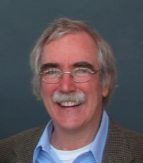
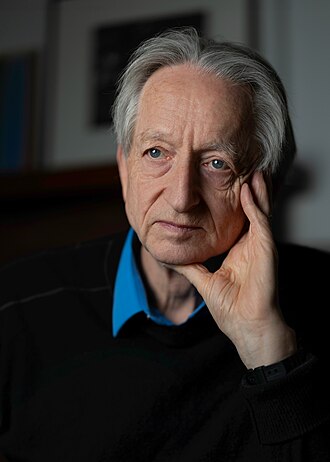
图:Whitehead inst · CC BY-SA 3.0 · Wikimedia Commons
鲁道夫·耶尼施1942—
Rudolf Jaenisch
German geneticist
鲁道夫·耶尼施,出生于纳粹德国下西里西亚省沃尔费尔斯格伦德(现波兰),德国分子生物学家和遗传学家,怀特黑德生物医学研究所创始成员之一,为用小鼠做模型来研究人类疾病作出了重大贡献。
摘自维基百科「鲁道夫·耶尼施」,CC BY-SA 4.0
- 出生
- 1942 年 4 月 22 日,济西热
- 国籍
- 德国、美国
- 学科
- 生物学
- 职业
- 遗传学家、分子生物学家、大学教师
- 母语 / 工作语言
- 德语
- 母校
- 慕尼黑大学
- 工作单位
- 麻省理工学院、白石研究中心
研究领域
所获奖项(16)
- 2001格鲁伯遗传学奖
- 2002罗伯·柯霍奖
- 2006马克斯·德尔布吕克奖章
- 2007Vilcek Prize
- 2008马斯利奖
- 2009恩斯特先灵奖
- 2010Knight Commander's Cross of the Order of Merit of the Federal Republic of Germany
- 2010美国国家科学奖章
- 2011沃尔夫医学奖
- 2011J. Allyn Taylor International Prize in Medicine
- 2013富兰克林研究所奖项
- 2014奥托·瓦尔堡奖章
- 2015March of Dimes Prize in Developmental Biology
- 2016Fellow of the AACR Academy
- —Pour le Mérite for Sciences and Arts order
- —Fellow of the New York Academy of Medicine
学会与院士
百科正文
学术研究
耶尼施被认为是转基因研究领域的先驱。他的小鼠模型使人能够考察一众疾病的原因,也能研究的DNA复制错误和X染色体失活的作用。
奖项和荣誉
2010年获国家科学奖章,2011年获沃尔夫医学奖,2013年获富兰克林奖章。
以上内容摘自维基百科「鲁道夫·耶尼施」,按 CC BY-SA 4.0 使用,去掉了参考文献、外部链接等尾部小节,公式改写成了纯文本。全文、配图和出处见原文。
英文维基百科补充中文条目比较短,下面是英文条目「Rudolf Jaenisch」的原文
Rudolf Jaenisch (born April 22, 1942) is a professor of biology at the Massachusetts Institute of Technology and a founding member of the Whitehead Institute for Biomedical Research,as well as a member of the National Academy of Sciences. He is a pioneer of transgenic science, in which an animal's genetic makeup is altered. Jaenisch has focused on creating genetically modified mice to study cancer, epigenetic reprogramming and neurological diseases.
Research
Jaenisch's first breakthrough occurred in 1974, when he and Beatrice Mintz showed that foreign DNA could be integrated into the DNA of early mouse embryos They injected retrovirus DNA into early mouse embryos and showed that leukemia DNA sequences had integrated into the mouse genome and also into that of its offspring. These mice were the first transgenic mammals in history.
His current research focuses on the epigenetic regulation of gene expression, which has led to major advances in creating embryonic stem cells and "induced pluripotent stem" (IPS) cells, as well as their therapeutic applications. In 2007, Jaenisch's laboratory was one of the first three laboratories worldwide to report reprogramming cells taken from a mouse's tail into IPS cells. Jaenisch has since shown therapeutic benefits of IPS cell-based treatment for sickle-cell anemia and Parkinson's disease in mice. Additional research focuses on the epigenetic mechanisms involved in cancer and brain development.
Jaenisch's therapeutic cloning research deals exclusively with mice, but he is an advocate for using the same techniques with human cells in order to advance embryonic stem cell research. In fact, Jaenisch states in his research how he believes that the idea is there. Jaenisch claims, "This is a proof-of-principle experiment, which shows that nuclear transplantation therapy may be possible for human application". However, in 2001, Jaenisch made a public case against human reproductive cloning, testifying before a U.S. House of Representatives subcommittee and writing an editorial in Science magazine.
Career
Jaenisch received his doctorate in medicine from LMU Munich in 1967, preferring the laboratory to the clinic. He became a postdoc at the Max Planck Institute of Biochemistry in Munich, studying bacteriophages. He left Germany in 1970 for research positions at Princeton University, Fox Chase Institute for Cancer Research and the Salk Institute. He returned to Germany in 1977 to become the head of the Department of Tumor Virology at the Heinrich Pette Institute at the University of Hamburg. He arrived at MIT in 1984. He participated in the 2005 science conference on human cloning at the United Nations and serves on the science advisory boards of the Genetics Policy Institute and Stemgent. He also served on the Life Sciences jury for the Infosys Prize in 2010.
Awards and honors
- 2001 Inaugural Genetics Prize of the Gruber Foundation
- 2002 Robert Koch Prize
- 2003 Election as a member of U.S. National Academy of Sciences
- 2006 Max Delbrück Medal
- 2007 Vilcek Prize in Biomedical Science
- 2008 Massry Prize from the Keck School of Medicine
- 2009 Ernst Schering Prize
- 2010 National Medal of Science
- 2011 Wolf Prize in Medicine
- 2012 International Society for Stem Cell Research McEwen Innovation Award
- 2013 Benjamin Franklin Medal in Life Science from the Franklin Institute
- 2013 Passano Award
- 2014 Otto Warburg Medal
- 2015 March of Dimes Prize in Developmental Biology
2016 Semantic Scholar AI program included Jaenisch on its list of top ten most influential biomedical researchers.
- 2025 Ogawa-Yamanaka Stem Cell Prize
- 2025 ISTT Prize
- 2026 Research.com's Best Scientists Award
以上内容摘自英文维基百科「Rudolf Jaenisch」,按 CC BY-SA 4.0 使用,去掉了参考文献、外部链接等尾部小节,公式改写成了纯文本。全文、配图和出处见原文。
同年获同一奖项
同一学科、同时代的科学家






同一学科的科学家
更多 ›