格物
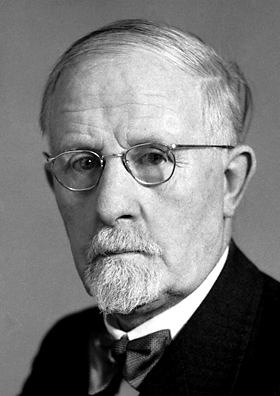
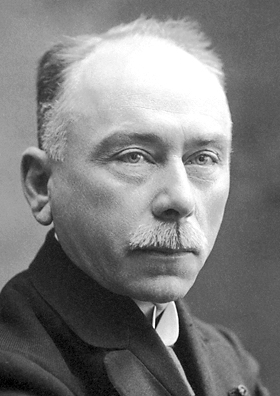
图:Nobel Foundation · Public domain · Wikimedia Commons
瓦尔特·鲁道夫·赫斯1881—1973
Walter Rudolf Hess
医生, 瑞士
瓦尔特·鲁道夫·赫斯,瑞士医生。由于发现间脑的对内脏的调节功能而获得1949年诺贝尔生理学或医学奖。
摘自维基百科「瓦尔特·鲁道夫·赫斯」,CC BY-SA 4.0
- 出生
- 1881 年 3 月 17 日,弗劳恩费尔德
- 逝世
- 1973 年 8 月 12 日,穆拉尔托
- 国籍
- 瑞士
- 学科
- 生物学、医学
- 职业
- 医生、眼科医生、神经学家、大学教师
- 母语 / 工作语言
- 德语
- 母校
- 苏黎世大学
- 工作单位
- 苏黎世大学
研究领域
师承
博士生1
来自 Wikidata 的「博士导师」「师从」「博士生」「学生」记录,可能不全。
所获奖项(3)
- 1931马塞尔·本努瓦奖
- 1938Carl-Ludwig Honorary Medal
- 1949诺贝尔生理学或医学奖
学会与院士
百科正文
生平
1912年,他以眼科医生的身份离开了利润丰厚的私人诊所,并在尤斯图斯·高卢的带领下进行研究。他的主要兴趣是调节血液流动和呼吸。
1916年,高卢退休,赫斯担任苏黎世大学生理学系系主任,并于1917年正式升职为该研究所的正教授和所长,直到1951年退休。
在1930年代,他开始绘制猫的中脑中起控制作用部分的地图。这项研究使他获得了1949年诺贝尔生理与医学奖。
赫斯于1951年退休,但继续在大学的办公室工作。1967年,他移居阿斯科纳,并于1973年因心力衰竭在瑞士洛迦诺,享年92岁。他的遗孀于1987年去世。
研究
赫斯使用了1920年代后期开发的大脑刺激技术。赫斯使用电极刺激了明确定义的解剖区域的大脑。这使他能映射大脑区域中特定的生理反应。他开发了一种特殊的技术,称为“中断直流刺激”。
以上内容摘自维基百科「瓦尔特·鲁道夫·赫斯」,按 CC BY-SA 4.0 使用,去掉了参考文献、外部链接等尾部小节,公式改写成了纯文本。全文、配图和出处见原文。
英文维基百科补充中文条目比较短,下面是英文条目「Walter Rudolf Hess」的原文
Walter Rudolf Hess (17 March 1881 – 12 August 1973) was a Swiss physiologist who won the Nobel Prize in Physiology or Medicine in 1949 for mapping the areas of the brain involved in the control of internal organs. He shared the prize with Egas Moniz.
Early life and education
Hess was born in Frauenfeld as the second of three children to Clemens Hess and Gertrud Hess (née Fischer). His father encouraged him to pursue a scientific career and with him he conducted experiments in his physics laboratory. He started to study medicine in Lausanne in 1899 and then in Berlin, Kiel and Zürich. He received his medical degree from the University of Zurich in 1906 and trained as surgeon in Münsterlingen (in the same canton as his birthplace Frauenfeld) under Conrad Brunner (1859–1927). He developed a viscosimeter to measure blood viscosity and published his dissertation in 1906 titled Zum Thema Viskosität des Blutes und Herzarbeit. In 1907, he went to the University of Zurich to study under Otto Haab to be trained as an
ophthalmologist and opened his own private practice in Rapperswil SG. In these years, he developed the "Hess screen", married Louise Sandmeier and in 1910 their daughter Gertrud Hess was born. In 1913 his son Rudolf Max Hess was born.
In 1912, he left his lucrative private practice as an ophthalmologist and went into research under Justus Gaule (1849–1939), habilitating in 1913 to become Privatdozent. His primary interests were the regulation of blood flow and respiration. During the First World War he spent a year at the Physiological Institute of the University of Bonn under Max Verworn. In 1916, Gaule retired and Hess first became interim director of the Department of the Physiological Institute at the University of Zurich. Hess served as full professor and director of the institute from 1917 until his retirement in 1951.
In the 1930s, he began mapping the parts of the diencephalon that control the internal organs using cats. This research won him the Nobel prize in Physiology and Medicine 1949. Hess also helped to found the meteorological research foundation International Foundation for the High Alpine Research Station Jungfraujoch in 1930 and served as its director until 1937. Furthermore, he politically campaigned against the anti-vivisectionists that wanted to forbid animal experimentation.
Hess retired in 1951 but continued working at the university in an office. In 1967, he moved to Ascona and died of heart failure in 1973 at the age of 92 in Locarno, Switzerland. His widow died in 1987.
Research
Hess used brain stimulation techniques developed in the late 1920s. Using electrodes, Hess stimulated the brain at well-defined anatomical regions. This allowed him to map regions of the brain to specific physiological responses. He developed a special technique he called "interrupted direct-current (DC) stimulation" which used stimuli of long duration (typically 12.5 or 25 ms) with ramp-like upward and downward slopes. Also, the stimuli were rather weak (around 0.5–1.5 V) and of low frequency (2–12 Hz, usually 8 Hz) and he used very fine electrodes with a diameter of 0.25 mm.
By stimulating the hypothalamus, he could induce behaviors from excitement to apathy; depending on the region of stimulation. He found that he could induce different responses when stimulating the anterior (lateral) hypothalamus compared to stimulating the posterior ventromedial hypothalamus. When stimulating the anterior part, he could induce fall of blood pressure, slowing of respiration and responses such as hunger, thirst, micturition (urination) and defecation. Stimulation of the posterior part led to extreme excitement and defense-like behavior.
Hess also found that he could induce sleep in cats – a finding that was highly controversial at the time but later confirmed by other researchers, including his son Rudolf Max Hess.
Honours
Marcel Benoist Prize (1932)
Honorary doctorates at the University of Bern, University of Geneva, McGill University, University of Freiburg
Nobel prize in Physiology and Medicine (1949)
以上内容摘自英文维基百科「Walter Rudolf Hess」,按 CC BY-SA 4.0 使用,去掉了参考文献、外部链接等尾部小节,公式改写成了纯文本。全文、配图和出处见原文。
同年获同一奖项
同一学科、同时代的科学家