格物
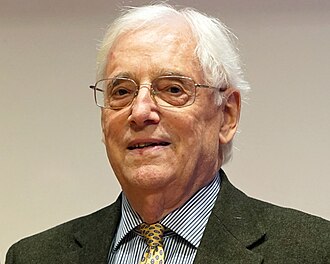
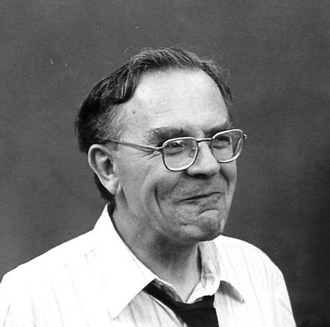
阿克塞尔·乌尔里希1943—
Axel Ullrich
German molecular biologist
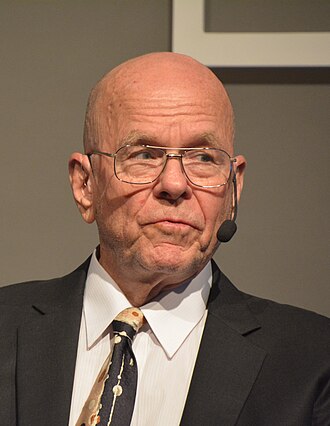
阿克塞尔·乌尔里希,出生于德国西里西亚的卢班,德国癌症研究员,1988年以来任Martinsried马克斯·普朗克生物化学研究所分子生物学部主任。该部门的研究主要集中在信号转导。乌尔里希和他的团队在2010年获得沃尔夫奖。
摘自维基百科「阿克塞尔·乌尔里希」,CC BY-SA 4.0
- 出生
- 1943 年 10 月 19 日,卢班
- 国籍
- 德国
- 学科
- 化学、生物学
- 职业
- 分子生物学家、肿瘤科医师、生物化学家
- 母语 / 工作语言
- 德语
- 母校
- 加州大学旧金山分校医学院
所获奖项(18)
- 1987Paul Langerhans Medal
- 1998德国癌症奖
- 2001罗伯·柯霍奖
- 2003King Faisal Prize in Medicine
- 2005German Cancer Aid Award
- 2005奥托·瓦尔堡奖章
- 2006华伦阿尔波特奖
- 2007Karl Heinz Beckurts Award
- 2007玛希敦王子奖
- 2009Debrecen Award for Molecular Medicine
- 2009保罗・杨森博士生物医学研究奖
- 2010沃尔夫医学奖
- 2012Hall of Fame of German Research
- 2014Fellow of the AACR Academy
- 2016Johann Georg Zimmermann Medal
- 2019拉斯克临床医学研究奖
- —Officer's Cross of the Order of Merit of the Federal Republic of Germany
- —欧洲分子生物学组织成员
学会与院士
百科正文
英文维基百科补充中文条目比较短,下面是英文条目「Axel Ullrich」的原文
Axel Ullrich (born 19 October 1943) is a German cancer researcher and has been the director of the molecular biology department at the Max Planck Institute of Biochemistry in Martinsried, Germany since 1988. This department's research has primarily focused on signal transduction. Ullrich has received Hamdan Award for Medical Research Excellence, awarded by Sheikh Hamdan bin Rashid Al Maktoum Award for Medical Sciences, Dubai, United Arab Emirates in 2008 and Ullrich and his team received the Wolf Prize in 2010.
Education
Ullrich received his primary degree in biochemistry at the University of Tübingen, Germany, he received a Ph.D. from the University of Heidelberg in molecular genetics in 1975.
Career
Ullrich completed post-doctoral work at the University of California, San Francisco, from 1975 to 1977 and worked as a senior scientist at Genentech in San Francisco from 1978 to 1988. From 1988, he has been at the Max Planck Institute of Biochemistry.
Ullrich was the first person to clone a human gene, insulin, into E. coli. He was one of the first employees of Genentech. While working for Genentech in 1979, he obtained a human insulinoma tissue sample from a surgeon in Munich. The tumor had just been extracted from a woman. Ullrich purified the insulin mRNA from this sample and cloned it into a vector that he inserted into E. coli. Thus, he produced a strain of E. coli that would manufacture human insulin.
He was one of several scientific leaders of 200+ scientists in developing the anti-cancer drug Trastuzumab (trade name: Herceptin) at Genentech, and has co-founded five biotech companies, Axxima, U3 Pharma, Kinaxo, SUGEN (acquired by Pfizer) and Blackfield.
He is listed by the Institute for Scientific Information (ISI) as a highly cited biologist and he is also in the top ten of H-index of living biologists.
Among many other achievements, he and his team have co-discovered two groups of receptor tyrosine kinases. In some tumours, (the cancerous state), some receptor tyrosine kinases tend to be over-active, due to genetic changes.
Ullrich is also Principal Investigator of Singapore Oncogenome Project at the Institute of Medical Biology aimed at identifying all oncogenic alterations in all protein tyrosine kinase (PTK) gene transcripts of a large number of tumor cell lines and primary tumors. The laboratory also focuses on functional characterization and, in cooperation with clinical oncologists, investigation of the clinical relevance of the newly discovered PTK oncogenes which serves as basis for the development of novel multi-targeted drugs.
The discovery of the drug Sunitinib and clarification of the multi-specific mechanism of action is partly based on discoveries of Axel Ullrich and his team at the Max Planck Institute of Biochemistry in the 1980s in Munich. The discovery, medical and pharmaceutical development as well as clinical testing of the drug was carried out by about 100+ scientists and physicians, at SUGEN, a company co-founded in 1991 by Ullrich, and the Max Planck Society, and other investors.
Sunitinib inhibits cellular signaling by targeting multiple receptor tyrosine kinases (RTKs). These include all receptors for platelet-derived growth factor (PDGFR) and vascular endothelial growth factor receptors (VEGFR), which play a role in both tumor angiogenesis and tumor cell proliferation. The simultaneous inhibition of these targets therefore leads to both reduced tumor vascularization and cancer cell death, and ultimately tumor shrinkage.
In the early 1990s, Ullrich and his team identified the signaling system involved in regulating tumor angiogenesis, the growth of blood vessels in tumors. He and his team discovered that inhibiting a key player in the signaling system (called vascular endothelial growth factor receptor or VEGFR) suppresses the generation of blood vessels in tumors and slows down cancer cell growth.
Honors and awards
2005 Otto Warburg Medal
2008 Pezcoller Foundation-AACR International Award for Extraordinary Achievement in Cancer Research
- 2008 Hamdan Award for Medical Research Excellence – Therapy in Malignancy
- 2009 Debrecen Award for Molecular Medicine
- 2009 Emanuel Merck Lectureship
2010 Wolf Prize research on human proto-oncogenes and development of novel cancer therapies.
2012 Honorary Doctor of Semmelweis University
2013 Elected Member of the Hungarian Academy of Sciences
2019 Lasker-DeBakey Clinical Medical Research Award.
以上节选摘自英文维基百科「Axel Ullrich」,按 CC BY-SA 4.0 使用,去掉了参考文献、外部链接等尾部小节,公式改写成了纯文本。篇幅所限,较长的小节只摘了开头一部分,有的小节没有收;全文、配图和出处见原文。