格物
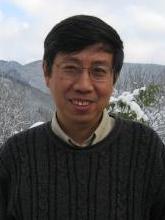
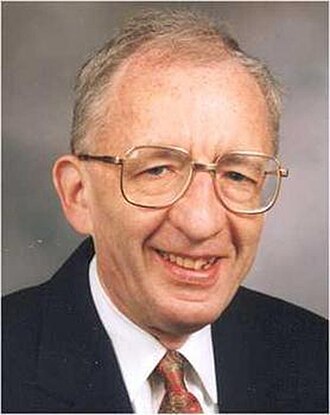
图:Schmid, Renate · CC BY-SA 2.0 de · Wikimedia Commons
- 出生
- 1958 年 11 月 24 日,南京市
- 国籍
- 中华人民共和国
- 学科
- 数学、博物与综合
- 职业
- 数学家、大学教师
- 母语 / 工作语言
- 英语
- 母校
- 北京大学、哈佛大学、南京市金陵中学
- 工作单位
- 普林斯顿大学、北京大学
研究领域
师承
博士导师1
博士生54
学生2
来自 Wikidata 的「博士导师」「师从」「博士生」「学生」记录,可能不全。
所获奖项(3)
- 1994艾伦·T·沃特曼奖
- 1996奥斯瓦尔德·维布伦几何学奖
- —美国文理科学院院士
学会与院士
百科正文
生平
1958年出生在江苏南京,从小在南京大学校园长大,母亲是南京大学数学系的教师王明淑,父亲则是农学专家。作为往届生,1977年落榜之后,1978年第二次参加高考,考入南京大学数学系,1982年夏季本科毕业。1984年获北京大学硕士学位并赴圣地亚哥加利福尼亚大学攻读博士学位,师从数学家丘成桐。后跟随丘成桐转学至哈佛大学,并于1988年获美国哈佛大学数学系博士学位。自1998年起,受聘为教育部“长江学者奖励计划”在北京大学的特聘教授。2003年至2018年,田刚在美国普林斯顿大学数学系任Higgins讲座教授。现在,田刚是美国普林斯顿大学荣誉退休教授、中国北京大学数学研究所及中国南京大学现代数学研究所所长、北京大学北京国际数学研究中心主任。2017年2月至2019年12月,任北京大学副校长。
2018年,他当选新一届国际数学联盟执委会委员。2019年11月24日,在广东佛山希尔顿酒店召开的中国数学会第十三次全国会员代表大会上,选举产生了中国数学会第十三届正副理事长、秘书长、常务理事、理事和监事,其当选为理事长。
2023年,他担任大湾区大学筹建负责人兼讲席教授。
荣誉
2012年出任国际数学界奖金最高(100万美元)的权威大奖阿贝尔奖仅有的5位评委之一,成为中国籍数学家出任该奖评委第一人。
曾获美国国家基金委1994年度沃特曼奖;1996年,他获美国数学会的奥斯瓦尔德·维布伦奖。2002年,成为第24届国际数学家大会的“1小时大会报告”特邀报告人。2001年,当选为中国科学院院士。2004年当选为美国文理科学院院士。
社会兼职
第十一届、第十二届全国政协常委。2010年2月加入中国民主同盟,2012年当选中国民主同盟中央委员会副主席。
以上内容摘自维基百科「田刚」,按 CC BY-SA 4.0 使用,去掉了参考文献、外部链接等尾部小节,公式改写成了纯文本。全文、配图和出处见原文。
英文维基百科补充中文条目比较短,下面是英文条目「Tian Gang」的原文
Tian Gang (Chinese: 田刚; pinyin: Tián Gāng; born November 24, 1958) is a Chinese mathematician known for his contributions to the mathematical fields of Kähler geometry, Gromov–Witten theory, and geometric analysis. He is a professor of mathematics at Peking University and the Higgins Professor Emeritus at Princeton University.
As of 2020, he is the Vice Chairman of the China Democratic League and the President of the Chinese Mathematical Society. From 2017 to 2019 he served as the Vice President of Peking University.
Biography
Tian was born in Nanjing, Jiangsu, China, on November 24, 1958. In 1978, after the Cultural Revolution, he qualified in the second Gaokao exam. He graduated from Nanjing University with a Bachelor of Science in mathematics in 1982, earned a Master of Science in mathematics from Peking University in 1984, and earned his Ph.D. in mathematics from Harvard University in 1988 under the supervision of Shing-Tung Yau.
In 1998, he was appointed as a Cheung Kong Scholar professor at Peking University. Later his appointment was changed to Cheung Kong Scholar chair professorship. He was a professor of mathematics at the Massachusetts Institute of Technology from 1995 to 2006 (holding the chair of Simons Professor of Mathematics from 1996). His employment at Princeton started from 2003, and was later appointed the Higgins Professor of Mathematics. Starting 2005, he has been the director of the Beijing International Center for Mathematical Research (BICMR); from 2013 to 2017 he was the Dean of School of Mathematical Sciences at Peking University. He and John Milnor are Senior Scholars of the Clay Mathematics Institute (CMI). In 2011, Tian became director of the Sino-French Research Program in Mathematics at the Centre national de la recherche scientifique (CNRS) in Paris. In 2010, he became scientific consultant for the International Center for Theoretical Physics in Trieste, Italy.
Tian has served on many committees, including for the Abel Prize and the Leroy P. Steele Prize. He is a member of the editorial boards of many journals, including Advances in Mathematics and the Journal of Geometric Analysis. In the past he has been on the editorial boards of the Annals of Mathematics and the Journal of the American Mathematical Society.
- Among his awards and honors:
- Sloan Research Fellowship (1991-1993)
- Alan T. Waterman Award (1994)
- Oswald Veblen Prize in Geometry (1996)
- Elected to the Chinese Academy of Sciences (2001)
- Elected to the American Academy of Arts and Sciences (2004)
Mathematical contributions
The Kähler-Einstein problem
Tian is well-known for his contributions to Kähler geometry, and in particular to the study of Kähler-Einstein metrics. Shing-Tung Yau, in his renowned resolution of the Calabi conjecture, had settled the case of closed Kähler manifolds with nonpositive first Chern class. His work in applying the method of continuity showed that C0 control of the Kähler potentials would suffice to prove existence of Kähler-Einstein metrics on closed Kähler manifolds with positive first Chern class, also known as "Fano manifolds." Tian and Yau extended Yau's analysis of the Calabi conjecture to non-compact settings, where they obtained partial results.[TY90] They also extended their work to allow orbifold singularities.[TY91]
Tian introduced the "α-invariant," which is essentially the optimal constant in the Moser-Trudinger inequality when applied to Kähler potentials with a supremal value of 0. He showed that if the α-invariant is sufficiently large (i.e. if a sufficiently strong Moser-Trudinger inequality holds), then C0 control in Yau's method of continuity could be achieved.[T87b] This was applied to demonstrate new examples of Kähler-Einstein surfaces. The case of Kähler surfaces was revisited by Tian in 1990, claiming a complete resolution of the Kähler-Einstein problem in that context.[T90b] The main technique was to study the possible geometric degenerations of a sequence of Kähler-Einstein metrics, as detectable by the Gromov–Hausdorff convergence. Tian adapted many of the technical innovations of Karen Uhlenbeck, as developed for Yang-Mills connections, to the setting of Kähler metrics. Some similar and influential work in the Riemannian setting was done in 1989 and 1990 by Michael Anderson, Shigetoshi Bando, Atsushi Kasue, and Hiraku Nakajima. However, it was later discovered that Tian's paper contains serious gaps.
以上节选摘自英文维基百科「Tian Gang」,按 CC BY-SA 4.0 使用,去掉了参考文献、外部链接等尾部小节,公式改写成了纯文本。篇幅所限,较长的小节只摘了开头一部分,有的小节没有收;全文、配图和出处见原文。
同一学科、同时代的科学家



同一学科的科学家
更多 ›