格物
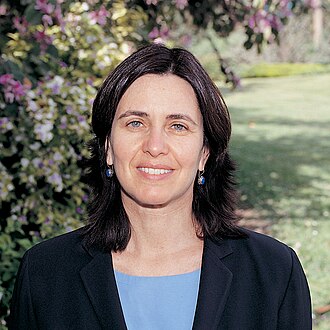
图:Weizmann Institute of Science · Public domain · Wikimedia Commons
- 出生
- 1958 年 11 月 14 日,纽约
- 国籍
- 美国、以色列
- 学科
- 数学、计算机科学、工程与发明、博物与综合
- 职业
- 密码学家、数学家、计算机科学家、工程师
- 母语 / 工作语言
- 英语
- 母校
- 卡内基梅隆大学、加州大学伯克利分校
- 工作单位
- 麻省理工学院、魏茨曼科学研究所
研究领域
师承
博士导师1
博士生12
来自 Wikidata 的「博士导师」「师从」「博士生」「学生」记录,可能不全。
所获奖项(12)
- 1993哥德尔奖
- 1996格蕾丝·默里·霍珀奖
- 2001哥德尔奖
- 2007IACR Fellow
- 2008Athena Lecturer
- 2010富兰克林研究所奖项
- 2011IEEE皮奥尔奖
- 2012图灵奖
- 2017BBVA基金会前沿奖
- 2017ACM会士
- 2021欧莱雅-教科文组织女科学家奖
- 2023哈罗德·彭德奖
学会与院士
百科正文
生平
戈德瓦塞尔出生于纽约市,1979年在卡内基梅隆大学获得数学和科学的学士学位,在加州大学伯克利分校的计算机科学领域十分杰出曼纽尔·布卢姆的指导下于1981年获得该校计算机科学硕士学位,1984年获得博士学位。1983年加入麻省理工学院(MIT),1997年成为教授。1993年成为魏茨曼科学研究学院教授。她是麻省理工学院计算机科学计算理论和人工智能实验室的一员。戈德瓦塞尔和同事一起获得2012年图灵奖。
以上内容摘自维基百科「莎菲·戈德瓦塞尔」,按 CC BY-SA 4.0 使用,去掉了参考文献、外部链接等尾部小节,公式改写成了纯文本。全文、配图和出处见原文。
英文维基百科补充中文条目比较短,下面是英文条目「Shafi Goldwasser」的原文
Shafrira Goldwasser (Hebrew: שפרירה גולדווסר; born November 14, 1959) is an Israeli-American computer scientist. She is the RSA Professor of Electrical Engineering and Computer Science at the Massachusetts Institute of Technology, a professor of mathematical sciences at the Weizmann Institute of Science, the former director of the Simons Institute for the Theory of Computing, and co-founder and chief scientist of Duality Technologies. In 2012, she and Silvio Micali won the ACM Turing Award.
Education and early life
Goldwasser was born in New York City and grew up in Tel Aviv. She later returned to the US and obtained her bachelor's degree in 1979 in mathematics and science from Carnegie Mellon. She received a master's degree in 1981 and PhD in 1984 from Berkeley advised by Manuel Blum.
While at Berkeley, Goldwasser worked on cryptography and algorithmic number theory. She and Blum proposed the Blum-Goldwasser cryptosystem. Along with Silvio Micali, also a student at Berkeley at the time, she introduced the notion of probabilistic encryption where one message can be encrypted probabilistically to many different ciphertexts, which is more resistant to chosen-plaintext attacks.
Career and research
Goldwasser joined MIT in 1983, and in 1997 became the first holder of the RSA Professorship. She became a professor at the Weizmann Institute of Science, concurrent to her professorship at MIT, in 1993. She is a member of the theory of computation group at MIT Computer Science and Artificial Intelligence Laboratory.
In November 2016, along with several colleagues including Vinod Vaikuntanathan, Goldwasser co-founded Duality Technologies in order to commercialize fully homomorphic encryption. She is also a scientific advisor for several technology startups, including QED-it, specializing in the Zero Knowledge Blockchain, and Algorand, a pure proof-of-stake blockchain founded by her collaborator Silvio Micali.
On January 1, 2018, she became the director of Simons Institute for the Theory of Computing, a position she held until August 2024.
Research
Goldwasser's research areas include computational complexity theory, cryptography and computational number theory.
In 1984, along with Silvio Micali, she introduced probabilistic encryption, which has become the basis for most public-key cryptographic schemes.
In 1985, Goldwasser, Silvio Micali, and Charles Rackoff introduced zero-knowledge proofs, which became a fundamental cryptographic primitive used to probabilistically and interactively demonstrate the validity of an assertion without conveying any additional knowledge. They began by studying interactive proofs more broadly, where a proof is developed interactively by answering a series of questions about a problem.
Awards and honors
Goldwasser was awarded the 2012 Turing Award along with Silvio Micali for having "pioneered the field of provable security, which laid the mathematical foundations that made modern cryptography possible."
Goldwasser has twice won the Gödel Prize in theoretical computer science: first in 1993 along with László Babai, Silvio Micali, Shlomo Moran, and Charles Rackoff (for "The knowledge complexity of interactive proof systems"), and again in 2001 along with Sanjeev Arora, Uriel Feige, Carsten Lund, László Lovász, Rajeev Motwani, Shmuel Safra, Madhu Sudan, and Mario Szegedy (for Interactive Proofs and the Hardness of Approximating Cliques). She also received the ACM Grace Murray Hopper Award in 1996 and the RSA Award for Excellence in Mathematics in 1998.
In 2001 she was elected to the American Academy of Arts and Sciences and in 2002 she gave a plenary lecture at the International Congress of Mathematicians in Beijing. In 2004 she was elected to the National Academy of Sciences, and in 2005 to the National Academy of Engineering for contributions to cryptography, number theory, and complexity theory, and their applications to privacy and security. In 2006, Berkeley awarded her its Computer Science Distinguished Alumni Award. She was selected as an IACR Fellow in 2007. Goldwasser received the 2008–2009 Athena Lecturer Award of the Association for Computing Machinery's Committee on Women in Computing. She is the recipient of The Franklin Institute's 2010 Benjamin Franklin Medal in Computer and Cognitive Science. She received the IEEE Emanuel R. Piore Award in 2011.
Personal life
Goldwasser has two sons.
以上节选摘自英文维基百科「Shafi Goldwasser」,按 CC BY-SA 4.0 使用,去掉了参考文献、外部链接等尾部小节,公式改写成了纯文本。篇幅所限,较长的小节只摘了开头一部分,有的小节没有收;全文、配图和出处见原文。
同年获同一奖项
同一学科、同时代的科学家




同一学科的科学家
更多 ›