格物
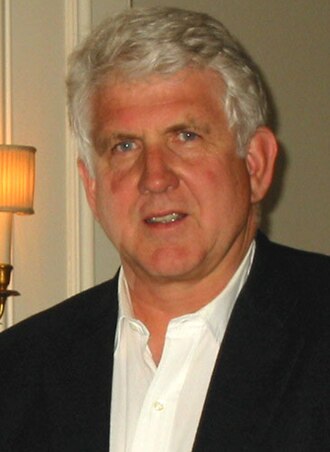
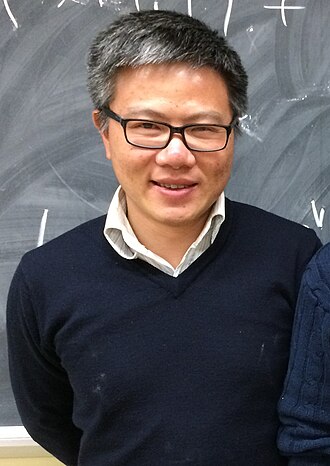
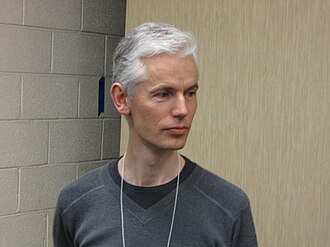
图:Andreu Veà, WiWiW.org · CC BY-SA 3.0 · Wikimedia Commons
罗伯特·梅特卡夫1946—
Robert Metcalfe
美国电子工程师
罗伯特·梅兰克顿·梅特卡夫,昵称鲍伯·梅特卡夫 是一名美国工程师、企业家。他发明了以太网,成立3Com且制定了梅特卡夫定律。
摘自维基百科「罗伯特·梅特卡夫」,CC BY-SA 4.0
- 出生
- 1946 年 4 月 7 日,布鲁克林区
- 国籍
- 美国
- 学科
- 数学、计算机科学、工程与发明、博物与综合
- 职业
- 计算机科学家、发明家、工程师、商人
- 母语 / 工作语言
- 英语
- 母校
- MIT斯隆管理学院、哈佛大学、麻省理工学院、Bay Shore High School
- 工作单位
- 帕罗奥多研究中心(?—1979)、3Com(1979—1990)、得克萨斯大学奥斯汀分校(2011—)
研究领域
主要贡献
代表成就
以他 / 她命名
师承
博士导师2
博士生1
来自 Wikidata 的「博士导师」「师从」「博士生」「学生」记录,可能不全。
所获奖项(10)
学会与院士
百科正文
生平
在1973年,梅特卡夫在帕罗奥多研究中心工作时,他发明了以太网,一个可以在短矩离使得电脑可以互相连通的标准。在1979年,梅特卡夫离开帕罗奥多研究中心,成立3Com,一家电脑网络设备的制造商。在1980年,以发展局域网,特别是乙太网的贡献,他得到由计算机协会所颁发的格蕾丝·默里·霍珀奖。在1990年,梅特卡夫从3Com退休并且开始一段为期10年的的发行者和网络权威者的生涯,为信息世界撰写网络专栏。他于2001年成为资本投资家,现在是Polaris Partners的一员。
他以两个学士学位毕业于麻省理工学院,一个是电机工程学位,另一个麻省理工学院史隆商学院的工业管理学位。他在哈佛大学以一篇有关于分组交换的论文获取博士学位。那篇论文实际上是他在麻省理工学院为一个名为MAC的计划工作时写好的。
在2005年3月14日,美国布希总统在白宫庆典时颁给他全国科技奖章,以表扬他创新以太网及将其标准化及商业通用化上的领导地位。根据IDC,在2004年全世界上有2亿个新的以太网的端口被制造出货。
他获得了2022年图灵奖,以表彰他对以太网的发明、标准及商业化,乃至互联网的贡献。
以上内容摘自维基百科「罗伯特·梅特卡夫」,按 CC BY-SA 4.0 使用,去掉了参考文献、外部链接等尾部小节,公式改写成了纯文本。全文、配图和出处见原文。
英文维基百科补充中文条目比较短,下面是英文条目「Robert Metcalfe」的原文
Robert "Bob" Melancton Metcalfe (born April 7, 1946) is an American engineer and entrepreneur who contributed to the development of the internet in the 1970s. He co-invented Ethernet, co-founded 3Com, and formulated Metcalfe's law, which describes the effect of a telecommunications network. Metcalfe has also made several predictions which failed to come to pass, including forecasting the demise of the internet during the 1990s.
Metcalfe has received various awards, including the IEEE Medal of Honor and National Medal of Technology and Innovation for his work developing Ethernet technology. In 2023, he received the Turing Award, the highest distinction in computer science. From 2011 to 2021, he was professor of innovation and entrepreneurship at the University of Texas at Austin.
Early life and family
Robert Metcalfe was born in 1946 in New York, New York, to Ruth and Robert Metcalfe. He is of English, Irish, and Norwegian descent. His father was a test technician who specialized in gyroscopes. His mother was a homemaker who later became a secretary at Bay Shore High School. Metcalfe graduated from that school in 1964.
Metcalfe graduated from the Massachusetts Institute of Technology in 1969, receiving two Bachelor of Science degrees in electrical engineering and industrial management. He then attended Harvard University and received a Master of Science in applied mathematics in 1970 and a Doctor of Philosophy in computer science in 1973.
Metcalfe and his wife Robyn have two children.
Career
While pursuing his doctorate in computer science, Metcalfe took a job with MIT's Project MAC after Harvard refused permission for him to connect the university to the then-new ARPAnet. At MAC, Metcalfe was responsible for building some of the hardware that would link MIT's minicomputers with ARPAnet. Metcalfe made ARPAnet the topic of his doctoral thesis, but Harvard initially rejected it. Metcalfe decided how to improve his thesis while working at Xerox PARC, where he read a paper about the ALOHA network at the University of Hawaiʻi. He identified and fixed some of the bugs in the AlohaNet model, then added that work to his revised thesis. It was then accepted by Harvard, which granted his PhD.
Metcalfe was working at PARC in 1973 when he and David Boggs invented Ethernet, initially as a standard for connecting computers over short distances. He later recalled that Ethernet was born on May 22, 1973, the day he circulated a memo titled "Alto Ethernet" which contained a rough schematic of how it would work. "That is the first time Ethernet appears as a word, as does the idea of using coax as ether, where the participating stations, like in AlohaNet or ARPAnet, would inject their packets of data, they'd travel around at megabits per second, there would be collisions, and retransmissions, and back-off," Metcalfe explained. Boggs argued that another date was the birth of Ethernet: November 11, 1973, the first day the system actually functioned.
Awards
In 1996, Metcalfe was awarded the IEEE Medal of Honor for "exemplary and sustained leadership in the development, standardization, and commercialization of Ethernet." The following year, he was elected as a member into the National Academy of Engineering for the development of Ethernet. He received the National Medal of Technology in 2003 "for leadership in the invention, standardization, and commercialization of Ethernet". In October 2003, he received the Marconi Award for "For inventing the Ethernet and promulgating his Law of network utility based on the square of the nodes".
Metcalfe was inducted into the National Inventors Hall of Fame in 2007, for his work with Ethernet technology. In 2008, he received the Fellow Award from the Computer History Museum "for fundamental contributions to the invention, standardization, and commercialization of Ethernet."
In March 2023, Metcalfe was awarded the 2022 Association for Computing Machinery's Turing Award for his contributions to the invention of Ethernet technology.
Predicted Internet collapse
In 1995, Metcalfe argued that the Internet would suffer a "catastrophic collapse" in the following year; he promised to eat his words if it did not. During his keynote speech at the sixth International World Wide Web Conference in 1997, he took a printed copy of his column that predicted the collapse, put it in a blender with some liquid and then consumed the pulpy mass. He had suggested having his words printed on a very large cake, but the audience would not accept this form of "eating his words."
以上节选摘自英文维基百科「Robert Metcalfe」,按 CC BY-SA 4.0 使用,去掉了参考文献、外部链接等尾部小节,公式改写成了纯文本。篇幅所限,较长的小节只摘了开头一部分,有的小节没有收;全文、配图和出处见原文。
同一学科、同时代的科学家


同一学科的科学家
更多 ›