格物
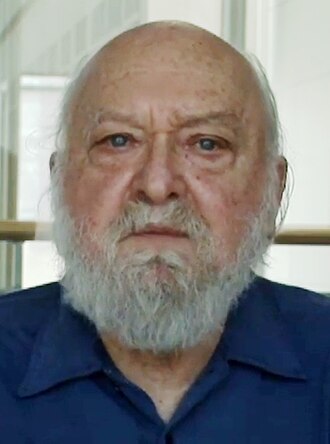
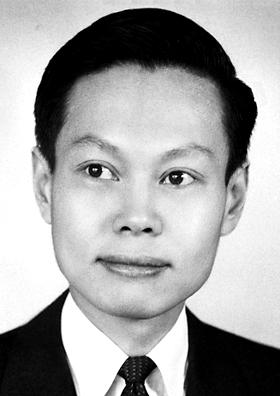
图:Institute of Physics · CC BY 3.0 · Wikimedia Commons
利奥·卡达诺夫1937—2015
Leo Kadanoff
美国物理学家
利奥·菲利普·卡达诺夫,美国物理学家。他是芝加哥大学的物理学教授(2004年荣誉退休) 和美国物理学会(APS)的前主席。 他对统计物理,混沌理论,凝聚态物理等领域做出了贡献。
摘自维基百科「利奥·卡达诺夫」,CC BY-SA 4.0
- 出生
- 1937 年 1 月 14 日,纽约
- 逝世
- 2015 年 10 月 26 日,芝加哥
- 国籍
- 美国
- 学科
- 物理学、博物与综合
- 职业
- 物理学家、大学教师
- 母校
- 哈佛大学、德威特克林顿高中
- 工作单位
- 芝加哥大学、莱顿大学(2003—)
研究领域
师承
博士导师2
博士生22
来自 Wikidata 的「博士导师」「师从」「博士生」「学生」记录,可能不全。
所获奖项(13)
- 1977奥利弗·巴克利奖
- 1980沃尔夫物理学奖
- 1986埃利奥特·克雷森奖章
- 1989波兹曼奖
- 1998法国科学院大奖章
- 1998拉斯·昂萨格奖
- 1999美国国家科学奖章
- 2004Onsager Medal
- 2006洛仑兹奖章
- 2011艾萨克·牛顿奖章
- —哈佛百年奖章
- —美国物理学会会士
- —美国文理科学院院士
学会与院士
百科正文
生平
卡达诺夫成长于美国纽约。他在哈佛大学获得了物理学学士学位和博士学位,之后在哥本哈根尼尔斯·玻尔研究所从事博士后研究。1965年,他加入了伊利诺伊大学物理学院。
部分出版物
"Scaling laws for Ising models near T_(c) ", Physics 2(263), 1966. (The seminal paper for the development of renormalization group theory; see History of renormalization group theory.)
"Operator Algebra and the Determination of Critical Indices", Phys. Rev. Lett. 23(1430), 1969. (The seminal paper for the development of conformal field theory; see History of conformal field theory.)
以上内容摘自维基百科「利奥·卡达诺夫」,按 CC BY-SA 4.0 使用,去掉了参考文献、外部链接等尾部小节,公式改写成了纯文本。全文、配图和出处见原文。
英文维基百科补充中文条目比较短,下面是英文条目「Leo Kadanoff」的原文
Leo Philip Kadanoff (January 14, 1937 – October 26, 2015) was an American physicist. He was a professor of physics (emeritus from 2004) at the University of Chicago and a former president of the American Physical Society (APS). He contributed to the fields of statistical physics, chaos theory, and theoretical condensed matter physics.
Biography
Kadanoff was raised in New York City. He received his undergraduate degree and doctorate in physics (1960) from Harvard University. After a post-doctorate at the Niels Bohr Institute in Copenhagen, he joined the physics faculty at the University of Illinois in 1965.
Kadanoff's early research focused upon superconductivity. In the late 1960s, he studied the organization of matter in phase transitions. Kadanoff demonstrated that sudden changes in material properties (such as the magnetization of a magnet or the boiling of a fluid) could be understood in terms of scaling and universality. With his collaborators, he showed how all the experimental data then available for the changes, called second-order phase transitions, could be understood in terms of these two ideas. These same ideas have now been extended to apply to a broad range of scientific and engineering problems, and have found numerous and important applications in urban planning, computer science, hydrodynamics, biology, applied mathematics and geophysics. In recognition of these achievements, he won the Buckley Prize of the American Physical Society (1977), the Wolf Prize in Physics (1980), the 1989 Boltzmann Medal of the International Union of Pure and Applied Physics, and the 2006 Lorentz Medal.
In 1969 he moved to Brown University. He exploited mathematical analogies between solid state physics and urban growth to shed insights into the latter field, so much so that he contributed substantially to the statewide planning program in Rhode Island. In 1978 he moved to the University of Chicago, where he became the John D. and Catherine T. MacArthur Distinguished Service Professor of Physics and Mathematics. Much of his work in the second half of his career involved contributions to chaos theory, in both mechanical and fluid systems. He was elected a Fellow of the American Academy of Arts and Sciences in 1982.
He was one of the recipients of the 1999 National Medal of Science, awarded by President Clinton. He was a member of the National Academy of Sciences and of the American Philosophical Society as well as being a Fellow of the American Physical Society and of the American Association for the Advancement of Science. During the last decade, he has received the Quantrell Award (for excellence in teaching) from the University of Chicago, the Centennial Medal of Harvard University, the Lars Onsager Prize of the American Physical Society, and the Grande Medaille d'Or of the Académie des sciences de l'Institut de France.
His textbook with Gordon Baym, Quantum Statistical Mechanics (ISBN 020141046X), is a prominent text in the field and has been widely translated.
With Leo Irakliotis, Kadanoff established the Center for Presentation of Science at the University of Chicago.
In June 2013, it was stated that anonymous donors had provided a $3.5 million gift to establish the Leo Kadanoff Center for Theoretical Physics at the University of Chicago. He died after complications from an illness on October 26, 2015. In 2018 the American Physical Society established the Leo P. Kadanoff Prize in his honor.
Publications (selection)
"Scaling laws for Ising models near T_(c) ", Physics 2(263), 1966. (The seminal paper for the development of renormalization group theory; see History of renormalization group theory.)
"Operator Algebra and the Determination of Critical Indices", Phys. Rev. Lett. 23(1430), 1969. (The seminal paper for the development of conformal field theory; see History of conformal field theory.)
以上内容摘自英文维基百科「Leo Kadanoff」,按 CC BY-SA 4.0 使用,去掉了参考文献、外部链接等尾部小节,公式改写成了纯文本。全文、配图和出处见原文。
同年获同一奖项
同一学科、同时代的科学家

同一学科的科学家
更多 ›