格物
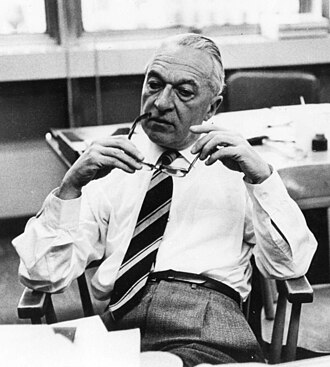
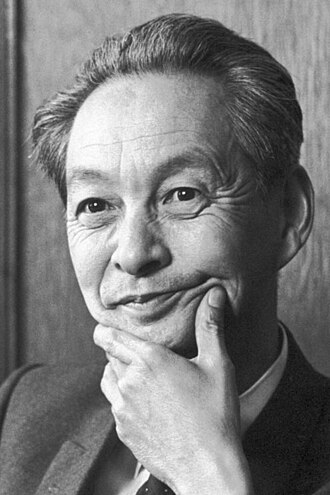
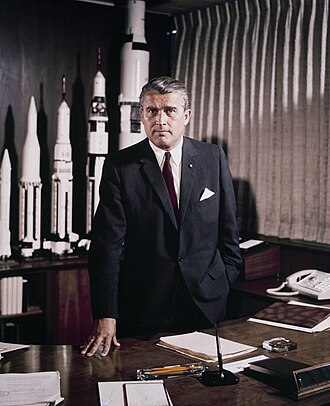
图:Massachusetts Institute of Technology · CC BY-SA 3.0 · Wikimedia Commons
布鲁诺·B·罗西1905—1993
Bruno Rossi
Italian experimental physicist (1905–1993)
布鲁诺·贝内代托·罗西,意大利实验物理学家。他对粒子物理学和宇宙射线的研究做出了重大贡献。
摘自维基百科「布鲁诺·罗西」,CC BY-SA 4.0
- 出生
- 1905 年 4 月 13 日,威尼斯
- 逝世
- 1993 年 11 月 21 日,剑桥
- 国籍
- 意大利、美国、意大利王国
- 学科
- 物理学、天文学、博物与综合
- 职业
- 天文学家、天体物理学家、物理学家、大学教师
- 母语 / 工作语言
- 意大利语、英语
- 母校
- 博洛尼亚大学
- 工作单位
- 巴勒莫大学、康奈尔大学、芝加哥大学、麻省理工学院、帕多瓦大学、佛罗伦萨大学
研究领域
师承
博士导师1
博士生6
来自 Wikidata 的「博士导师」「师从」「博士生」「学生」记录,可能不全。
所获奖项(8)
- 1974埃利奥特·克雷森奖章
- 1976伦福德奖金
- 1983美国国家科学奖章
- 1987沃尔夫物理学奖
- 1991马泰乌奇奖章
- 1994意大利共和国功绩指挥官勋章
- —honorary doctor of Durham University
- —honorary doctor of the University of Palermo
学会与院士
百科正文
1947年至1966年间,布鲁诺·贝内代托·罗西数度获得诺贝尔物理学奖提名。
奖项和荣誉
奖项
- 沃尔夫物理学奖 (1987)
- 美国国家科学奖章 (1985年)
- 美国文理科学院拉姆福德奖 (1976年)
- 埃利奥特·克雷森奖章 (1974年)
- 意大利物理协会金质奖章 (1970年)
- 巴勒莫大学,杜伦大学和芝加哥大学名誉博士
以他命名的事物
- 美国国家航空航天局罗西X-射线计时探测器
- 美国天文学会高能天体物理分会布鲁诺·罗西奖
- 麻省理工学院布鲁诺·罗西讲席教授
以上内容摘自维基百科「布鲁诺·罗西」,按 CC BY-SA 4.0 使用,去掉了参考文献、外部链接等尾部小节,公式改写成了纯文本。全文、配图和出处见原文。
英文维基百科补充中文条目比较短,下面是英文条目「Bruno Rossi」的原文
Bruno Benedetto Rossi ( ROSS-ee, Italian: [ˈbruːno beneˈdetto ˈrossi]; 13 April 1905 – 21 November 1993) was an Italian-American experimental physicist. He made major contributions to particle physics and the study of cosmic rays. A 1927 graduate of the University of Bologna, he became interested in cosmic rays. To study them, he invented an improved electronic coincidence circuit and travelled to Eritrea to conduct experiments that showed that cosmic ray intensity from the West was significantly larger than that from the East.
Forced to emigrate in October 1938 due to the Italian racial laws, Rossi moved to Denmark, where he worked with Niels Bohr. He then moved to Britain, where he worked with Patrick Blackett at the University of Manchester. Finally, he went to the United States, where he worked with Enrico Fermi at the University of Chicago, and later at Cornell University. Rossi stayed in the United States and became an American citizen.
During World War II, Rossi worked on radar at the MIT Radiation Laboratory, and he played a pivotal role in the Manhattan Project, heading the group at the Los Alamos Laboratory that carried out the RaLa Experiments. After the war, he was recruited by Jerrold Zacharias at MIT, where Rossi continued his pre-war research into cosmic rays.
In the 1960s, he pioneered X-ray astronomy and space plasma physics. His instrumentation on Explorer 10 detected the magnetopause, and he initiated the rocket experiments that discovered Scorpius X-1, the first extra-solar source of X-rays.
Italy
Rossi was born to a Jewish family in Venice, Italy. He was the eldest of three sons of Rino Rossi and Lina Minerbi. His father was an electrical engineer who participated in the electrification of Venice. Rossi was tutored at home until the age of fourteen, after which he attended the Ginnasio and the Liceo in Venice. After beginning his university studies at the University of Padua, he undertook advanced work at the University of Bologna, where he received a Laurea in Physics in 1927.
Exile
With this setback, Rossi began an important phase of his career. He summarised this period in a memoir: "The Decay of 'Mesotrons' (1939–1943): Experimental Particle Physics in the Age of Innocence", which he presented in a symposium at Fermilab in 1980. On 12 October 1938, the Rossis left for Copenhagen, where the Danish physicist, Niels Bohr, had invited him to study. The couple had no intention of returning to Italy, and Bohr facilitated Rossi's search for a more secure position by sponsoring a conference attended by leading physicists.
Los Alamos
With the completion of his work on mesotrons, Rossi turned his attention toward the war effort. In 1942, while commuting from Ithaca to Cambridge, Massachusetts, he became a consultant on radar development at the Radiation Laboratory of the Massachusetts Institute of Technology. Here, along with Greisen, he invented a "range tracking circuit", which was patented after the war.
In early July 1943, Bethe invited Rossi to join the Manhattan Project. Within a month, he reported for duty at Los Alamos Laboratory.
MIT
With the success of the Manhattan Project and the Radiation Laboratory, MIT moved into a new era of "big science" funded by the US government. MIT's expansion in nuclear physics was spearheaded by Jerrold R. Zacharias, who went to Los Alamos late in the war, and recruited Viki Weisskopf and Rossi as MIT professors. Rossi left Los Alamos for Cambridge on 6 February 1946.
Within the new Laboratory for Nuclear Science, headed by Zacharias, Rossi was delegated to create a cosmic ray research group at MIT.
Honors and awards
Awards
Wolf Prize in Physics for his role in the development of X-ray astronomy (1987)
National Medal of Science (1985)
Rumford Prize award of the American Academy of Arts and Sciences for "discoveries concerning the nature and origins of cosmic radiations" (1976)
- Elliott Cresson Medal (1974)
- Gold Medal of the Italian Physical Society (1970)
- Doctors honoris causa from the universities of Palermo, Durham, and Chicago
Honours
- Elected to the American Academy of Arts and Sciences (1948)
- Elected to the United States National Academy of Sciences (1950)
- Elected to the American Philosophical Society (1959)
以上节选摘自英文维基百科「Bruno Rossi」,按 CC BY-SA 4.0 使用,去掉了参考文献、外部链接等尾部小节,公式改写成了纯文本。篇幅所限,较长的小节只摘了开头一部分,有的小节没有收;全文、配图和出处见原文。
同年获同一奖项
同一学科、同时代的科学家

同一学科的科学家
更多 ›