 格物

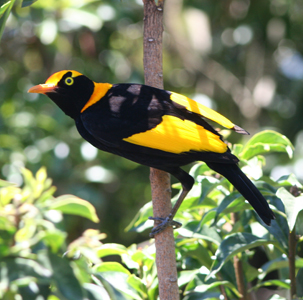
图:fir0002 flagstaffotos at gmail.com Canon 20D + Canon 400mm f… · GFDL 1.2 · Wikimedia Commons
- 学名
- Passeri
- 分类等级
- 亚目
- 英文名
- songbirds
- 上级类群
- 真雀类
- 大类
- 鸟类
- 命名
- 卡尔·林奈,1758 年
下级类群(25)

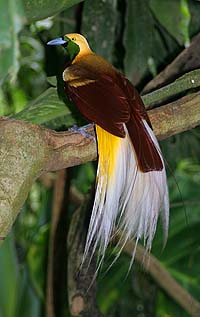
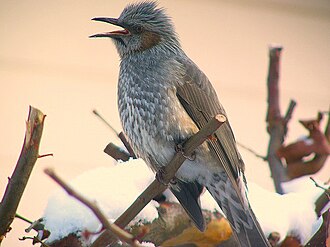
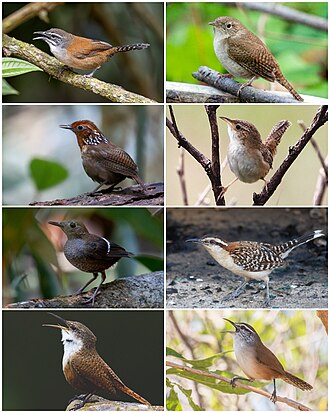
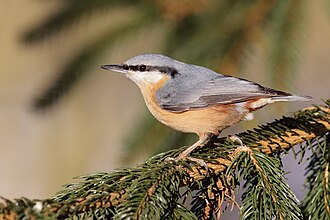
- 百灵科 Alaudidae 科
- 极乐鸟科 Paradisaeidae 科
- 鹎科 Pycnonotidae 科
- 鹪鹩科 Troglodytidae 科
- 䴓科 Sittidae 科
- 园丁鸟科 Ptilonorhynchidae 科
- 啄花鸟科 Dicaeidae 科
- 柳莺科 Phylloscopidae 科
- 短嘴旋木雀科 Climacteridae 科
- 扇尾鹟科 Rhipiduridae 科
- 冠啄果鸟科 Paramythiidae 科
- 刺嘴莺科 Acanthizidae 科
- 长嘴莺科 Macrosphenidae 科
- 夏威夷吸蜜鸟科 Mohoidae 科
- 鹑鸫科 Cinclosomatidae 科
- 乌脸唐纳雀科 Mitrospingidae 科
- 喉䳭科 Modulatricidae 科
- 雀下小目 Passerida 小目
- 刺尾鸫属 Orthonychidae 科
- Prionopidae 科
- 澳䴓属 Neosittidae 科
- 鸦下目 Corvida 下纲
- 斑啄果鸟科 Pardalotidae 科
- 吸蜜鸟总科 Meliphagoidea 总科
- Malaconotoidea 总科
百科正文
鸣禽是现存雀形目的两个主要谱系之一(约 4000 种),另一种是霸鹟亚目(学名:Tyranni,或称叫禽亚目,约有1000种),它们在新热带界最为多样化,在世界许多地方都不存在。霸鹟亚目的物种有一个更简单的鸣管肌肉组织,它们所发出的声音整体上相较鸣禽规律。
除了这两个雀形目下的亚目,新西兰的刺鹩科(学名:Acanthisittidae)是构成雀形目外的第三个分支,其中只有两个物种存活至今。 一些证据表明,鸣禽在 5000 万年前在冈瓦纳大陆经演化机制产生,在该大陆分裂后,鸣禽更自该大陆所分裂而成之地区散布到全球各地。
描述
此演化支中的物种之鸣声基本上是领域性的,因为鸣声向其他鸟类个体显示出鸣叫个体的身份(所属群体及个体特征)及所在地点,同时表示了交配行为方面的意向。
分类及系统树
根据鸟类DNA分类系统,下分鸦小目(Corvida)及雀小目(Passerida),各再分三个总科如下:
- 鸦下目 Corvida
- 琴鸟总科 Menuroidea
- 吸蜜鸟总科 Meliphagoidea
- 鸦总科 Corvoidea
- 雀下目 Passerida
- 鹟总科 Musicicapoidea
- 莺总科 Sylvioidea
- 雀总科 Passeroidea(旧大陆,燕雀科除外)
以下分类树根据Irestedt & Ohlson (2008)。
以上内容摘自维基百科「雀亞目」,按 CC BY-SA 4.0 使用,去掉了参考文献、外部链接等尾部小节,公式改写成了纯文本。全文、配图和出处见原文。
英文维基百科补充中文条目比较短,下面是英文条目「Songbird」的原文
A songbird is a bird belonging to the suborder Passeri of the perching birds. Another name that is sometimes seen as the scientific or vernacular name is Oscines, from Latin oscen, 'songbird'.
Songbirds form one of the two major lineages of extant perching birds (~4,000 species), the other being the Tyranni (~1,000 species), which are most diverse in the Neotropics and absent from many parts of the world. The Tyranni have a simpler syrinx musculature, and while their vocalizations are often just as complex and striking as those of songbirds, they are altogether more mechanical sounding. There is a third perching bird lineage, the Acanthisitti of New Zealand, of which only two species remain alive today. Recent estimates indicate that songbirds originated 50 million years ago. The distribution of their basal lineages suggests that their origin and initial diversification occurred exclusively in the Australian continent; and only about 40 million years ago, oscines started to colonize Eurasia, Africa, and eventually the Americas.
Description
The song in this clade is essentially territorial, because it communicates the identity and whereabouts of an individual to other birds, and also signals sexual intentions. Sexual selection among songbirds is highly based on mimetic vocalization. Female preference has shown in some populations to be based on the extent of a male's song repertoire. The larger a male's repertoire, the more females a male individual attracts. It is not to be confused with bird calls that are used for alarms and contact and are especially important in birds that feed or migrate in flocks. While almost all living birds give calls of some sort, well-developed songs are only given by a few lineages outside the songbirds. And still, not all songbirds proffer a call that is distinctly melodious. Songbirds do, however, possess a highly developed vocal organ, the syrinx, that enables their sonorous activity. This organ, also known as a song box, can be found where the windpipe meets diverging bronchial tubes which lead to the lungs. The organ is a solid, bony structure lined with a film of membranes which air passes through as the songbird calls.
Song repertoire and courtship
Sexual selection can be broken down into several different studies regarding different aspects of a bird's song. As a result, songs can vary even within a single species. Many believe that song repertoire and cognition are directly related. However, a study published in 2013 has shown that cognitive abilities may not all be directly related to the song repertoire of a songbird. Specifically, spatial learning is said to have an inverse relationship with song repertoire. So for example, this would be an individual who does not migrate as far as others in the species but has a better song repertoire. This suggests an evolutionary trade-off between possible alleles. With natural selection choosing traits best fit for reproductive success, there could be a trade-off in either direction depending on which trait would produce a higher fitness at that time period.
Song repertoire can be attributed to male songbirds as it is one of the main mechanisms of courtship. Song repertoires differ from male individual to male individual and species to species.
Taxonomy and systematics
Sibley and Alquist divided songbirds into two "parvorders", Corvida and Passerida (standard taxonomic practice would rank these as infraorders), distributed in Australo-Papua and Eurasia respectively. Subsequent molecular studies, however, show this treatment to be somewhat erroneous. Passerida is a highly diverse lineage, uniting over one-third of all bird species to include (in 2015) 3,885 species). These are divided into three major superfamilies (though not exactly corresponding to the Sibley-Ahlquist arrangement), in addition to some minor lineages.
In contrast, Sibley & Alquist's "Corvida" is a phylogenetic grade and an artefact of the phenetic methodology. The bulk of the "Corvida" make up the large clade Corvides (812 species as of 2015), which is a sister group to the Passerida. The remaining 15 oscine families (343 species in 2015) form a series of basally branching sister groups to the Corvoid - Passerid clade. All of these groups, which form at least six successively branching basal clades, are found exclusively or predominantly in Australasia.
以上节选摘自英文维基百科「Songbird」,按 CC BY-SA 4.0 使用,去掉了参考文献、外部链接等尾部小节,公式改写成了纯文本。篇幅所限,较长的小节只摘了开头一部分,有的小节没有收;全文、配图和出处见原文。