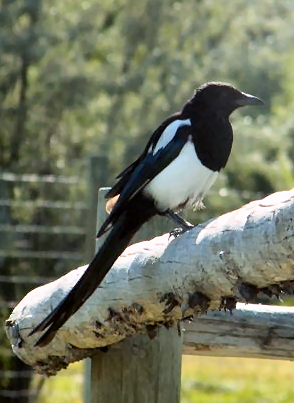
格物

图:Wing-Chi Poon · CC BY-SA 2.5 · Wikimedia Commons
- 学名
- Nucifraga
- 分类等级
- 属
- 上级类群
- 鸦科
- 大类
- 鸟类
- 命名
- 马蒂兰·雅克·布里松,1760 年
- 数据库
- NCBI 分类 · GBIF
下级类群(3)


百科正文
- 属下物种有:
- 北美星鸦 Nucifraga columbiana
- 星鸦 Nucifraga caryocatactes
以上内容摘自维基百科「星鸦属」,按 CC BY-SA 4.0 使用,去掉了参考文献、外部链接等尾部小节,公式改写成了纯文本。全文、配图和出处见原文。
英文维基百科补充中文条目比较短,下面是英文条目「Nutcracker (bird)」的原文
The nutcrackers (Nucifraga) are a genus of four species of passerine bird, in the family Corvidae, related to the jays and crows.
The genus Nucifraga was introduced by the French zoologist Mathurin Jacques Brisson in 1760 with the northern nutcracker (Nucifraga caryocatactes) as the type species. The genus name is a Neo-Latin translation of an old German name Nussbrecher, "nut-breaker".
Extant species
Following reappraisal of species limits in the genus in Asia, the genus is now treated as containing four species: This follows the split of Southern and Kashmir nutcrackers from a former broad view (e.g. Voous, 1977) of all Eurasian nutcrackers as being a single species.
The most vital food resources for these species are the seeds (pine nuts) of various pines (Pinus sp.), principally the cold-climate (far northern or high altitude) species of white pine (Pinus subgenus Strobus) with large seeds: P. albicaulis, P. armandii, P. cembra, P. flexilis, P. koraiensis, P. parviflora, P. peuce, P. pumila, P. sibirica and P. wallichiana, and also the pinyon and lacebark pines. In some regions, where none of these pines occur, the seeds of spruce (Picea sp.) and hazel (Corylus sp.) nuts form a vital part of the diet instead. Their bills are specialised tools for extracting seeds from pine cones.
Surplus seed is always stored for later use, and it is this genus that is responsible for the re-establishment of their favoured pines over large areas either burnt in forest fires or cleared by man. Each individual nutcracker can store as many as 98,000 pine nuts in a single season, and remembering the location of 75% to over 90% of their stash, even when buried in snow more than a metre deep. The memory is also retained for 7–8 months, enabling them to feed their young on seed stored the previous autumn. Nutcrackers will cache seeds as far as 32 kilometres (20 mi) away from parent plants, about eight times further than related dispersers like jays and crows, and are thus important in re-establishing forests and responding to climate change.
Various insects are also taken, including bee and wasp larvae, and birds' eggs and nestlings, and carrion if it is found.
Nesting is always early in this genus, so as to make the best use of pine nuts stored the previous autumn. The nest is usually built high in a conifer. There are normally 2–4 eggs laid and incubated for 18 days. Both parents feed the young, which are usually fledged by about 23 days and stay with their parents for many months, following them to learn food storage techniques.
None of the species are migratory, but they will leave their usual ranges if a cone crop failure causes a food shortage.
以上内容摘自英文维基百科「Nutcracker (bird)」,按 CC BY-SA 4.0 使用,去掉了参考文献、外部链接等尾部小节,公式改写成了纯文本。全文、配图和出处见原文。