格物
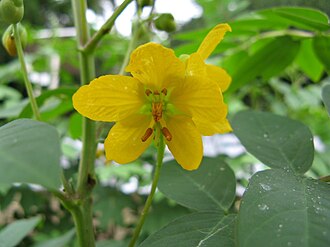
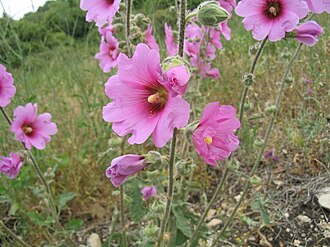
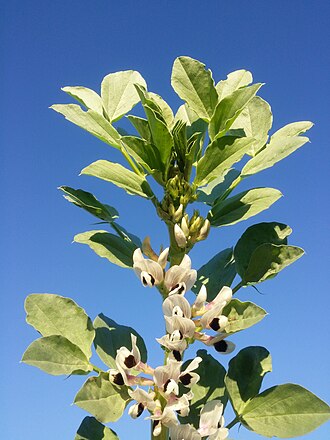
图:Pieria(Uploader and Photographer) · Public domain · Wikimedia Commons
- 学名
- Fabales
- 分类等级
- 目
- 上级类群
- 真双子叶植物
- 大类
- 被子植物
- 命名
- 埃德瓦·布荣海德,1838 年
- 数据库
- NCBI 分类 · GBIF
下级类群(4)
百科正文
分类
在克朗奎斯特分类法中,豆目只包括豆科一科,2009年的被子植物APG III分类法采用的豆目内包括的分类群有四个科,共有754属,约20,055种。其中豆科占了最大的数量。四科如下:
豆科 Fabaceae Lindl. (1836), nom. cons.
远志科 Polygalaceae Hoffmanns. & Link (1809), nom. cons.
皂皮树科 Quillajaceae D.Don (1831)
海人树科 Surianaceae Arn. (1834), nom. cons.
以上内容摘自维基百科「豆目」,按 CC BY-SA 4.0 使用,去掉了参考文献、外部链接等尾部小节,公式改写成了纯文本。全文、配图和出处见原文。
英文维基百科补充中文条目比较短,下面是英文条目「Fabales」的原文
Fabales is an order of flowering plants included in the rosid group of the eudicots in the Angiosperm Phylogeny Group II classification system. In the APG II circumscription, this order includes the families Fabaceae or legumes (including the subfamilies Caesalpinioideae, Mimosoideae, and Faboideae), Quillajaceae, Polygalaceae or milkworts (including the families Diclidantheraceae, Moutabeaceae, and Xanthophyllaceae), and Surianaceae. Under the Cronquist system and some other plant classification systems, the order Fabales contains only the family Fabaceae. In the classification system of Dahlgren the Fabales were in the superorder Fabiflorae (also called Fabanae) with three families corresponding to the subfamilies of Fabaceae in APG II. The other families treated in the Fabales by the APG II classification were placed in separate orders by Cronquist, the Polygalaceae within its own order, the Polygalales, and the Quillajaceae and Surianaceae within the Rosales.
The Fabaceae, as the third-largest plant family in the world, contain most of the diversity of the Fabales, the other families making up a comparatively small portion of the order's diversity. Research in the order is largely focused on the Fabaceae, due in part to its great biological diversity, and to its importance as food plants. The Polygalaceae are fairly well researched among plant families, in part due to the large diversity of the genus Polygala, and other members of the family being food plants for various Lepidoptera (butterfly and moth) species. While taxonomists using molecular phylogenetic techniques find strong support for the order, questions remain about the morphological relationships of the Quillajaceae and Surianaceae to the rest of the order, due in part to limited research on these families.
According to molecular clock calculations, the lineage that led to Fabales split from other plants about 101 million years ago.
Distribution
The Fabales are a cosmopolitan order of plants, except only the subfamily Papilionoideae (Faboideae) of the Fabaceae are well dispersed throughout the northern part of the North Temperate Zone.
以上内容摘自英文维基百科「Fabales」,按 CC BY-SA 4.0 使用,去掉了参考文献、外部链接等尾部小节,公式改写成了纯文本。全文、配图和出处见原文。