格物
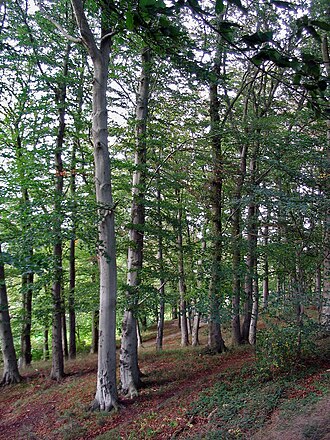
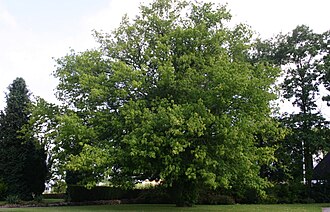
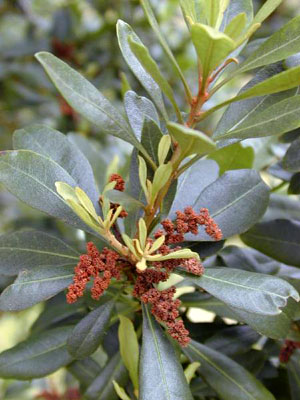
图:Darkone (Fotograf) · CC BY-SA 1.0 · Wikimedia Commons
- 学名
- Fagales
- 分类等级
- 目
- 上级类群
- 真双子叶植物
- 大类
- 被子植物
- 命名
- 阿道夫·恩格勒,1892 年
- 异名
- 胡桃目
- 数据库
- NCBI 分类 · GBIF
下级类群(6)
百科正文
分布
多数种类原产于温带和亚热带地区,但少数种类,主要是桦木科和种类,分布到北极和阿尔卑斯气候带木本植物的特征极限区域。与松柏门类似,演化出许多耐寒树种。
分类
在克朗奎斯特分类法上是双子叶植物纲金缕梅亚纲中的一个目。
在APG 分类法中,壳斗目是真双子叶植物分支中蔷薇类植物分支中豆类植物分支中的一目。
以上内容摘自维基百科「壳斗目」,按 CC BY-SA 4.0 使用,去掉了参考文献、外部链接等尾部小节,公式改写成了纯文本。全文、配图和出处见原文。
英文维基百科补充中文条目比较短,下面是英文条目「Fagales」的原文
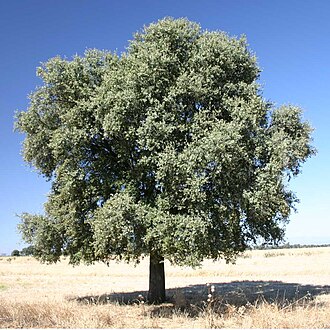
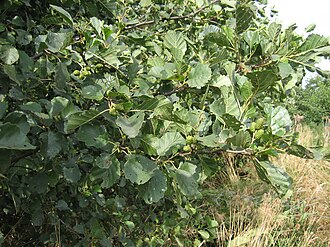
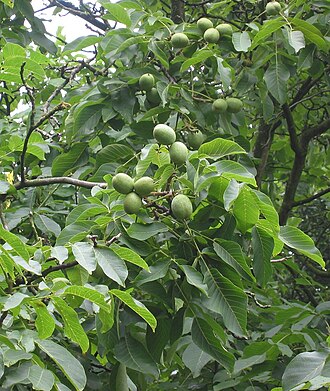
The Fagales are an order of flowering plants in the rosid group of dicotyledons, including some of the best-known trees. Well-known members of Fagales include: beeches, chestnuts, oaks, walnut, pecan, hickory, birches, alders, hazels, hornbeams, she-oaks, and southern beeches. The order name is derived from genus Fagus (beeches).
Systematics
Fagales include the following seven families, according to the APG III system of classification:
Betulaceae – birch family (Alnus, Betula, Carpinus, Corylus, Ostrya, and Ostryopsis)
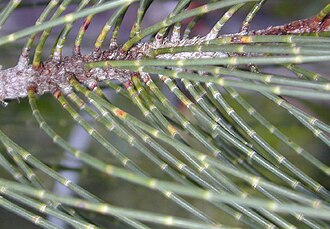
Casuarinaceae – she-oak family (Allocasuarina, Casuarina, Ceuthostoma, and Gymnostoma)
Fagaceae – beech family (Castanea, Castanopsis, Chrysolepis, Fagus, Lithocarpus, Notholithocarpus, Quercus, and Trigonobalanus)
Juglandaceae – walnut family (Alfaroa, Carya, Cyclocarya, Engelhardia, Juglans, Oreomunnea, Platycarya, Pterocarya, and Rhoiptelea)
- Myricaceae – bayberry family (Canacomyrica, Comptonia, and Myrica)
- Nothofagaceae – southern beech family (Nothofagus)
- Ticodendraceae – ticodendron family (Ticodendron)
- Modern molecular phylogenetics suggest the following relationships:
The older Cronquist system only included four families (Betulaceae, Corylaceae, Fagaceae, Ticodendraceae; Corylaceae now being included within Betulaceae); this arrangement is followed by, for example, the World Checklist of selected plant families. The other families were split into three different orders, placed among the Hamamelidae. The Casuarinales comprised the single family Casuarinaceae, the Juglandales comprised the Juglandaceae and Rhoipteleaceae, and the Myricales comprised the remaining forms (plus Balanops). The change is due to studies suggesting the Myricales, so defined, are paraphyletic to the other two groups.
Characteristics
Most Fagales are wind pollinated and are monoecious with unisexual flowers.
Evolutionary history
The oldest member of the order is the flower Soepadmoa cupulata preserved in the late Turonian-Coniacian New Jersey amber, which is a mosaic with characteristics characteristic of both Nothofagus and other Fagales, suggesting that the ancestor of all Fagales was Nothofagus-like.
以上内容摘自英文维基百科「Fagales」,按 CC BY-SA 4.0 使用,去掉了参考文献、外部链接等尾部小节,公式改写成了纯文本。全文、配图和出处见原文。