格物

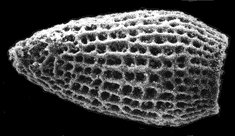
图:Public domainPublic domainfalsefalse This work has been rele… · Public domain · Wikimedia Commons
- 学名
- Heterotrichea
- 分类等级
- 纲
- 上级类群
- AH/SAR 总类群
- 大类
- 其他真核生物
- 命名
- Samuel Friedrich Stein,1859 年
- 中文别名
- 异毛纤毛纲
- 数据库
- NCBI 分类 · GBIF
百科正文
传统分类系统中,异毛类为目级单位,称异毛目,归属旋毛纲。经分子生物学研究,发现其中的核心异毛类(即现异毛目)为独立的演化支,不属旋毛纲,故分出且提升为纲,而余下的非核心类群仍属旋毛纲。目前有些数据库中异毛纲下除异毛目外还有其他目,是旧分类体系的残留,根据最新分类系统,这些目应归属旋毛纲。
以上内容摘自维基百科「异毛纲」,按 CC BY-SA 4.0 使用,去掉了参考文献、外部链接等尾部小节,公式改写成了纯文本。全文、配图和出处见原文。
英文维基百科补充中文条目比较短,下面是英文条目「Heterotrich」的原文
The heterotrichs are a class of ciliates. They typically have a prominent adoral zone of membranelles circling the mouth, used in locomotion and feeding, and shorter cilia on the rest of the body. Many species are highly contractile, and are typically compressed or conical in form. These include some of the largest protozoa, such as Stentor and Spirostomum, as well as many brightly pigmented forms, such as certain Blepharisma.
Etymology
The term heterotrich derives from the ancient Greek ἕτερος (héteros), meaning "another, different", and θρίξ, τριχός (thríx, trikhós), meaning 'hair', because of the contrast between the regular somatic ciliation and that of the oral zone.
Ultrastructure
A number of ultrastructural details characterize the group. The cilia on the body are in dikinetids, in which either the anterior one or both kinetosomes may be ciliated, and which are associated with fibers composed of overlapping postciliary microtubules, called postciliodesmata and found only in this group and the closely related Karyorelictea. A series of oral polykinetids, each containing two or three rows of kinetosomes, support the membranelles. These run from the left to the anterior of the mouth, and often spiral out of the oral cavity. The macronucleus is divided by external microtubules, whereas in the Karyorelictea it forms by differentiation of micronuclei, and in all other ciliates it is divided by internal microtubules.
Pigmentation
Many species are highly pigmented, e.g. the blue Stentor coeruleus. In Blepharisma, the red pigment is associated with light sensitivity. Species of blue-pigmented Eufolliculina form extensive mats in the deep sea that have been called "blue mats".
Systematics
Early classification schemes by Otto Bütschli, Alfred Kahl, Emmanuel Fauré-Fremiet, and John O. Corliss classified the heterotrichs as a subgroup of spirotrichs. They included groups such as Armophorida, Odontostomatida, Licnophorida, Clevelandellida, and Plagiotomida within the Heterotrichea. However, more recent classification systems, which have incorporated information from molecular phylogenetics, place the above groups within the Intramacronucleata, because they are not closely related to the "core" heterotrichs at all. Almost all of the "true" heterotrichs belong to a single order, Heterotrichida.
In the classification scheme of Lynn (2008), the order Heterotrichida contains the following nine families:
- Blepharismidae Jankowski in Small & Lynn, 1985
- Chattonidiidae Villeneuve-Brachon 1940
- Climacostomidae Repak, 1972
- Condylostomatidae Kahl in Doflein & Reichenow, 1929
- Folliculinidae Dons, 1914
- Maristentoridae Miao, Simpson, Fu & Lobban 2005
- Peritromidae Stein, 1867
- Spirostomidae Stein, 1867
- Stentoridae Carus, 1863
- Two new families were established in 2014 on the basis of molecular phylogenies:
- Gruberiidae
- Fabreidae
以上内容摘自英文维基百科「Heterotrich」,按 CC BY-SA 4.0 使用,去掉了参考文献、外部链接等尾部小节,公式改写成了纯文本。全文、配图和出处见原文。