 格物
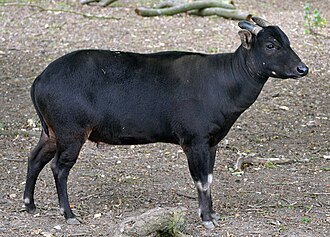
图:The Land · CC BY-SA 3.0 · Wikimedia Commons
- 学名
- Bubalus depressicornis
- 分类等级
- 种
- 上级类群
- 水牛属
- 大类
- 哺乳动物
- 命名
- Charles Hamilton Smith,1827 年
- 保护状况(IUCN)
- 濒危 (保育状况)
- 异名
- Bos bubalus anoa
- 特有于
- 苏拉威西岛
- 数据库
- NCBI 分类 · GBIF · IUCN 红色名录
百科正文
低地水牛是世界上最小的水牛之一,外观上似鹿,一般体长在180cm左右,高约85cm,尾长40cm,体重150kg-300kg。他们毛色黑褐,雄性比雌性颜色更深,幼仔出生时为红褐偏橙色。低地水牛在头上和四肢下部都有白色标记,咽喉处有白色月牙形标记。雌雄皆长有一对墨绿色的直角,角长18-37cm,扁平形,生于前额,角尖向后。
低地水牛2至3岁性成熟,孕期9个多月,1胎1仔,6至9个月时断奶,寿命可达28-30岁。通常单独或成对生活在热带平原的水边,喜欢泡在水里,喜食水生植物的嫩枝叶,白天与傍晚活动,中午休息。他们活动迟缓,不擅长跳跃,即使在奔逃时也是慢吞吞的,他们在穿越矮树林时会把角靠在脖颈上防止被钩住。被敌人紧逼时,低地水牛是非常危险的对手,他们的犄角会像匕首一样发起攻击。
低地水牛生性孤僻,易怒,尤其是在发情期时的年轻水牛,请不要对它们做出有含恶意的行为和动作。这是一种濒临灭绝的动物,已于1996年被列入《濒危野生动植物种国际贸易公约》附录Ⅰ。
以上内容摘自维基百科「低地水牛」,按 CC BY-SA 4.0 使用,去掉了参考文献、外部链接等尾部小节,公式改写成了纯文本。全文、配图和出处见原文。
英文维基百科补充中文条目比较短,下面是英文条目「Lowland anoa」的原文
The lowland anoa (Bubalus depressicornis) is a species of buffalo endemic to Sulawesi. Its closest relative is the mountain anoa, and it is still a debate as to whether the two are the same species or not. It is also related to the water buffalo, and both are classified in the genus Bubalus.
Taxonomy
Skulls of anoa cannot be accurately identified as to species, and there is likely hybridizing and interbreeding between the mountain anoa and lowland anoa in the zoo population. It is questioned as to whether the two species were actually different due to them occurring together in many different areas, as well as some interbreeding. A study of the mtDNA of ten specimens from different localities found a high mitochondrial genetic diversity between individuals identified as one or the other species, indicating support for recognition as two species.
The extinct Bubalus grovesi of southern Sulawesi appears to be a close relative of both anoa species.
Description
The lowland anoa is a small bovid, only slightly larger than the mountain anoa. It stands barely over 90 cm (35 in) at the shoulder and weighs between 150–300 kg (330–660 lb). It is usually solitary, living in lowland forests, browsing on plants and understory. According to Groves (1969), the lowland anoa can be told apart from the other species by being larger, having a triangular horn cross-section, having sparse as opposed to thick and woolly hair, and always having white markings on the face and legs.
Both anoa species are found on the island of Sulawesi and the nearby island of Buton in Indonesia and live in undisturbed rainforest areas. They only live singly or in pairs, rather than in herds like most cattle, except when the cows are about to give birth. Little is known about their life history as well. However, in captive individuals, they have a life expectancy of 20–30 years. Anoa take two to three years before they reach sexual maturity have one calf a year and have very rarely been seen to have more.
Conservation
Both species of anoa have been classified as endangered since the 1960s and the populations continue to decrease. Fewer than 5,000 animals of each species likely remain. Reasons for their decline include hunting for hides, horns, and meat by the local peoples and loss of habitat due to the advancement of settlement. Currently, hunting is the more serious factor in most areas.
The leading cause of their population decline is hunting by local villagers for meat, with habitat loss also being significant. One benefit of the lack of knowledge about the legal status of what they are doing is that villagers are open to communication with researchers on their harvests and hunting practices; where awareness of conservation issues has penetrated, villagers will lie about their activities.
Logging is a large issue because both species prefer core forested habitats that are far away from humans and the influences that come with them. By logging, humans create much more fragmented habitats and, therefore, a decrease in the area where the anoa can breed and live. This habitat fragmentation also alters the natural mixing of populations of the anoa. This may lead to a loss in genetic diversity between the two species and, over time, could also lead to their decline.
以上内容摘自英文维基百科「Lowland anoa」,按 CC BY-SA 4.0 使用,去掉了参考文献、外部链接等尾部小节,公式改写成了纯文本。全文、配图和出处见原文。