 格物
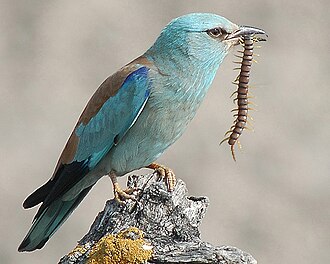
图:Christian Svane · CC BY-SA 2.5 · Wikimedia Commons
- 学名
- Coraciiformes
- 分类等级
- 目
- 上级类群
- 䴕翠鸟类
- 大类
- 鸟类
- 命名
- William Alexander Forbes,1884 年
- 数据库
- NCBI 分类 · GBIF
下级类群(6)

百科正文
这一目在很大程度上是一个旧大陆的目,在新大陆的代表仅限于十几种短尾𫁡科和翠𫁡科,以及一百多种翠鸟科中的一小部分。
分布
佛法僧目的鸟在除两极和部分海洋岛屿外地区都有分布。很多科分布局限于热带、亚热带地区,其它科则分布比较广泛。其中鹃𫁡科仅在马达加斯加岛有分布。
形态特征
佛法僧目的鸟形态多样,体形大小不一,羽色大多艳丽,喙的形状多样。腿短,足的前三趾基部有不同程度的并合,为并趾足。
习性
这一目的鸟生存环境多样,鸣声简单。多数种类以昆虫和小动物为食,有些种类食鱼,还有些种类食果实。繁殖于洞穴中,多是双亲育雏,雏鸟晚成型。
名称由来
此名称来自日本。夜间森林中“but po so”(音似日语“佛法僧”)的鸟鸣声,被认为是其中的一种三宝鸟所发,故名。1935年发现此鸟鸣声实为普通角鸮所发。
分类
- 翠鸟科 Alcedinidae
- 翠鸟亚科 Alcedininae
- 翡翠亚科 Halcyoninae
- 鱼狗亚科 Cerylinae
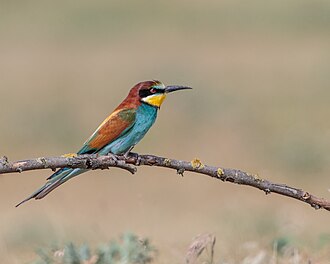
- 蜂虎科 Meropidae
- 地三宝鸟科 Brachypteraciidae
- 短尾𫁡科 Todidae
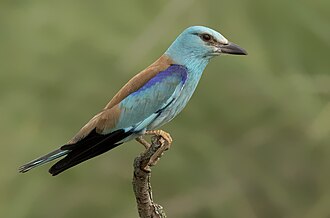
- 佛法僧科 Coraciidae
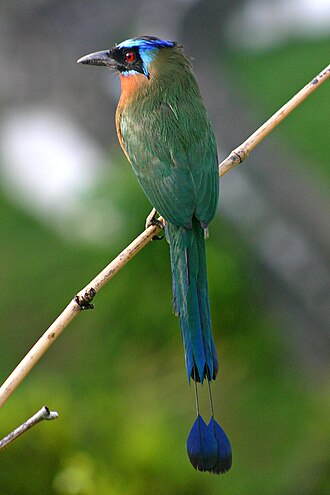
- 翠𫁡科 Momotidae
以前传统的形态学分类将鹃𫁡科(Leptosomatidae)、戴胜科(Upupidae)、林戴胜科(Phoeniculidae)与犀鸟科(Bucerotidae)归类于此,但遗传分子学研究显示,这四科与佛法僧科鸟类的亲缘关系甚至比䴕形目更疏远,于是鹃𫁡科独立列入鹃𫁡目,后三者则列入犀鸟目。
以上内容摘自维基百科「佛法僧目」,按 CC BY-SA 4.0 使用,去掉了参考文献、外部链接等尾部小节,公式改写成了纯文本。全文、配图和出处见原文。
英文维基百科补充中文条目比较短,下面是英文条目「Coraciiformes」的原文
The Coraciiformes are a group of usually colourful birds including the kingfishers, the bee-eaters, the rollers, the motmots, and the todies. They generally have syndactyly, with three forward-pointing toes (and toes 3 & 4 fused at their base), though in many kingfishers one of these is missing.
In the past, Coraciiformes encompassed all anisodactyl (including syndactyl) members of the Cavitaves. This means that the birds currently classified in Leptosomiformes (cuckoo-roller) and Bucerotiformes (hornbills, hoopoes and allies) were formerly classified in Coraciiformes.
This is largely an Old World order, with the representation in the New World limited to the dozen or so species of todies and motmots, and a mere handful of the more than a hundred species of kingfishers.
The name Coraciiformes means "raven-like". Specifically, it comes from the Latin language "corax", meaning "raven" and Latin "forma", meaning "form".
Systematics
The phylogenetic relationships between the six families in the order Coraciiformes is shown below. The cladogram is based on a large study by Richard Prum and colleagues published in 2015. The number of species in each family is taken from the list maintained by Frank Gill, Pamela C. Rasmussen and David Donsker on behalf of the International Ornithological Committee (IOC).
Several extinct coraciiform families are only known from Paleogene fossils. They probably belong to the basal group and are sometimes difficult to assign because they were even closer still to the Piciformes (see also Neanis). In addition, there are some prehistoric genera which are likewise difficult to place into a family. At least the Eocoraciidae are very basal, but the Late Eocene (some 35 mya) Geranopteridae form a superfamily Coracioidea with the extant rollers and ground-rollers already (Mayr & Mourer-Chauviré 2000). A few prehistoric taxa of the present-day families have been described; see the family articles for details.
Taxonomic sequence
Unresolved
Genus Quasisyndactylus (fossil; Middle Eocene of Messel, Germany) - alcediniform, basal?
Genus Cryptornis (fossil; Late Eocene of France) – bucerotid? geranopterid?
Family Primobucconidae (fossil), including Primobucco and Septencoracias
Coraciiformes gen. et spp. indet. PQ 1216, QU 15640 (fossil; Late Eocene of Quercy, France: Mayr & Mourer-Chauviré 2000)
Genus Protornis (fossil: Oligocene of Switzerland) – basal to motmotids and meropids?
A recent study suggest that the following families may belong to a separate order called Bucerotiformes. The results still in dispute though.
- Family Bucorvidae (ground hornbills)
- Family Bucerotidae (hornbills)
- Family Upupidae (hoopoe)
- Family Phoeniculidae (woodhoopoes)
The Leptosomidae (cuckoo roller) probably do not belong here. The trogons are sometimes placed here as a family Trogonidae. The Late Eocene Palaeospizidae are sometimes also placed in the Coraciiformes, as are the Early to Middle Eocene Primobucconidae and the Middle Eocene to Early Oligocene Sylphornithidae. The Primobucconidae at least indeed seem to belong here.
Basal group
Family Eocoraciidae (fossil; Middle Eocene of Messel, Germany)
Family Geranopteridae (fossil; Late Eocene of Quercy, France – Early Miocene of Czech Republic) - includes "Nupharanassa" bohemica
- Family Coraciidae (rollers)
- Family Brachypteraciidae (ground-rollers)
- Family Meropidae (bee-eaters)
- Suborder Alcedines
- Family Todidae (todies)
- Family Momotidae (motmots)
- Family Alcedinidae (kingfishers)
以上内容摘自英文维基百科「Coraciiformes」,按 CC BY-SA 4.0 使用,去掉了参考文献、外部链接等尾部小节,公式改写成了纯文本。全文、配图和出处见原文。