 格物
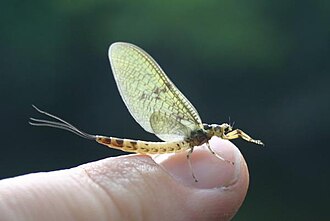
- 学名
- Palaeoptera
- 分类等级
- 总纲
- 上级类群
- 有翅亚纲
- 大类
- 昆虫
- 命名
- Andrey Vasilyevich Martynov,1923 年
- 数据库
- NCBI 分类
下级类群(1)
- 蜻蛉总目 Odonatoptera 总目
百科正文
复杂的翅膀折叠机制和间接飞行肌的特征表明新翅下纲物种在演化树上是一个单系群,但翅膀无法折叠的共同特征并不能说明古翅下纲也是单系群,这种“非新翅下纲的昆虫便是古翅下纲”的分法是废纸篓式的分法,只会导致古翅下纲成为尚待整理的并系群,并不能厘清蜻蛉目和蜉蝣目的亲缘关系。关于蜻蛉目和蜉蝣目的亲缘关系目前有三种假说,其中二种认为古翅下纲为并系群,且蜻蛉目比起蜉蝣目更为接近新翅下纲,由蜻蛉目和新翅下纲共同组成的演化支称为伴翅类(Metapterygota)。
如果把已经灭绝的分类群也加进来的话,古翅下纲这个概念最终将被废弃或是被改变成更准确地反映出昆虫进化关系的定义。在许多情况下,古翅下纲下的三个主要分支通常被视为总目,其中古网翅总目本身同样可能是并系群,为有翅亚纲基群物种的集合。
系统分类学
蜻蜓总目 Odonatoptera
- †目 Eugeroptera
- †目 Kukaloptera
- †目 Argentinoptera
- †目 Geroptera
- †亚目 Eomeganisoptera
- †巨差翅目 Meganisoptera
- †科 Lapeyriidae
- †目 Campylopterodea
- †原差翅目 Protanisoptera
- †目 Triadophlebioptera
- †原束翅目 Protozygoptera
- †目 Tarsophlebioptera
- 蜻蜓目 Odonata
泛蜉蝣总目 Panephemeroptera
†长基蜉蝣目 Coxoplectoptera
蜉蝣目 Ephemeroptera
†古网翅总目 Palaeodictyopteroidea
- †古网翅目 Palaeodictyoptera
- †古蜻蜓目 Archodonata
- †透翅目 Diaphanopterodea
- †疏翅目 Megasecoptera
以上内容摘自维基百科「古翅下纲」,按 CC BY-SA 4.0 使用,去掉了参考文献、外部链接等尾部小节,公式改写成了纯文本。全文、配图和出处见原文。
英文维基百科补充中文条目比较短,下面是英文条目「Palaeoptera」的原文
The name Palaeoptera (from Greek παλαιός (palaiós 'old') + πτερόν (pterón 'wing')) has been traditionally applied to those ancestral groups of winged insects (most of them extinct) that lack the ability to fold the wings back over the abdomen as characterizes the Neoptera. The Diaphanopterodea, which are palaeopteran insects, had independently and uniquely evolved a different wing-folding mechanism.
Current living palaeopteran lineages are Ephemeroptera (mayflies) and Odonata (dragonflies and damselflies).
Physiological similarities
Both mayflies and dragonflies lack any of the smell centers in their brain found in Neoptera. Their midgut epithelium has a dual origin: the anterior and posterior regions develop through cellular differentiation, while the central region originates from yolk cells. In all other winged insects, the midgut epithelium is formed solely by cellular differentiation, whereas in the remaining hexapods, including Apterygota, it develops entirely from yolk cells, which suggests that Palaeoptera represent a transitional stage between these two developmental strategies.
Disputed status
The existence of Palaeoptera as a monophyletic group has been one of the most important open problems in insect phylogeny. The complexities of the wing-folding mechanism, as well as the mechanical operation of the wings in flight (indirect flight muscles), are such that it indicates that Neoptera is a monophyletic lineage. The plesiomorphic absence of wing-folding however does not necessarily mean the Palaeoptera form a natural group. In any case, three main palaeopteran lineages, traditionally treated as superorders, are recognized.
As of 2026, the relationship of the two living Palaeopteran groups – Ephemeroptera (mayflies) and Odonata (dragonflies and damselflies) is not considered fully resolved. Three possibilities exist: Palaeoptera as a monophyletic group, Ephemeroptera being closer to Neoptera than Odonata (the Chiastomyaria hypothesis), or viceversa Odonata being closer to Neoptera than Ephemerophera (the Metapterygota hypothesis). The Palaeodictyopteroidea themselves might be a paraphyletic assemblage of basal Pterygota, too.
A 2026 phylogenomic study, using genomic and transcriptomic data from 101 species, supported the monophyly of living Palaeoptera, reconciling morphological and molecular data. The same study dated their emergence to the Late Devonian.
以上内容摘自英文维基百科「Palaeoptera」,按 CC BY-SA 4.0 使用,去掉了参考文献、外部链接等尾部小节,公式改写成了纯文本。全文、配图和出处见原文。