格物
光生伏特效应1839
photovoltaic effect
electric current generation from light
光生伏打效应,简称为光伏效应,是指受光线或其他电磁辐射照射的半导体或半导体与金属组合的部位间产生电压与电流的现象。光生伏打效应与光电效应密切相关,属内光电效应。在光电效应中,材料吸收了光子的能量产生了一些自由电子溢出表面。而在光生伏打效应中,由于材料内部的不均匀(例如当材料内部形成PN结时)在自建电场的作用下,受到激励的电子和失去电子的空穴向相反方向移动,而形成了正负两极。
摘自维基百科「光生伏打效应」,CC BY-SA 4.0
- 发现 / 发明时间
- 1839 年
- 发现者 / 提出者
- 安托万·塞萨尔·贝克勒尔
- 学科
- 物理学
- 上级概念
- 物理现象
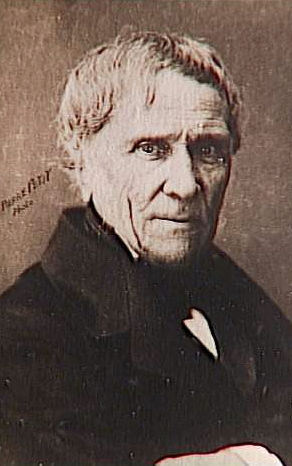
相关科学家
百科正文
光生伏打效应最早于1839年由法国物理学家亚历山大·爱德蒙·贝克勒尔发现。
在实际应用中的光能通常来自太阳能,这样的器件即是一般所指的太阳能电池。
以上内容摘自维基百科「光生伏打效应」,按 CC BY-SA 4.0 使用,去掉了参考文献、外部链接等尾部小节,公式改写成了纯文本。全文、配图和出处见原文。
英文维基百科补充中文条目比较短,下面是英文条目「Photovoltaic effect」的原文
The photovoltaic effect is a physical phenomenon in which a semiconductor material generates electric energy upon being exposed to light.
The photovoltaic effect is closely related to the photoelectric effect. For both phenomena, light is absorbed, causing excitation of an electron or other charge carrier to a higher-energy state. The main distinction is that the term photoelectric effect is usually used when the electron is ejected out of the material (usually into a vacuum), and photovoltaic effect is used when the excited charge carrier is still contained within the material. In either case, an electric potential (or voltage) is produced by the separation of charges, and the light has to have a sufficient energy to overcome the potential barrier for excitation. The physical essence of the difference is usually that photoelectric emission separates the charges by ballistic conduction and photovoltaic emission separates them by diffusion, but some "hot carrier" photovoltaic devices concepts blur this distinction.
History
The first demonstration of the photovoltaic effect, by Edmond Becquerel in 1839, used an electrochemical cell. He explained his discovery in Comptes rendus de l'Académie des sciences, "the production of an electric current when two plates of platinum or gold immersed in an acid, neutral, or alkaline solution are exposed in an uneven way to solar radiation."
The first solar cell, consisting of a layer of selenium covered with a thin film of gold, was experimented by Charles Fritts in 1884, but it had a very poor efficiency. However, the most familiar form of the photovoltaic effect uses solid-state devices, mainly in photodiodes. When sunlight or other sufficiently energetic light is incident upon the photodiode, the electrons present in the valence band absorb energy and, being excited, jump to the conduction band and become free. These excited electrons diffuse, and some reach the rectifying junction (usually a diode p–n junction) where they are accelerated into the n-type semiconductor material by the built-in potential (Galvani potential). This generates an electromotive force and an electric current, and thus some of the light energy is converted into electric energy.
Physics
In addition to the direct photovoltaic excitation of free electrons, an electric current can also arise through the Seebeck effect. When a conductive or semiconductive material is heated by absorption of electromagnetic radiation, the heating can lead to increased temperature gradients in the semiconductor material or differentials between materials. These thermal differences in turn may generate a voltage because the electron energy levels are shifted differently in different areas, creating a potential difference between those areas which in turn create an electric current. The relative contributions of the photovoltaic effect versus the Seebeck effect depend on many characteristics of the constituent materials.
All above effects generate direct current, the first demonstration of the alternating current photovoltaic effect (AC PV) was done by Dr. Haiyang Zou and Prof. Zhong Lin Wang at the Georgia Institute of Technology in 2017. The AC PV effect is the generation of alternating current (AC) in the nonequilibrium states when the light periodically shines at the junction or interface of material.
Solar cells
In most photovoltaic applications, the radiation source is sunlight, and the devices are called solar cells. In the case of a semiconductor p–n (diode) junction solar cell, illuminating the material creates an electric current because excited electrons and the remaining holes are swept in different directions by the built-in electric field of the depletion region.
The AC PV is operated at the non-equilibrium conditions. The first study was based on a p-Si/TiO2 nanofilm. It is found that except for the DC output generated by the conventional PV effect based on a p–n junction, AC current is also produced when a flashing light is illuminated at the interface. The AC PV effect does not follow Ohm's law, being based on the capacitive model that the current strongly depends on the frequency of the chopper, but voltage is independent of the frequency. The peak current of AC at high switching frequency can be much higher than that from DC. The magnitude of the output is also associated with the light absorption of materials.
以上节选摘自英文维基百科「Photovoltaic effect」,按 CC BY-SA 4.0 使用,去掉了参考文献、外部链接等尾部小节,公式改写成了纯文本。篇幅所限,较长的小节只摘了开头一部分,有的小节没有收;全文、配图和出处见原文。