格物

图:Simon Ritter von Stampfer · Public domain · Wikimedia Commons
- 发现 / 发明时间
- 1832 年
- 发现者 / 提出者
- 约瑟夫·普拉托
- 学科
- 物理学
- 上级概念
- optical toy
相关科学家
百科正文
费纳奇镜变体之一是在一个手柄上垂直安装的盘片。盘片上围绕中心绘制了一系列的图片,是动画的对应的帧,图片的周围是一系列狭缝。使用者旋转盘片,通过移动的狭缝看盘片在镜子里的反射。这样,使用者看到图片接连出现,由于视觉暂留,得到连续播放效果。另一种变体有两个盘片,一张有狭缝,另一张是图片,这样就不需要镜子的反射就可以看到动画。和西洋镜以及之后的发明不同,费纳奇镜一次只能由一个人使用。费纳奇镜只存在了两年,就被别的技术取代。
以上内容摘自维基百科「費納奇鏡」,按 CC BY-SA 4.0 使用,去掉了参考文献、外部链接等尾部小节,公式改写成了纯文本。全文、配图和出处见原文。
英文维基百科补充中文条目比较短,下面是英文条目「Phenakistoscope」的原文
The phenakistoscope (also known by the spellings phénakisticope or phenakistiscope) was the first widespread animation device that created a fluid illusion of motion. Dubbed Fantascope and Stroboscopische Scheiben ('stroboscopic discs') by its inventors, it has been known under many other names until the French product name Phénakisticope became common (along with alternative spellings). The phenakistiscope is regarded as one of the first forms of moving media entertainment that paved the way for the future motion picture and film industry. Similar to a GIF animation, it displays a short continuous loop.
Etymology and spelling
When the product name 'phénakisticope' was introduced in the French newspaper Le Figaro on 27 June 1833, it was explained to be from the Greek words phenakisticos for 'to deceive' and ops for 'eye' (φενακιστικός, or rather φενακίζειν phenakizein, and ὄψ or ὤψ), so it was presumably intended to mean 'optical deception' or 'optical illusion'.
Technology
The phenakistoscope is typically a cardboard disc with an array of sequential pictures around its center and evenly spaced rectangular apertures around the rim. To view the pictures in motion, the disc is placed on a handle and spun in front of a mirror while the user looks through the slits from the back of the disc.
Invention
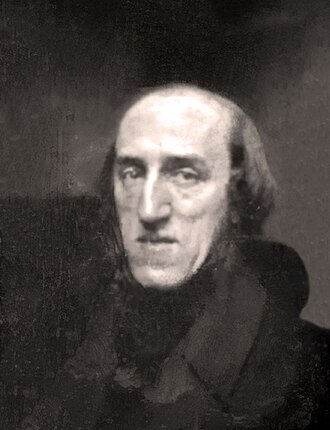
The phenakisticope was invented almost simultaneously around December 1832 by the Belgian physicist Joseph Plateau and the Austrian professor of practical geometry Simon Stampfer.
As a university student Plateau noticed in some early experiments that when looking from a small distance at two concentric cogwheels that turned fast in opposite directions, it produced the optical illusion of a motionless wheel.
Commercial production
According to Mathias Trentsensky, of art dealer and publishing company Trentsensky & Vieweg, Stampfer had prepared six double-sided discs as early as February 1833 and had repeatedly demonstrated these to many friends. In April 1833 Trentsensky applied for an Austrian patent (k.k. Privilegium) together with Stampfer, which was granted on 7 May 1833.
Variations
Many versions of the phénakisticope used smaller illustrated uncut cardboard discs that had to be placed on a larger slotted disc. A common variant had the illustrated disc on one end of a brass axis and the slotted disc on the other end; this was slightly more unwieldy but needed no mirror and was claimed to produce clearer images.
Projection
A plan for a phénakisticope projector with a transparent disc was published by Englishman T.W. Naylor in 1843 in the Mechanics' Magazine – Volume 38. His letter was illustrated with a detailed side view of the device. Naylor suggested tracing the pictures of available phenakisticopes onto glass with transparent paint and painting the rest black. Nothing else is known of Naylor or his machine.
Scientific use
The phénakisticope was invented through scientific research into optical illusions and published as such, but soon the device was marketed very successfully as an entertaining novelty toy. After the novelty wore off, it was mostly seen as a toy for children. Nonetheless, some scientists still regard it as a useful demonstration tool.
The Czech physiologist Jan Purkyně used his version, called Phorolyt, in lectures since 1837.
20th and 21st centuries
The Joseph Plateau Award, a trophy resembling a phénakisticope, was a Belgian movie award given yearly between 1985 and 2006.
Several vinyl music releases have phénakistiscope-like animations on the labels or on the vinyl itself. In 1956 Red Raven Movie Records started a series of 78 RPM 8" singles with animations to be viewed with a device with small mirrors similar to a praxinoscope to be placed on the center of the disc.
Fantascope invented by Prof. Plateau published by Ackermann & Co, London
The original handmade designs by Joseph Plateau have been preserved in the Ghent University Museum. The first series of 6 discs was initially published as Phantasmacope designed by Prof. Plateau, but the product name was later changed to Fantascope.
以上节选摘自英文维基百科「Phenakistoscope」,按 CC BY-SA 4.0 使用,去掉了参考文献、外部链接等尾部小节,公式改写成了纯文本。篇幅所限,较长的小节只摘了开头一部分,有的小节没有收;全文、配图和出处见原文。