格物
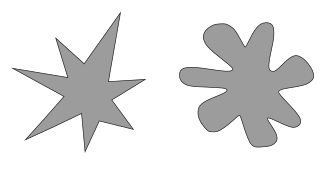
图:Monochrome version 1 June 2007 by Bendž Vectorized with Inks… · CC BY-SA 3.0 · Wikimedia Commons
- 发现 / 发明时间
- 1929 年
- 发现者 / 提出者
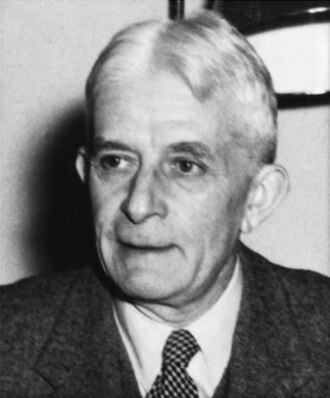
- 沃尔夫冈·苛勒
- 学科
- 生物学
相关科学家
百科正文
此效应首先由德国心理学家沃尔夫冈·苛勒于1929年发现。当时他在特内里费岛(主要语言是西班牙语)做了类似的实验,使用了类似的形状并询问何为 "takete",何为 "baluba" (1947年版本为“maluma”)。实验结果显示偏好将作为圆滑形状作为baluba,尖角形状作为takete。
2001年,维莱亚努尔·拉马钱德兰和爱德华·哈伯德(Edward Hubbard)对美国大学生和说泰米尔语的印度人重复了苛勒的实验。这次可选择的单词改为“kiki”和“bouba”。两组的实验结果相似,95%至98%的人选择圆滑图形为“bouba”,尖角图形为“kiki”。达芙妮·毛雷尔等人的研究显示2.5岁的儿童(尚未达到识字年龄)也可发生此效应。
当使用已知的名字与图片配对时,这个效应也会出现。这意味着即使受测者对语言刺激有一定的熟悉,这个现象也不会消失。一项研究显示人们会将“Molly”之类的名字与圆滑的形状配对,将“Kate”之类的名字与尖角的形状配对。另外人们也会将不同的人格特质与两组名字联系起来(比如将随和的性格联系到更为“圆滑”的名字,将果决的性格联系到更为“尖锐”的名字)。这暗示了一些抽象概念可能对这个效应的影响。
以上内容摘自维基百科「波巴/奇奇效应」,按 CC BY-SA 4.0 使用,去掉了参考文献、外部链接等尾部小节,公式改写成了纯文本。全文、配图和出处见原文。
英文维基百科补充中文条目比较短,下面是英文条目「Bouba/kiki effect」的原文
The bouba–kiki effect ( BOO-bə KEE-kee), or takete–maluma phenomenon, is a non-arbitrary mental association between certain speech sounds and certain visual shapes. The most typical research finding is that people, when presented with nonsense words, tend to associate certain "soft" sounds (like bouba and maluma) with a rounded shape and other "hard" sounds (like kiki and takete) with a spiky shape. Its discovery dates back to the 1920s, when psychologists Uznadze and Köhler documented experimental participants as connecting nonsense words to shapes in consistent ways.
There is a strong general tendency towards the effect worldwide. It has been robustly confirmed across a majority of cultures and languages in which it has been researched; examples include English-speaking American university students, Tamil speakers in India, speakers of certain languages with no writing system, young children, infants, and (though to a much lesser degree) the congenitally blind. It has also been shown to occur with familiar names. The effect has also been shown to extend to chickens and dogs. The bouba–kiki effect is one form of sound symbolism.
Research
Discovery
This effect was first observed by Georgian psychologist Dimitri Uznadze in a 1924 paper. He conducted an experiment with 10 participants who were given a list with nonsense words, shown six drawings for five seconds each, then instructed to pick a name for the drawing from the list of given words. He describes the different "strategies" participants developed to match words to drawings and quotes their reasoning. He also describes situations where participants described very specific forms that they associated with a nonsense word, without reference to the shown drawings. He develops a theory of four factors that influence the way names for objects are decided.
In total, there were 42 words. For one particular drawing, 45% picked the same word. For three others, the percentages were 40%. Uznadze points out that this is significantly more overlap than one could expect, given the high number of possible words. He speculates that there must therefore be certain regularities "which the human soul follows in the process of name-giving".
German American psychologist Wolfgang Köhler referred to Uznadze's experiment in his 1929 book Gestalt Psychology which showed two forms and asked readers which shape was called "takete" and which was called "maluma". Although he does not say so outright, Köhler implies that there is a strong preference to pair the jagged shape with "takete" and the rounded shape with "maluma".
In 2001, V. S. Ramachandran and Edward Hubbard at the University of California, San Diego, presented the words "kiki" and "bouba" along with new figures as alternatives to the stimuli used by Köhler. They stated that when asked to guess, 95% of people will select the curvy shape as "bouba" and the jagged one as "kiki".
Extension to other contexts
Cross-language contexts
There is a strong general tendency towards the effect worldwide. It has been robustly confirmed across a majority of cultures and languages in which it has been researched. A 2022 study by Cwiek et al, that found evidence supporting the idea that the bouba/kiki effect is a cross-cultural phenomenon. 917 participants speaking 25 different languages, with 10 different writing systems, maintain a higher than chance consistency in bouba/kiki identification, intuitively associating the "bouba" with a rounded shape and "kiki" with a sharp, pointed shape, regardless of their native language, though the effect is stronger in some languages than others. It also supports that Roman orthography is a factor that could enhance the bouba/kiki effect. However, this biasing effect of orthography is rather weak since the participants that speak languages with Roman orthography are only marginally more likely to show the bouba/kiki effect.
Cross-age contexts
Daphne Maurer and colleagues showed that even children as young as 21⁄2 years old may show this preference.
Work by Özge Öztürk and colleagues in 2013 showed that even 4-month-old infants have the same sound–shape mapping biases as adults and toddlers. Infants are able to differentiate between congruent trials (pairing an angular shape with "kiki" or a curvy shape with "bubu") and incongruent trials (pairing a curvy shape with "kiki" or an angular shape with "bubu"). Infants looked longer at incongruent pairings than at congruent pairings.
以上节选摘自英文维基百科「Bouba/kiki effect」,按 CC BY-SA 4.0 使用,去掉了参考文献、外部链接等尾部小节,公式改写成了纯文本。篇幅所限,较长的小节只摘了开头一部分,有的小节没有收;全文、配图和出处见原文。