格物

图:Joe Haupt from USA · CC BY 2.0 · Wikimedia Commons
- 发现 / 发明时间
- 1889 年
- 发现者 / 提出者
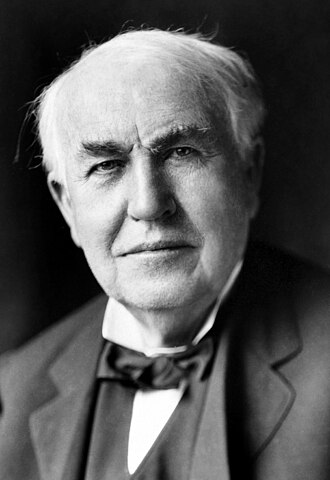
- 托马斯·爱迪生、威廉·肯尼迪·迪克森、Charles Moisson
- 学科
- 物理学、工程与发明
- 上级概念
- camera and optics product、光学仪器
相关科学家
百科正文
自19世纪晚期发明以来,电影摄影机一度非常流行用于私人摄影,直到被它的后继者摄录影机所取代。如今,许多电影摄影机摇身一变成为收藏品,也有爱好者组成规模不大但组织完善的小社团,持续经营电影摄影机这项嗜好,即使多数相关零件和设备早已停产。
以上内容摘自维基百科「電影攝影機」,按 CC BY-SA 4.0 使用,去掉了参考文献、外部链接等尾部小节,公式改写成了纯文本。全文、配图和出处见原文。
英文维基百科补充中文条目比较短,下面是英文条目「Movie camera」的原文
A movie camera (also known as a motion picture camera, or cine-camera) is a type of photographic camera that rapidly takes a sequence of photographs, either onto film stock or an image sensor, in order to produce a moving image to display on a screen. In contrast to the still camera, which captures a single image at a time, the movie camera takes a series of images by way of an intermittent mechanism or by electronic means; each image is a frame of film or video. The frames are projected through a movie projector or a video projector at a specific frame rate to show the moving picture. The historical answer to the eye and brain's ability to perceive separate frames as continuous and smooth moving images was persistence of vision, but phi phenomenon and beta movement are explanations developed in the 20th century. Higher frame rates allow for the perception of smoother motion, while lower frame rates will produce flicker or strobe effects.
History
Screen practice itself goes back to the 1600s, when images were first projected by various means, including the magic lantern. The development of this screen practice went through several technological stages, including the invention of the magic lantern, the projection of photographic images, the motion picture, and eventually the synchronization of sound and film. The earliest research into image projection was Athanasius Kircher's 1645 work Ars Magna Lucis et Umbrae, which described images being reflected onto a wall in a darkened room. Kircher described and illustrated his designs, intending to demystify the technology and effect for viewers of such apparatus. He emphasized that the combination of narration and images granted the ability to express narrative.
The development of the motion picture camera comes from this tradition of technological development, and the desire to create more life-like images to project on screen for audiences. Magic lantern shows would have slides that moved, being manipulated by the projectionist.
Technical details
Camera mechanics
The lens
The basic form of a camera is a box with a hole to allow in light, a portable camera obscura. These smaller portable versions are pinhole cameras. Camera obscuras were used to view solar eclipses, and eventually included converging lenses. Overtime the lenses were moved out of the camera body into external attachments with various glass elements contained in a barrel, with a lens mount on one end to attach to the camera body. Internal to the lens is a series of blades called the aperture that close in a circular fashion, changing the amount of light that goes through the lens and enters the camera body. Changing the aperture changes the depth of field, which allows for selective focus in the image. Apertures are typically measured in f-stops. By manipulating the placement of the internal glass elements, the area of the image that is in focus can be changed.
The shutter
Internal to the camera's body is the shutter, which is designed to momentarily block light from entering the camera body and striking the imaging medium (which may be photographic film or a digital sensor).
Amateur and home movie cameras
Various small gauges of motion picture film formats have been produced since the 1910s, not only intending to bring the tools for filmmaking to an amateur and mass audience, but also film exhibition and film projection. Formats like 8mm, 9.5 mm, 16 mm, and Super 8 were among the small gauges introduced. All of these formats had their own cameras and projector systems, but remained expensive and accessible largely only to the middle class and upper class. 8mm and Super 8, having a much lower financial barrier of entry, created the environment for the creation of home movies to arise as a common family activity. While some 8mm cameras would have a singular fixed lens, higher end cameras (like the Kodak Brownie Turret Movie Camera) would have a turret lens, which allowed two or more lenses to rotate on the front of the camera.
In 1921, an extremely compact 35mm movie camera Kinamo was designed by Emanuel Goldberg for amateur and semi-professional filmmakers. At this time cameras were not motorized but required hand-cranking. This changed when a spring motor attachment was created for the Kinamo in 1923 to allow flexible handheld filming.
以上节选摘自英文维基百科「Movie camera」,按 CC BY-SA 4.0 使用,去掉了参考文献、外部链接等尾部小节,公式改写成了纯文本。篇幅所限,较长的小节只摘了开头一部分,有的小节没有收;全文、配图和出处见原文。