格物
费马-卡塔兰猜想
Fermat–Catalan conjecture
generalization of Fermat's Last Theorem and Catalan's conjecture: a^m+b^n=c^k has only finitely many positive-integer solutions where a, b, c are coprime and m, n, k satisfy 1/m+1/n+1/k<1
在数论上,费马-卡塔兰猜想是费马大定理与卡塔兰猜想的推广,而这猜想认为,以下的等式
摘自维基百科「費馬-卡塔蘭猜想」,CC BY-SA 4.0
- 类型
- 猜想
- 命名来源
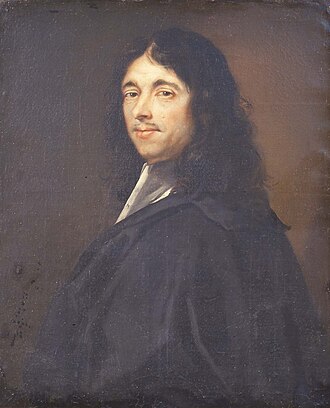
- 皮埃尔·德·费马
- 学科
- 数学
相关科学家
百科正文
仅有有限多个 a,b,c 彼此互质,且 m,n,k 满足下列条件的解:
这个给出 m,n,k 条件的不等式是猜想的必要成分,而这是因为没有这不等式的话,这结果就会有无限多的解,像例如在 k=1 的状况下, a^(m)+bⁿ=c 显然有无限多的解;而在 m=n=k=2 的状况下该等式就是勾股定理,而目前已知有无限多个勾股数存在。
已知解
截至2015年为止,等式(1)已知有十个满足不等式(2)的解,而这些解如下: 1^(m)+2³=3² (在 m>6 的状况下这满足不等式(2)) 2⁵+7²=3⁴
- 7³+13²=2⁹
- 2⁷+17³=71²
- 3⁵+11⁴=122²
- 33⁸+1549034²=15613³
- 1414 1414³+2213459²=65⁷
- 9262 9262³+15312283²=113⁷
- 17⁷+76271³=21063928²
- 43⁸+96222³=30042907²
根据在普雷达·米哈伊列斯库于2002年证明的卡塔兰猜想,这些等式中的第一个,也就是 1^(m)+2³=3²,是唯一满足 a,b,c 其中一个是1的解。尽管因为 m 可以是大于6的任意数之故,因此 1^(m)+2³=3² 等同于有无限多解,这些解只对 (a^(m),bⁿ,c^(k)) 这三元数给出一组解。
部分结果
根据利用了法尔廷斯定理的达尔蒙-关维定理(Darmon–Granville theorem),对于任意特定不等式(2)的三元数组 (m,n,k),等式(1)仅有有限解;然而完整的费马-卡塔兰猜想强于此,而这是因为完整的猜想允许 m,n,k 这三个指数项是任意数之故。
abc猜想可导出费马-卡塔兰猜想。
亦可见比尔猜想一文的内容以得知已证实不可能的指数组合;而比尔猜想为真,当且仅当所有费马-卡塔兰猜想的解都有 m=2、 n=2 或 k=2。
以上内容摘自维基百科「費馬-卡塔蘭猜想」,按 CC BY-SA 4.0 使用,去掉了参考文献、外部链接等尾部小节,公式改写成了纯文本。全文、配图和出处见原文。
英文维基百科补充中文条目比较短,下面是英文条目「Fermat–Catalan conjecture」的原文
In number theory, the Fermat–Catalan conjecture is a generalization of Fermat's Last Theorem and of Catalan's conjecture. The conjecture states that the equation
has only finitely many solutions (a, b, c, m, n, k) with distinct triplets of values (am, bn, ck) where a, b, c are positive coprime integers and m, n, k are positive integers satisfying
The inequality on m, n, and k is a necessary part of the conjecture. Without the inequality there would be infinitely many solutions, for instance with k = 1 (for any a, b, m, and n and with c = am + bn), with m=n=k=2 (for the infinitely many Pythagorean triples), and e.g. 7⁵+393³=7792².
Known solutions
As of 2024, the following ten solutions to equation (1) which meet the criteria of equation (2) are known: 1^(m)+2³=3² (for m>6 to satisfy Eq. 2) 2⁵+7²=3⁴
- 7³+13²=2⁹
- 2⁷+17³=71²
- 3⁵+11⁴=122²
- 33⁸+1549034²=15613³
- 1414 1414³+2213459²=65⁷
- 9262 9262³+15312283²=113⁷
- 17⁷+76271³=21063928²
- 43⁸+96222³=30042907²
The first of these (1m + 23 = 32) is the only solution where one of a, b or c is 1, according to the Catalan conjecture, proven in 2002 by Preda Mihăilescu. While this case leads to infinitely many solutions of (1) (since one can pick any m for m > 6), these solutions only give a single triplet of values (am, bn, ck).
Partial results
It is known by the Darmon–Granville theorem, which uses Faltings' theorem, that for any fixed choice of positive integers m, n and k satisfying (2), only finitely many coprime triples (a, b, c) solving (1) exist. However, the full Fermat–Catalan conjecture is stronger as it allows for the exponents m, n and k to vary.
The abc conjecture implies the Fermat–Catalan conjecture.
For a list of results for impossible combinations of exponents, see Beal conjecture#Partial results. Beal's conjecture is true if and only if all Fermat–Catalan solutions have m = 2, n = 2, or k = 2.
- Poonen et al. list exponent triples where the solutions have been determined:
- {2,3,7},
- {2,3,8},
- {2,3,9},
- {2,2q,3} for prime 7<q<1000 with q≠31,
- {2,4,5},
- {2,4,6},
- (2,4,7),
- (2,4,q) for prime q≥211,
- (2,n,4),
- {2,n,n},
- {3,3,4},
- {3,3,5},
- {3,3,q} for 17≤q≤10000,
- {3,n,n},
- {2n,2n,5},
{n,n,n}.
For each of these exponent triples, if there is some solution at all, it is listed among those in section § Known solutions.
Sikora partially used the cluster computers at the Center for Computational Research at University at Buffalo to test all tuples (a,b,c,m,n,k) such that min(m,n,k) ≤ 113 and am, bn, ck < Mmin(m,n,k), where M2 = 271, M3 = 280, M4 = 2100, and M5 =... = M113 = 2113. He did not find any other solution than those above.
以上内容摘自英文维基百科「Fermat–Catalan conjecture」,按 CC BY-SA 4.0 使用,去掉了参考文献、外部链接等尾部小节,公式改写成了纯文本。全文、配图和出处见原文。