格物

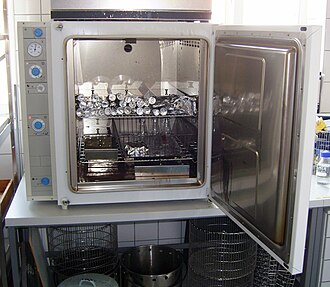
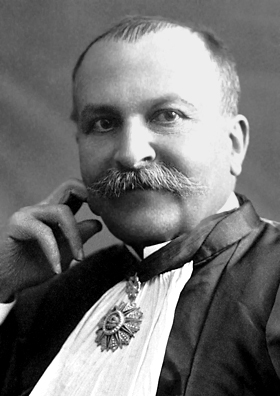
图:VamosSandor · CC BY-SA 4.0 · Wikimedia Commons
- 类型
- 人名反应、化学过程、甲烷化、放热反应
- 发现 / 发明时间
- 1897 年
- 发现者 / 提出者
- 保罗·萨巴捷、让-巴蒂斯特·森登斯
- 命名来源
- 保罗·萨巴捷
- 学科
- 化学
相关科学家
百科正文
英文维基百科补充中文条目比较短,下面是英文条目「Sabatier reaction」的原文
The Sabatier reaction or Sabatier process produces methane and water from a reaction of hydrogen with carbon dioxide at elevated temperatures (optimally 300–400 °C) and pressures (perhaps 3 megapascals; 440 psi; 30 bar) in the presence of a nickel catalyst. It was discovered by the French chemists Paul Sabatier and Jean-Baptiste Senderens in 1897. Optionally, ruthenium on alumina (aluminium oxide) makes a more efficient catalyst. It is described by the following exothermic reaction: (公式略) ∆H = −165.0 kJ/mol
There is disagreement on whether the CO2 methanation occurs by first associatively adsorbing an adatom hydrogen and forming oxygen intermediates before hydrogenation or dissociating and forming a carbonyl before being hydrogenated. (公式略) ∆H = −206 kJ/mol
CO methanation is believed to occur through a dissociative mechanism where the carbon oxygen bond is broken before hydrogenation with an associative mechanism only being observed at high H2 concentrations.
Methanation reactions over different metal catalysts including Ni, Ru and Rh have been widely investigated for the production of CH4 from syngas and other power to gas initiatives. Nickel is the most widely used catalyst owing to its high selectivity and low cost.
Applications
Creation of synthetic natural gas
Methanation is an important step in the creation of synthetic or substitute natural gas (SNG). Coal or wood undergo gasification which creates a producer gas that must undergo methaneation in order to produce a usable gas that just needs to undergo a final purification step.
The first commercial synthetic gas plant opened in 1984 and is the Great Plains Synfuels plant in Beulah, North Dakota. As of 2016, it is still operational and produces 1500 MW worth of SNG using coal as the carbon source. In the years since its opening, other commercial facilities have been opened using other carbon sources such as wood chips.
In France, AFUL Chantrerie, located in Nantes, in November 2017 opened the demonstrator MINERVE. The plant feeds a compressed natural gas station and sometimes injects methane into a natural gas fired boiler.
The Sabatier reaction has been used in renewable-energy-dominated energy systems to use the excess electricity generated by wind, solar photovoltaic, hydro, marine current, etc. to make methane from hydrogen sourced from water electrolysis.
In contrast to a direct usage of hydrogen for transport or energy storage applications, the methane can be injected into the existing gas network. The methane can be used on-demand to generate electricity overcoming low points of renewable energy production. The process is electrolysis of water by electricity to create hydrogen (which can partly be used directly in fuel cells) and the addition of carbon dioxide CO2 (Sabatier reaction) to create methane. The CO2 can be extracted from the air or fossil fuel waste gases by the amine process.
A 6 MW power-to-gas plant went into production in Germany in 2013, and powered a fleet of 1,500 Audi A3.
Ammonia synthesis
In ammonia production CO and CO2 are considered poisons to most commonly used catalysts. Methanation catalysts are added after several hydrogen producing steps to prevent carbon oxide buildup in the ammonia synthesis loop as methane does not have similar adverse effects on ammonia synthesis rates.
International Space Station life support
Oxygen generators on board the International Space Station produce oxygen from water using electrolysis; the hydrogen produced was previously discarded into space. As astronauts consume oxygen, carbon dioxide is produced, which must then be removed from the air and discarded as well. This approach required copious amounts of water to be regularly transported to the space station for oxygen generation in addition to that used for human consumption, hygiene, and other uses—a luxury that will not be available to future long-duration missions beyond low Earth orbit.
NASA is using the Sabatier reaction to recover water from exhaled carbon dioxide and the hydrogen previously discarded from electrolysis on the International Space Station and possibly for future missions. The other resulting chemical, methane, is released into space. As half of the input hydrogen becomes wasted as methane, additional hydrogen is supplied from Earth to make up the difference. However, this creates a nearly-closed cycle between water, oxygen, and carbon dioxide which only requires a relatively modest amount of imported hydrogen to maintain. (公式略)
以上节选摘自英文维基百科「Sabatier reaction」,按 CC BY-SA 4.0 使用,去掉了参考文献、外部链接等尾部小节,公式改写成了纯文本。篇幅所限,较长的小节只摘了开头一部分,有的小节没有收;全文、配图和出处见原文。