格物
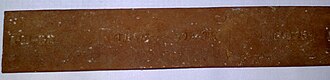
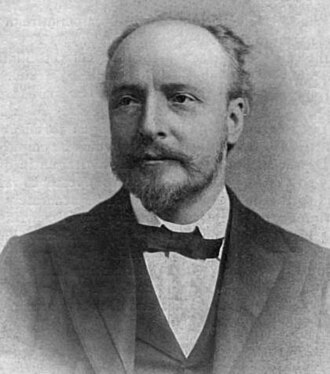
图:Matthewoutram · CC BY-SA 3.0 · Wikimedia Commons
- 类型
- 爆炸物
- 发现 / 发明时间
- 1889 年
- 发现者 / 提出者
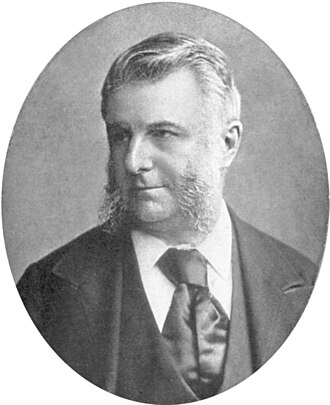
- 福德烈·雅宝、詹姆斯·杜瓦
- 学科
- 化学、物理学
- 上级概念
- 无烟火药
相关科学家
百科正文
炮弹的药筒/药包内也装有条形火药,不过这些火药往往是特殊的管状结构(单孔/多孔且横截面往往呈多边形,目的是达到理想的燃烧速度),且成分多为双基药或者其他较强的配方。与线状无烟火药差别很大,不要混淆。
历史
线状无烟火药最初用来制造恩菲尔德步枪使用的.303 British步枪弹,在1891年或1892年被命名为Mk.I C步枪弹,在1893年,.303步枪弹改用伯丹底火后,又定型新型Mk.II步枪弹。Mk.II步枪弹在第一次世界大战的使用造成无烟火药的短缺,也使美国发展无烟火药来改良英国的步枪弹,线性无烟火药并应用在各式火炮上。自从第一次世界大战后,线状无烟火药便经常在英国及英联邦使用于这类武器。其于第二次世界大战继续发展为防空武器弹药的火药、弹射座椅的火箭填料,甚至原子弹“小男孩”的引爆系统填料。
以上内容摘自维基百科「线状无烟火药」,按 CC BY-SA 4.0 使用,去掉了参考文献、外部链接等尾部小节,公式改写成了纯文本。全文、配图和出处见原文。
英文维基百科补充中文条目比较短,下面是英文条目「Cordite」的原文
Cordite is a family of smokeless propellants developed and produced in Britain since 1889 to replace black powder as a military firearm propellant. Cordite is made by combining two chemical explosives—nitrocellulose and nitroglycerine—with petroleum jelly. It is designed, in normal use, to produce a subsonic deflagration wave rather than the supersonic detonation wave produced by brisants, or high explosives. The hot gases produced by burning gunpowder or cordite generate sufficient pressure to propel a bullet or shell to its target, but not so quickly as to damage the gun barrel.
Cordite was used initially in the.303 British, Mark I and II, standard rifle cartridge between 1891 and 1915. Shortages of cordite in World War I led to the creation of the HM Factory, Gretna on the English–Scottish border, which produced around 800 tons of cordite per week. The UK also imported some United States–developed smokeless powders for use in rifle cartridges. Cordite was also used for large weapons, such as tank guns, artillery, and naval guns. It has been used mainly for this purpose since the late 19th century by the UK and British Commonwealth countries. Its use was further developed before World War II, and as 2-and-3-inch-diameter (51 and 76 mm) Unrotated Projectiles for launching anti-aircraft weapons. Small cordite rocket charges were also developed for ejector seats made by the Martin-Baker Company. Cordite was also used in the detonation system of the Little Boy atomic bomb dropped over Hiroshima in August 1945.
During World War II, double-base propellants were very widely used, and there was some use of triple-base propellants by artillery. Triple-base propellants were used in post-war ammunition designs and remain in production for UK weapons; most double-base propellants left service as World War II stocks were expended after the war. For small arms it has been replaced by other propellants, such as the Improved Military Rifle (IMR) line of extruded powder or the WC844 ball propellant currently in use in the 5.56×45mm NATO. Production ceased in the United Kingdom around the end of the 20th century, with the closure of the last of the World War II cordite factories, ROF Bishopton. Triple-base propellant for UK service (for example, the 105 mm L118 Light Gun) is now manufactured in Germany.
以上节选摘自英文维基百科「Cordite」,按 CC BY-SA 4.0 使用,去掉了参考文献、外部链接等尾部小节,公式改写成了纯文本。篇幅所限,较长的小节只摘了开头一部分,有的小节没有收;全文、配图和出处见原文。