格物
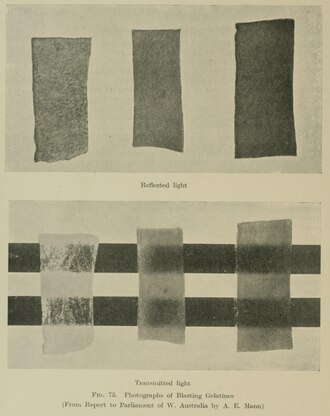
图:A. E. Mann · Public domain · Wikimedia Commons
葛里炸药1875
gelignite
explosive material
Gelignite, also known as blasting gelatin or simply "jelly", is an explosive material consisting of collodion-cotton dissolved in either nitroglycerine or nitroglycol and mixed with wood pulp and saltpetre.
摘自英文维基百科「Gelignite」(英文维基百科,暂无中文条目),CC BY-SA 4.0
- 发现 / 发明时间
- 1875 年
- 发现者 / 提出者
- 阿尔弗雷德·诺贝尔
- 学科
- 化学
- 上级概念
- 爆炸物
- 组成部分
- 硝酸甘油、硝化纤维、木糠、硝酸钾
相关科学家
百科正文
本条目暂无中文维基百科条目,下面是英文维基百科原文。
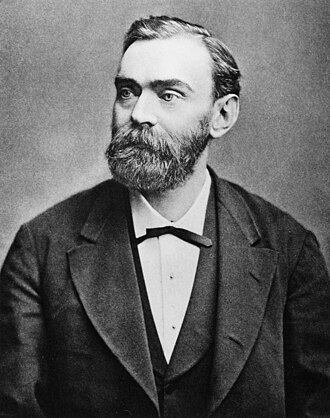
It was invented in 1875 by Swedish chemist Alfred Nobel, who also invented dynamite. It is more stable than dynamite, but can still suffer from "sweating" or leaching out nitroglycerine. Its composition makes it easily moldable and safe to handle without protection, as long as it is not near anything capable of detonating it.
Considered one of the cheapest explosives, it burns slowly and cannot explode without a detonator. It can be stored safely as long as it does not sweat.
In the United Kingdom, an explosives certificate issued by the local Chief Officer of Police is required for possession of gelignite. Due to its widespread civilian use in quarries and mining, it has historically been used by rebel groups such as Mudiad Amddiffyn Cymru, the Provisional Irish Republican Army and the Ulster Volunteer Force, who often used gelignite as a booster.
以上内容摘自英文维基百科「Gelignite」,按 CC BY-SA 4.0 使用,去掉了参考文献、外部链接等尾部小节,公式改写成了纯文本。全文、配图和出处见原文。