格物
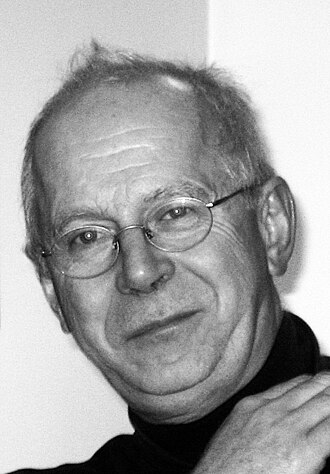
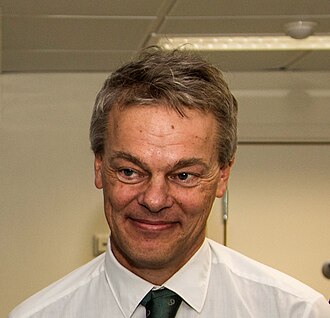
图:Keith Roberts · CC BY-SA 3.0 · Wikimedia Commons
戴维·鲍尔库姆1952—
David Baulcombe
British geneticist
戴维·查尔斯·鲍尔库姆爵士,FRS,英国的植物科学家和遗传学家。目前,他是英国皇家学会研究教授和剑桥大学植物学教授。鲍尔库姆的研究兴趣和对科学的贡献主要是在病毒运动、基因调控、抗病性和基因沉默方面。他和Andrew Hamilton发现了小干扰RNA。
摘自维基百科「戴维·鲍尔库姆」,CC BY-SA 4.0
- 出生
- 1952 年 7 月 4 日,索利哈尔
- 国籍
- 英国
- 学科
- 生物学
- 职业
- 植物学家、大学教师、遗传学家
- 母语 / 工作语言
- 英语
- 母校
- 爱丁堡大学(哲学博士)、利兹大学
- 工作单位
- 剑桥大学、东安格利亚大学
研究领域
师承
博士生2
来自 Wikidata 的「博士导师」「师从」「博士生」「学生」记录,可能不全。
所获奖项(14)
- 2001英国皇家学会院士
- 2004M. W. Beijerinck Prize for Virology
- 2005马斯利奖
- 2006皇家奖章
- 2008拉斯克基础医学研究奖
- 2008富兰克林研究所奖项
- 2009哈维奖
- 2010沃尔夫农业奖
- 2010英国医学科学院院士
- 2012巴仁奖
- 2014格鲁伯遗传学奖
- 2014The McClintock Prize for Plant Genetics and Genome Studies
- 2017Mendel Medal
- —下级勋位爵士
学会与院士
百科正文
英文维基百科补充中文条目比较短,下面是英文条目「David Baulcombe」的原文
Sir David Charles Baulcombe FMedSci FRS (born 7 April 1952) is a British plant scientist and geneticist. He was Regius Professor of Botany at the University of Cambridge (Emeritus since 2019) and is currently Biological Secretary and Vice President of the Royal Society. In 2026, Baulcombe was announced as the next Master of Trinity College, Cambridge.
Early life and education
David Baulcombe was born on 7 April 1952 in the United Kingdom, in Solihull, Warwickshire, (in England's Midlands), into what he describes as "a non-scientific family".
As a child growing up in England's West Midlands, David Baulcombe developed a fascination for algae, mosses, and other 'lower plants', which eventually led him to study botany at Leeds before shifting his focus to molecular biology.
He received his Bachelor of Science degree in botany from the University of Leeds in 1973, and continued his studies at the University of Edinburgh, receiving his Doctor of Philosophy degree in 1977 for research on Messenger RNA in vascular plants, supervised by John Ingle.
Career
After his doctoral research, Baulcombe spent the next four years as a postdoctoral fellow at McGill University from January 1977 to November 1978, and then at the University of Georgia until December 1980. He then moved to the Plant Breeding Institute in Cambridge (PBI) from 1980 until 1988 before joining the Sainsbury Laboratory in Norwich in 1988. In March 2007 he became the professor of botany at the University of Cambridge and in 2009 was elected as a Fellow of Trinity College, Cambridge. In 2009, the Cambridge professorship was renamed "Regius Professor of Botany": the first Regius Professorship created by Queen Elizabeth II.
Since 2024, David Baulcombe has been Biological Secretary and Vice President of the Royal Society. In 2026, Baulcombe was announced as the next Master of Trinity College, succeeding Sally Davies.
Research
One of Baulcombe's major discoveries in 1999 with Andrew Hamilton was of small interfering RNA (siRNA) that is the specificity determinant in RNA-mediated gene silencing in plants. These small RNAs were subsequently discovered in animals and fungi as part of a process first described as RNA interference by Fire and Mello in 1996. Fire and Mello were awarded the Nobel Prize in Physiology or Medicine in 2006 for their work, although some have argued that Baulcombe was among those overlooked for that year's prize.
Following the discover of small interfering RNAs, the Baulcombe research group at the Sainsbury Laboratory helped unravel the importance of RNA silencing and small interfering RNA in epigenetics and in defence against viruses. More recently, siRNAs have been developed as drugs to treat diseases in humans.
Other interests of the Baulcombe group involve disease resistance mechanisms in plants through the actions of NB-LRR (NLR) proteins. These proteins act in pairs with one partner serving as a sensor and the other as a helper. Baulcombe and his then PHD student Jack Peart provided the first evidence for NLR proteins acting as a pair.
Personal life
Baulcombe has been married to Rose Eden since 1976, and they have four children. His interests include music, sailing, and hill walking.
Honours and awards
In June 2009, Baulcombe was knighted by Queen Elizabeth II in the 2009 Birthday Honours List, "for services to plant science".
- Baulcombe has also received the following honours and awards:
- 1997 election to EMBO Membership;
- 2001 election as Fellow of the Royal Society (FRS);
- 2002 election as Member of the Academia Europaea (MAE);
- 2002 recipient of the Ruth Allen Award of the American Phytopathological Society;
2002 recipient of the Kumho Science International Award in Plant Molecular Biology and Biotechnology, awarded by the Kumho Cultural Foundation, Korea;
2003 co-recipient (with Thomas Tuschl, Craig Mello, an Andrew Fire), of the Wiley Prize in the Biomedical Sciences, awarded by the Wiley Foundation at Rockefeller University;
2004 recipient of the M. W. Beijerinck Virology Prize, awarded by the Royal Netherlands Academy of Arts and Sciences;
2005 election as a Foreign Associate Member of the National Academy of Sciences;
2005 co-recipient (with Craig Mello and Andrew Fire) of the Massry Prize, awarded by the Massry Foundation and the University of Southern California;
2006 recipient of the Royal Medal of The Royal Society, "For his profoundly significant recent discoveries for not only plants but for all of biology and for medicine";
以上节选摘自英文维基百科「David Baulcombe」,按 CC BY-SA 4.0 使用,去掉了参考文献、外部链接等尾部小节,公式改写成了纯文本。篇幅所限,较长的小节只摘了开头一部分,有的小节没有收;全文、配图和出处见原文。
同一学科、同时代的科学家





同一学科的科学家
更多 ›