格物

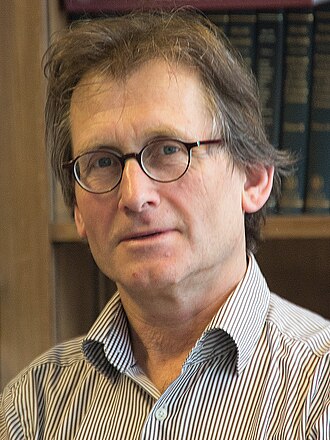
图:作者不详 · CC BY-SA 4.0 · Wikimedia Commons
理查德·恩斯特1933—2021
Richard Ernst
化学家, 瑞士
里夏德·罗伯特·恩斯特,男,瑞士物理化学家,1991年沃尔夫化学奖、诺贝尔化学奖得主。
摘自维基百科「理查德·恩斯特」,CC BY-SA 4.0
- 出生
- 1933 年 8 月 14 日,温特图尔
- 逝世
- 2021 年 6 月 4 日,温特图尔
- 国籍
- 瑞士
- 学科
- 化学
- 职业
- 化学家
- 母语 / 工作语言
- 德语、英语
- 母校
- 苏黎世联邦理工学院
- 工作单位
- 苏黎世联邦理工学院
研究领域
师承
博士生1
来自 Wikidata 的「博士导师」「师从」「博士生」「学生」记录,可能不全。
所获奖项(11)
- 1985马塞尔·本努瓦奖
- 1991诺贝尔化学奖
- 1991路易莎·格罗斯·霍维茨奖
- 1991沃尔夫化学奖
- 1993英国皇家学会外籍会员
- 1997honorary doctor of the University of Antwerp
- 1999honorary doctorate from University of Montpellier-II
- —Commander of the Order of the Star of Romania
- —honorary doctor of Babeș-Bolyai University
- —Fellow of the Bangladesh Academy of Science
- —honorary doctor of the École polytechnique fédérale de Lausanne
学会与院士
百科正文
英文维基百科补充中文条目比较短,下面是英文条目「Richard R. Ernst」的原文
Richard Robert Ernst (14 August 1933 – 4 June 2021) was a Swiss physical chemist and Nobel laureate.
Ernst was awarded the Nobel Prize in Chemistry in 1991 for his contributions towards the development of Fourier transform nuclear magnetic resonance (NMR) spectroscopy while at Varian Associates and ETH Zurich. These underpin applications to both to chemistry with NMR spectroscopy and to medicine with magnetic resonance imaging (MRI).
He humbly referred to himself as a "tool-maker" rather than a scientist.
Early life
Ernst was born in Winterthur, Switzerland on 14 August 1933 to Robert Ernst and Irma Ernst-Brunner. He was the oldest of three children of Irma Brunner and Robert Ernst. He grew up in a house built in 1898 by his grandfather, who was a merchant. During his childhood, he was interested in music, playing the violoncello and even considering a career as a musical composer. At 13-years old, Ernst stumbled upon a box of chemicals belonging to his late uncle, a metallurgical engineer. Young Ernst was excited by what he found, and set about trying all conceivable reactions, some of which resulted in explosions that terrified his parents.
Education
He enrolled in the Eidgenössische Technische Hochschule (ETH) in Zurich to study chemistry and received his diploma in 1957 as a “Diplomierter Ingenieur Chemiker''. He was disappointed in the course content, so conducted further research and taught himself quantum mechanics and thermodynamics in his spare time. After a break to complete his military service, Ernst earned his Ph.D. in physical chemistry in 1962 from ETH Zurich. His dissertation was on nuclear magnetic resonance in the field of physical chemistry.
Career
Ernst entered Varian Associates as a scientist in 1963 and invented Fourier transform NMR, noise decoupling, and a number of other methods. He returned to ETH Zurich in 1968 and became a lecturer. His career developed into assistant professor in 1970 and associate professor in 1972. From 1976, Richard R. Ernst was Full Professor of Physical Chemistry.
Ernst led a research group dedicated to magnetic resonance spectroscopy, and was the director of the Physical Chemistry Laboratory at the ETH Zurich. He developed two-dimensional NMR and several novel pulse techniques. He retired in 1998. He participated in the development of medical magnetic resonance tomography, as well as the NMR structure determination of biopolymers in solution collaborating with Professor Kurt Wüthrich. He also participated in the study of intra-molecular dynamics.
Awards and honours
Ernst was a foreign fellow of the Estonian Academy of Sciences (elected 2002), the US National Academy of Sciences, the Royal Academy of Sciences, London, the German National Academy of Sciences Leopoldina, the Russian Academy of Sciences, the Korean Academy of Science and Technology and Bangladesh Academy of Sciences. He was elected a Foreign Member of the Royal Society (ForMemRS) in 1993. He was awarded the John Gamble Kirkwood Medal in 1989.
In 1991, Ernst was on an aeroplane flying over the Atlantic when he discovered he had been awarded The Nobel Prize in Chemistry. He was invited into the cockpit, where he was given a radio to talk to the Nobel committee. Here they told him he was being honoured "for his contributions to the development of the methodology of high resolution nuclear magnetic resonance (NMR) spectroscopy".
Ernst was a member of the World Knowledge Dialogue Scientific Board. He was awarded the Marcel Benoist Prize in 1986, the Wolf Prize in Chemistry in 1991, and Louisa Gross Horwitz Prize of Columbia University in 1991. He was also awarded the Tadeus Reichstein Medal in 2000 and the Order of the Star of Romania in 2004. He also held Honorary Doctorates from the Technical University of Munich, EPF Lausanne, University of Zurich, University Antwerpen, Babes-Bolyai University, and University Montpellier.
The 2009 Bel Air Film Festival featured the world premiere of a documentary film on Ernst Science Plus Dharma Equals Social Responsibility.
Personal life
Ernst was married to Magdalena (Kielholz) until his death. Together, they had three children: Anna Magdalena, Katharina Elisabeth and Hans-Martin Walter. Besides toiling with his work, Ernst also enjoyed music and art, specifically Tibetan scroll art. Using scientific techniques, Ernst would research the pigments on the scrolls to learn about their geographic origin and age.
Ernst died on 4 June 2021 in Winterthur at the age of 87.
以上节选摘自英文维基百科「Richard R. Ernst」,按 CC BY-SA 4.0 使用,去掉了参考文献、外部链接等尾部小节,公式改写成了纯文本。篇幅所限,较长的小节只摘了开头一部分,有的小节没有收;全文、配图和出处见原文。