格物

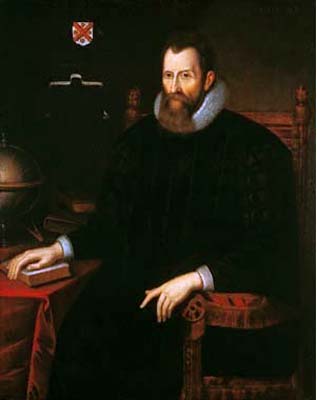
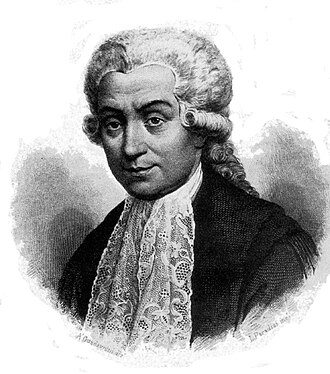
图:Godefroy Engelmann the Elder · Public domain · Wikimedia Commons
- 出生
- 1728 年 8 月 26 日,米卢斯
- 逝世
- 1777 年 9 月 25 日,柏林
- 国籍
- 法国、米卢斯共和国
- 学科
- 物理学、数学、天文学、博物与综合
- 职业
- 数学家、天文学家、物理学家、哲学家
- 母语 / 工作语言
- 法语、德语
- 母校
- 哥廷根大学
- 工作单位
- Johann Rudolf Iselin(1745—1748)、Peter von Salis-Soglio(1748—1758)、巴伐利亚科学人文学院(1760—1762)、普鲁士科学院(1764—1777)
研究领域
主要贡献
代表成就
以他 / 她命名
师承
来自 Wikidata 的「博士导师」「师从」「博士生」「学生」记录,可能不全。
学会与院士
百科正文
生平
朗伯12岁就离开学校,但在从事多份工作之余,他仍会利用时间读书进修。这些工作包括当裁缝父亲的助手,也做过铁匠铺的记账员、报社的秘书和私人教师。在当私人教师时,他常借助东主家偌大的图书馆来求取学问。
贡献
- 进行光学研究(尤其是吸光度)
- 发表π是无理数的证明(成为证明此特性的第一人)
- 提出宇宙存在其他行星系,甚至是其他星系的假说
- 首度将双曲函数引入三角学
- 研究非欧几何,包括双曲三角形的角度与面积
- 研发第一款实用的湿度计
- 研究地图投影(横轴墨卡托投影)
以上内容摘自维基百科「约翰·海因里希·朗伯」,按 CC BY-SA 4.0 使用,去掉了参考文献、外部链接等尾部小节,公式改写成了纯文本。全文、配图和出处见原文。
英文维基百科补充中文条目比较短,下面是英文条目「Johann Heinrich Lambert」的原文
Johann Heinrich Lambert (German: [ˈlambɛʁt]; French: Jean-Henri Lambert; 26 or 28 August 1728 – 25 September 1777) was an Alsatian polymath from the Republic of Mulhouse—then an associate of the Swiss Confederacy—who made fundamental contributions to mathematics, physics (particularly optics), philosophy, astronomy, and map projections.
Biography
Lambert was born in 1728 into a Huguenot family in the city-state of Mulhouse (in modern-day Alsace, France), which was allied to the Swiss Confederacy. His family had fled from Lorraine following the Thirty Years War. Historical sources differ on his exact date of birth, citing either 26 or 28 August.
Forced to leave school at age twelve due to financial constraints, Lambert pursued an exhaustive course of self-study during his free time while maintaining various jobs. In his youth, he worked as an assistant to his father (a tailor), a clerk at a local ironworks, a private tutor, and a secretary to the editor of the Basler Zeitung. At age twenty, he secured a position as private tutor to the sons of Count Salis in Chur, Switzerland.
Between 1756 and 1758, Lambert traveled extensively across Europe with his pupils, affording him the opportunity to connect with established mathematicians and intellectuals throughout the German states, the Netherlands, France, and the Italian states. Upon returning to Chur, he published his first major treatises on optics and cosmology and began seeking a formal academic appointment.
Following several short-term positions, Lambert's growing reputation earned him an invitation in 1763 to join the Prussian Academy of Sciences in Berlin. Supported by Frederick II of Prussia and working alongside Leonhard Euler, he spent his remaining years in this intellectually stimulating and financially secure environment, producing a prolific volume of work until his death in 1777.
Work
Mathematics
Lambert was the first to systematize and popularize the use of hyperbolic functions into trigonometry. He credits the previous works of Vincenzo Riccati and Daviet de Foncenex. Lambert developed exponential expressions and identities and introduced the modern notation. Lambert also made conjectures about non-Euclidean space.
Lambert is credited with the first proof that π is irrational using a generalized continued fraction for the function tan x. Euler believed the conjecture but could not prove that π was irrational, and it is speculated that Aryabhata also believed this, in 500 CE. Lambert also devised theorems about conic sections that made the calculation of the orbits of comets simpler.
Lambert devised a formula for the relationship between the angles and the area of hyperbolic triangles. These are triangles drawn on a concave surface, as on a saddle, instead of the usual flat Euclidean surface. Lambert showed that the angles added up to less than π (radians), or 180°. The defect (amount of shortfall) increases with area. The larger the triangle's area, the smaller the sum of the angles and hence the larger the defect C△ = π — (α + β + γ). That is, the area of a hyperbolic triangle (multiplied by a constant C) is equal to π (radians), or 180°, minus the sum of the angles α, β, and γ. Here C denotes, in the present sense, the negative of the curvature of the surface (taking the negative is necessary as the curvature of a saddle surface is by definition negative). As the triangle gets larger or smaller, the angles change in a way that forbids the existence of similar hyperbolic triangles, as only triangles that have the same angles will have the same area. Hence, instead of the area of the triangle's being expressed in terms of the lengths of its sides, as in Euclidean geometry, the area of Lambert's hyperbolic triangle can be expressed in terms of its angles.
Map projection
Lambert was the first mathematician to address the general properties of map projections (of a spherical Earth). In particular he was the first to discuss the properties of conformality and equal area
preservation and to point out that they were mutually exclusive.
(Snyder 1993 p77). In 1772, Lambert published
seven new map projections under the title Anmerkungen und Zusätze zur Entwerfung der Land- und Himmelscharten, (translated as Notes and Comments on the Composition of Terrestrial and Celestial Maps by Waldo Tobler (1972)).
Published works
Lambert, Johann Heinrich. "Pyrometrie; oder, Vom maasse des feuers und der wȧrme. Mit acht kupfertafeln." Berlin, Bey Haude und Spener, 1779.
以上节选摘自英文维基百科「Johann Heinrich Lambert」,按 CC BY-SA 4.0 使用,去掉了参考文献、外部链接等尾部小节,公式改写成了纯文本。篇幅所限,较长的小节只摘了开头一部分,有的小节没有收;全文、配图和出处见原文。
同一学科、同时代的科学家



同一学科的科学家
更多 ›