格物
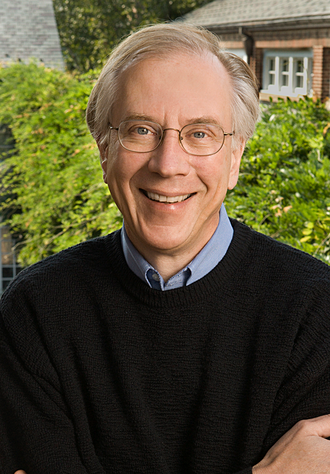
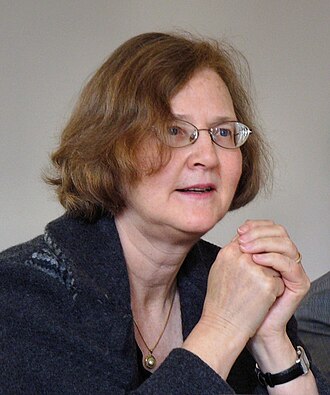
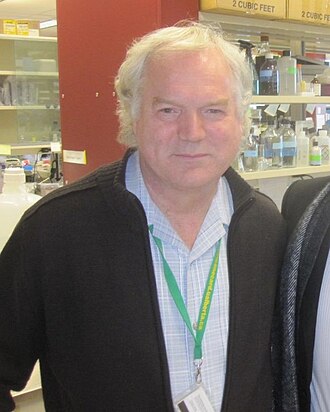
图:Jane Gitschier · CC BY 2.5 · Wikimedia Commons
托马斯·切赫1947—
Thomas Cech
生物化学家, 美国
托马斯·罗伯特·切赫,美国生物化学家,他与西德尼·奥尔特曼 因发现RNA的催化特性而分享1989年诺贝尔化学奖。
摘自维基百科「托马斯·切赫」,CC BY-SA 4.0
- 出生
- 1947 年 12 月 8 日,芝加哥
- 国籍
- 美国
- 学科
- 化学、生物学
- 职业
- 生物化学家、化学家、大学教师
- 母语 / 工作语言
- 英语
- 母校
- 加州大学伯克利分校、格林内尔学院、艾奥瓦城高中
- 工作单位
- 科罗拉多大学系统、科罗拉多大学博尔德分校
研究领域
所获奖项(15)
- 1985古根海姆学者奖
- 1985辉瑞酶化学奖
- 1986纽科姆·克利夫兰奖
- 1987NAS分子生物学奖
- 1988拉斯克基础医学研究奖
- 1988盖尔德纳国际奖
- 1988路易莎·格罗斯·霍维茨奖
- 1988Dr H.P. Heineken Prize for Biochemistry and Biophysics
- 1988罗森斯特尔奖
- 1989诺贝尔化学奖
- 1995美国国家科学奖章
- 2007奥斯默金牌奖章
- 2010哈佛大学名誉博士
- 2016Fellow of the AACR Academy
- —卓越鹰级童军奖
学会与院士
百科正文
切赫发现RNA本身可以切割RNA链,暗示生命可能是从RNA开始的。他发现RNA不仅可以传送指令,还可以扮演催化剂的角色,加速必要的反应。
他也研究端粒,他的实验室发现了一种酶TERT (端粒酶逆转录酶),这种酶是端粒在细胞分裂过程中缩短后恢复端粒过程的一部分。
身为霍华德·休斯医学研究所 (Howard Hughes Medical Institute) 所长,他推动科学教育,并在科罗拉多大学 (University of Colorado) 教授本科化学课程。
研究
切赫的主要研究领域是细胞核内的转录过程。他研究DNA遗传密码如何转录成RNA。 1970年代,切赫在研究单细胞生物四膜虫的RNA剪接时发现,未经加工的RNA分子可以进行自我剪接。 1982年,切赫首次证明RNA分子不仅限于作为遗传讯息的被动载体,它们还可以具有催化功能,并能参与细胞反应。 RNA加工反应和核糖体上的蛋白质合成特别由RNA催化。 RNA酶被称为核酶,为基因技术提供了一种新的工具。它们还具有提供新治疗剂的潜力——例如,它们具有破坏和裂解入侵核糖核酸病毒的能力。
切赫的第二个研究领域是端粒,也就是保护染色体末端的结构。 DNA每次复制都会缩短端粒,因此必须再次延长。他研究端粒酶,这种酶可以复制端粒序列并使其延长。 端粒酶的活性位点蛋白亚基包括一类新的逆转录酶,这些酶以前被认为仅限于病毒和转座因子。 90%的人类癌症中端粒酶被活化。因此,抑制其活性的药物可能有助于治疗癌症。
以上内容摘自维基百科「托马斯·切赫」,按 CC BY-SA 4.0 使用,去掉了参考文献、外部链接等尾部小节,公式改写成了纯文本。全文、配图和出处见原文。
英文维基百科补充中文条目比较短,下面是英文条目「Thomas Cech」的原文
Thomas Robert Cech (born 8 December 1947) is an American chemist who shared the 1989 Nobel Prize in Chemistry with Sidney Altman “for their discovery of catalytic properties of RNA.”
Cech discovered that RNA could itself cut strands of RNA, suggesting that life might have started as RNA. He found that RNA can not only transmit instructions, but can act as a catalyst to speed up the necessary reactions.
He has also studied telomeres, and his lab discovered an enzyme, TERT (telomerase reverse transcriptase), which is part of the process of restoring telomeres after they are shortened during cell division.
As president of Howard Hughes Medical Institute (2000–2008) he promoted science education, and he teaches an undergraduate chemistry course at the University of Colorado.
Early life and career
Cech was born to parents of Czech origin (his grandfather was Czech, his other grandparents were first-generation Americans) in Chicago. He grew up in Iowa City, Iowa. In junior high school, he knocked on the doors of geology professors at the University of Iowa, and asked them to discuss crystal structures, meteorites and fossils.
A National Merit Scholar, Cech entered Grinnell College in 1966. There he studied Homer's Odyssey, Dante's Inferno, constitutional history and chemistry. He married his organic chemistry lab partner, Carol Lynn Martinson, and graduated with a B.A. in 1970.
In 1975, Cech completed his PhD in chemistry at the University of California, Berkeley and in the same year, he entered the Massachusetts Institute of Technology where he engaged in postdoctoral research. In 1978, he obtained his first faculty position at the University of Colorado where he lectured undergraduate students in chemistry and biochemistry, and where he remains on the faculty, currently as distinguished professor in the department of biochemistry. In 2000, Cech succeeded Purnell Choppin as president of the Howard Hughes Medical Institute in Maryland. He also continued to head his biochemistry laboratory at the University of Colorado, Boulder. On April 1, 2008, Cech announced that he would step down as the president of HHMI, to return to teaching and research, in spring 2009.
Research
Cech's main research area is that of the process of transcription in the nucleus of cells. He studies how the genetic code of DNA is transcribed into RNA. In the 1970s, Cech had been studying the splicing of RNA in the unicellular organism Tetrahymena thermophila when he discovered that an unprocessed RNA molecule could splice itself. In 1982, Cech became the first to show that RNA molecules are not restricted to being passive carriers of genetic information – they can have catalytic functions and can participate in cellular reactions. RNA-processing reactions and protein synthesis on ribosomes in particular are catalysed by RNA. RNA enzymes are known as ribozymes and have provided a new tool for gene technology. They also have the potential to provide new therapeutic agents – for example, they have the ability to destroy and cleave invading, viral RNAs.
Cech's second area of research is on telomeres, the structure that protects the ends of chromosomes. Telomeres are shortened with every duplication of DNA, and must be lengthened again. He studies telomerase, the enzyme that copies the telomeric sequences and lengthens them. The active site protein subunits of telomerase comprise a new class of reverse transcriptases, enzymes previously thought to be restricted to viruses and transposable elements. Telomerase is activated in 90% of human cancers.
Awards
Cech's work has been recognised by many awards and prizes including: lifetime professorship by the American Cancer Society (1987), the Louisa Gross Horwitz Prize from Columbia University (1988), the Heineken Prize of the Royal Netherlands Academy of Sciences (1988), the Albert Lasker Basic Medical Research Award (1988), the Nobel Prize in Chemistry (1989, shared with Sidney Altman), the Golden Plate Award of the American Academy of Achievement in 1990 and the National Medal of Science (1995). In 1987, Cech was elected to the United States National Academy of Sciences and in 1988 he was elected to the American Academy of Arts and Sciences. Cech was elected to the American Philosophical Society in 2001. In 2003, Cech gave the University of Colorado's George Gamow Memorial Lecture. In 2007, he received the Othmer Gold Medal for outstanding contributions to progress in chemistry and science.
以上节选摘自英文维基百科「Thomas Cech」,按 CC BY-SA 4.0 使用,去掉了参考文献、外部链接等尾部小节,公式改写成了纯文本。篇幅所限,较长的小节只摘了开头一部分,有的小节没有收;全文、配图和出处见原文。