格物
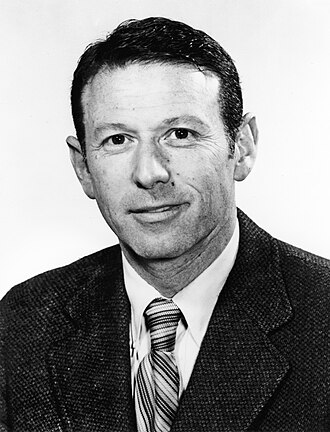
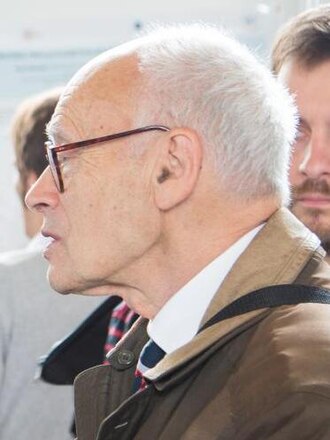
迈克尔·贝里奇1938—2020
Michael Berridge
British biochemist (1938–2020)
迈克尔·贝里奇爵士,英国生化学家。
摘自维基百科「迈克尔·贝里奇」,CC BY-SA 4.0
- 出生
- 1938 年 10 月 22 日,卡多马
- 逝世
- 2020 年 2 月 12 日
- 国籍
- 英国
- 学科
- 化学、生物学
- 职业
- 生物化学家、生理学家、分子生物学家
- 母语 / 工作语言
- 英语
- 母校
- 剑桥大学、剑桥大学冈维尔与凯斯学院、津巴布韦大学、伦敦大学
- 工作单位
- 剑桥大学
研究领域
师承
博士生1
来自 Wikidata 的「博士导师」「师从」「博士生」「学生」记录,可能不全。
所获奖项(21)
- 1984英国皇家学会院士
- 1985菲尔德伯格基金会
- 1986King Faisal Prize in Science
- 1986路易·让泰化学奖
- 1987William Bate Hardy Prize
- 1988盖尔德纳国际奖
- 1988克鲁内演讲
- 1989拉斯克基础医学研究奖
- 1989贝利奖章
- 1991皇家奖章
- 1993honorary doctorate of Hasselt University
- 1994沃尔夫医学奖
- 1994Dr H.P. Heineken Prize for Biochemistry and Biophysics
- 1996马斯利奖
- 1996Annual Review Prize Lecture
- 1998英国医学科学院院士
- 1999恩斯特先灵奖
- 2002汤森路透引文桂冠奖
- 2005邵逸夫生命科学与医学奖
- —美国文理科学院院士
- —下级勋位爵士
学会与院士
百科正文
经历
贝里奇从罗得西亚和尼亚萨兰大学、剑桥大学毕业。他是英国皇家学会成员,剑桥大学教授。
2020年2月12日病逝,享寿81岁。
学术研究
贝里奇发现了钙作为细胞的内部通信网络中的发送器的作用。他的工作为基础研究的众多问题提供了答案。
奖项和荣誉
他1988年获盖尔德纳基金会国际奖,1989年获拉斯克基础医学研究奖,2005年获邵逸夫奖。
以上内容摘自维基百科「迈克尔·贝里奇」,按 CC BY-SA 4.0 使用,去掉了参考文献、外部链接等尾部小节,公式改写成了纯文本。全文、配图和出处见原文。
英文维基百科补充中文条目比较短,下面是英文条目「Michael Berridge」的原文
Sir Michael John Berridge (22 October 1938 – 13 February 2020) was a British physiologist and biochemist. He was known for his work on cell signaling, in particular the discovery that inositol trisphosphate acts as a second messenger, linking events at the plasma membrane with the release of calcium ions (Ca2+) within the cell.
Early life and education
Berridge was born in Gatooma (now Kadoma, Zimbabwe) in Southern Rhodesia (now Zimbabwe). His high school biology teacher convinced him and his parents that he should pursue tertiary education, and he entered the newly founded University of Rhodesia and Nyasaland (now University of Zimbabwe), earning his Bsc in zoology and chemistry in 1960.
He became interested in insect physiology after helping with his physiology professor's research on tsetse flies, and went to the United Kingdom to study with Vincent Wigglesworth, regarded as the father of insect physiology, at the Department of Zoology of the University of Cambridge. Berridge became a member at the Gonville and Caius College, where Wigglesworth was a fellow, and obtained his PhD in 1965.
Career
Initially intending to return to Southern Rhodesia (now Zimbabwe) after his PhD, Berridge's plan was thwarted by the Rhodesian Bush War. He migrated to the United States instead, joining the Department of Biology of the University of Virginia as a postdoctoral fellow. A year later, he moved to the Developmental Biology Center of Case Western Reserve University. He became a research associate under Bodil Schmidt-Nielsen at the Department of Biology of the same university in 1967.
In 1969, John Treherne invited Berridge to return to the University of Cambridge and join the new Unit of Invertebrate Chemistry and Physiology that he was setting up in the Department of Zoology. He first joined as a senior scientific officer, and was promoted to principal scientific officer in 1972. He became a senior principal scientific officer at the Unit of Insect Neurophysiology and Pharmacology, also at the University of Cambridge, in 1978.
In 1990, Berridge joined the Babraham Institute as the Deputy Chief Scientific Officer of the Laboratory of Molecular Signalling, before serving as the Head of Signalling in 1996 until retiring in 2003. After retirement, Berridge was appointed as Babraham's first emeritus Babraham Fellow.
Berridge was a fellow of the Trinity College of the University of Cambridge from 1972 until his death.
Berridge maintained an online textbook on cell signalling, now hosted by Portland Press under the Biochemical Society.
Research
Berridge had been studying cell signaling when he was at Case Western Reserve University, where he received advice from Theodore W. Rall, co-discoverer of the second messenger cyclic AMP with Earl Wilbur Sutherland Jr., who had also worked at Case Western Reserve. Working on the salivary glands of a blow fly species, Berridge showed cyclic AMP produced the same physiological effect as serotonin, dramatically increasing saliva secretion. The idea of second messenger was new at the time, and his finding supported cyclic AMP as a second messenger of serotonin.
He continued studying cyclic AMP after returning to the University of Cambridge, and conducted experiments to study how serotonin and cyclic AMP affected the movement of ions, as ion concentration difference across the salivary gland epithelium controlled the movement of water across the epithelium through osmosis. Berridge measured the difference in electric potential across the epithelium since ions are charged.
Surprisingly, he found that serotonin and cyclic AMP produced opposite effect to ion movement. While the former reduced the transepithelial potential difference closer to zero, the latter caused an even more negative difference. This suggested cyclic AMP caused positively-charged ions to move across the epithelium from the extracellular fluid to the inside of the salivary gland (known as the lumen).
Berridge suspected calcium ions (Ca2+) could explain the distinct electrical but similar physiological effects of serotonin and cyclic AMP. In 1971, Howard Rasmussen, one of the first researchers to recognise the role of Ca2+ as a second messenger, was on a sabbatical at Cambridge. He and Rasmussen worked together and found serotonin triggered the release of Ca2+ from a storage inside the cell.
Awards and honours
The Sir Michael Berridge Prize at the Babraham Institute was named in his honour and established with his endowment.
以上节选摘自英文维基百科「Michael Berridge」,按 CC BY-SA 4.0 使用,去掉了参考文献、外部链接等尾部小节,公式改写成了纯文本。篇幅所限,较长的小节只摘了开头一部分,有的小节没有收;全文、配图和出处见原文。