格物
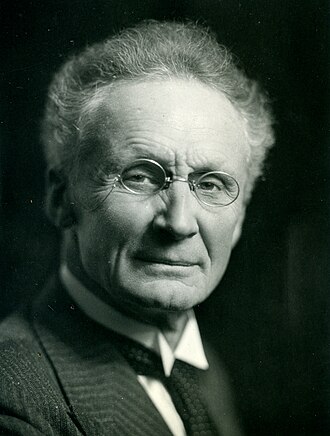
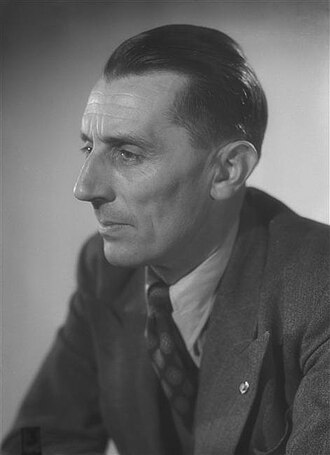
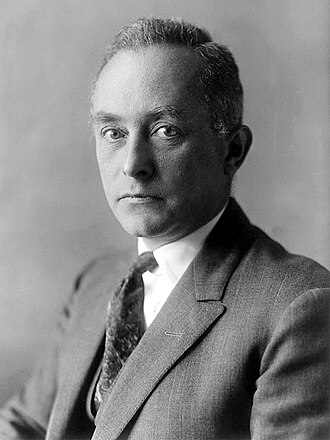
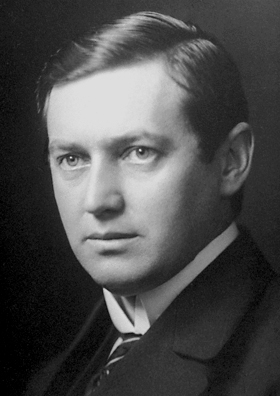
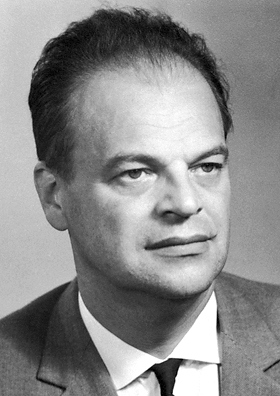
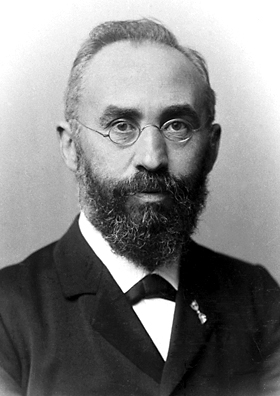
图:作者不详 · CC BY-SA 4.0 · Wikimedia Commons
- 出生
- 1862 年 3 月 14 日,克里斯蒂安尼亚
- 逝世
- 1951 年 4 月 9 日,奥斯陆
- 国籍
- 挪威
- 学科
- 物理学、数学、地球科学、博物与综合
- 职业
- 物理学家、气象学家、大学教师、数学家
- 母语 / 工作语言
- 德语、英语、挪威语
- 母校
- 奥斯陆大学(1888 年)、巴黎大学(1889 年)、波恩大学(1892 年)、奥斯陆大学(博士,1892 年)
- 工作单位
- 莱比锡大学(1912—1917)、斯德哥尔摩大学(1893—1905)、华盛顿卡内基研究所(1905—1907)、奥斯陆大学(1926—1932)、卑尔根大学地球物理研究所(1917—1926)、奥斯陆大学(1907—1912)
研究领域
主要贡献
代表成就
师承
博士生10
来自 Wikidata 的「博士导师」「师从」「博士生」「学生」记录,可能不全。
所获奖项(9)
- 1908Fridtjof Nansen Award of Excellence, Mathematics-Natural sciences class
- 1926亚历山大·阿加西兹勋章
- 1930爱丁堡皇家学会会员
- 1932西蒙斯金质奖章
- 1933Buys Ballot Medal
- 1933英国皇家学会外籍会员
- 1938贡内鲁斯奖
- 1938Knight Grand Cross of the Order of St. Olav
- 1939Vega Medal
学会与院士
百科正文
英文维基百科补充中文条目比较短,下面是英文条目「Vilhelm Bjerknes」的原文
Vilhelm Friman Koren Bjerknes ( BYURK-niss, Norwegian: [ˈʋɪlˌhɛlm ˈbjæɾknɛs]; 14 March 1862 – 9 April 1951) was a Norwegian geophysicist and meteorologist with essential contributions to the foundation of the modern practice of weather forecasting. He formulated the primitive equations that are still in use in numerical weather prediction and climate modeling. He is the founder of the Bergen School of Meteorology, which was successful in advancing weather prediction and meteorology in the early 20th century.
Life and career
Born in Christiania (later renamed Oslo), Bjerknes enjoyed an early exposure to fluid dynamics, as assistant to his father, Carl Anton Bjerknes, who had discovered by mathematical analysis the apparent actions at a distance between pulsating and oscillating bodies in a fluid, and their analogy with the electric and magnetic actions at a distance. Apparently no attempt had been made to demonstrate experimentally the theories arrived at by the older professor until Vilhelm Bjerknes, then about 17 or 18 years of age, turned his mathematical knowledge and mechanical abilities to the devising of a series of instruments by which all the well-known phenomena of electricity and magnetism were illustrated and reproduced by spheres and discs and membranes set into rhythmic vibration in a bath containing a viscous fluid such as syrup. These demonstrations formed the most important exhibit in the department of physics at the Exposition Internationale d'Électricité held in Paris in 1881, and aroused greatest interest in the scientific world.
Vilhelm Bjerknes became assistant to Heinrich Hertz in Bonn 1890–1891 and made substantial contributions to Hertz' work on electromagnetic resonance. He succeeded in giving the explanation of the phenomenon called "multiple resonance," discovered by Sarasin and De la Rive. Continuing his experiments at the University of Christiania (1891–1892), he proved experimentally the influence which the conductivity and the magnetic properties of the metallic conductors exert upon the electric oscillations, and measured the depth to which the electric oscillations penetrate in metals of different conductivity and magnetic permeability (the "skin effect"). Finally, in 1895 he furnished a complete theory of the phenomenon of electric resonance, involving a method of utilizing resonance experiments for the determination of the wavelengths, and especially of the damping (the logarithmic decrement) of the oscillations in the transmitter and the receiver of the electric oscillations. These methods contributed much to the development of wireless telegraphy. His papers on electric oscillations were published in Annalen der Physik (1891–1895).
In 1895, he became professor of applied mechanics and mathematical physics at the Stockholm University where he had been lecturer since 1893. There he elucidated the fundamental interaction between fluid dynamics and thermodynamics. His major contribution was the primitive equations which are used in climate models.
It was this work that inspired both V. Walfrid Ekman and Carl-Gustav Arvid Rossby to apply it to large-scale motions in the oceans and atmosphere and to make modern weather forecasting feasible. Bjerknes himself had foreseen the possible applications as early as 1904. This attack upon the meteorological problems from a hydrodynamical point of view was after 1906 supported by the Carnegie Institution of Washington, D.C., of which he became a research associate. Two introductory volumes, Statics and Kinematics, of a greater work, Dynamic Meteorology and Hydrography, were published in 1913 under the auspices of the Institution.
In his 1906 work Fields of force, Bjerknes was the first to describe and mathematically derive translational forces on bubbles in an acoustic field, now known as Bjerknes forces.
In his Vorlesungen über Hydrodynamische Fernkräfte nach C. A. Bjerknes Theorie (1900–1902) he gave the first complete mathematical and experimental exposition of the discoveries of his father, whose age and excessive self-criticism had prevented him from finishing his work himself. In a later book, Die Kraftfelder (1909), he stated the same theory in a very much generalized form according to methods of his own.
In 1907, Bjerknes returned to the Royal Frederick University in Oslo before becoming professor of geophysics at the University of Leipzig in 1912. In 1916, he started the publication Synoptische Darstellung atmosphärischer Zustände über Europa.
以上节选摘自英文维基百科「Vilhelm Bjerknes」,按 CC BY-SA 4.0 使用,去掉了参考文献、外部链接等尾部小节,公式改写成了纯文本。篇幅所限,较长的小节只摘了开头一部分,有的小节没有收;全文、配图和出处见原文。
同一学科、同时代的科学家
同一学科的科学家
更多 ›