格物
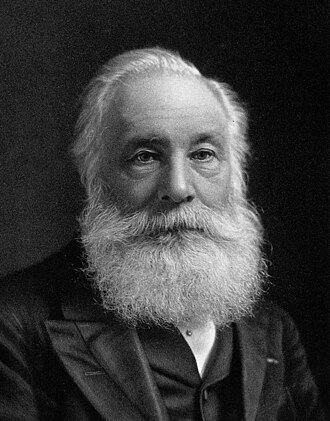
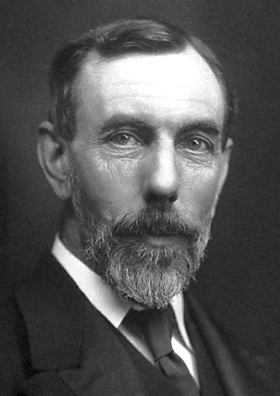
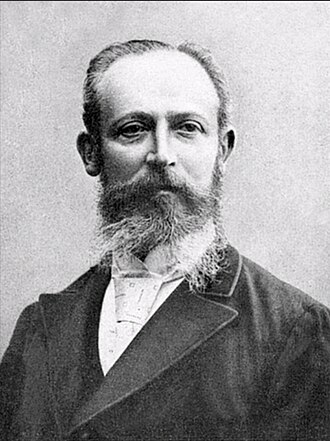
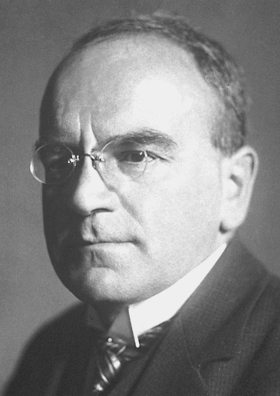
图:作者不详 · Public domain · Wikimedia Commons
- 出生
- 1838 年 3 月 12 日,伦敦
- 逝世
- 1907 年 7 月 14 日,哈洛伦敦自治市
- 国籍
- 大不列颠及爱尔兰联合王国
- 学科
- 化学、工程与发明
- 职业
- 化学家、发明家、商人
- 母语 / 工作语言
- 德语
- 母校
- 皇家化学学院
- 工作单位
- 伦敦帝国学院
研究领域
主要贡献
本站收录的发现与发明
师承
博士导师1
来自 Wikidata 的「博士导师」「师从」「博士生」「学生」记录,可能不全。
所获奖项(9)
- 1866英国皇家学会院士
- 1879皇家奖章
- 1888Longstaff Prize
- 1889戴维奖章
- 1890阿尔伯特奖章
- 1906珀金奖章
- 1906August Wilhelm von Hofmann Medal
- 1906拉瓦锡奖章
- 1906下级勋位爵士
学会与院士
百科正文
生平
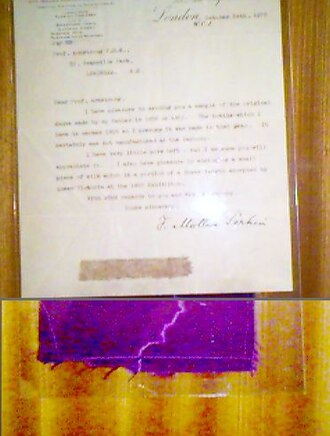
1853年15岁的珀金入读伦敦的皇家化学学院(现为伦敦帝国学院),成为奥古斯特·威廉·冯·霍夫曼的学生。在1856年的复活节,珀金在自己的实验室内进行有关奎宁的研究。他就在此时发现了苯胺紫。很快他便发现这种物质在光和洗擦都不易脱色,适合当染料。八月,他取得了专利权。当时的染料都很昂贵,制造过程劳动密集;在正值工业革命中的英国,这个新产品轻易成功了。
以后珀金继续进行有机化学研究,发现更多的人工染料。他发现了人工香水香豆素的合成方法,香豆酸的准备方法被后人称为珀金反应。1869年发现了茜素的商业制法,可惜德国公司BASF刚好在一天前申请了该制法的专利。1874年他家财万贯,卖掉工厂并退休。
荣誉
1906年,珀金奖章成立,以纪念发现苯胺紫五十周年。
以上内容摘自维基百科「威廉·珀金」,按 CC BY-SA 4.0 使用,去掉了参考文献、外部链接等尾部小节,公式改写成了纯文本。全文、配图和出处见原文。
英文维基百科补充中文条目比较短,下面是英文条目「William Henry Perkin」的原文
Sir William Henry Perkin (12 March 1838 – 14 July 1907) was an English chemist and entrepreneur best known for his serendipitous discovery of the first commercial synthetic organic dye, mauveine, made from aniline. Though he failed in trying to synthesise quinine for the treatment of malaria, he became successful in the field of dyes after his first discovery at the age of 18.
Perkin set up a factory to produce the dye industrially. Regina Lee Blaszczyk, professor of business history at the University of Leeds, states, "By laying the foundation for the synthetic organic chemicals industry, Perkin helped to revolutionize the world of fashion."
Early years
William Perkin was born in the East End of London, the youngest of the seven children of George Perkin, a successful carpenter. His mother, Sarah, was of Scottish descent and moved to East London as a child. He was baptized in the Anglican parish church of St Paul's, Shadwell, which had been connected to James Cook, Jane Randolph Jefferson (mother of Thomas Jefferson) and John Wesley.
At the age of 14, Perkin attended the City of London School, where he was taught by Thomas Hall, who fostered his scientific talent and encouraged him to pursue a career in chemistry.
Accidental discovery of mauveine
In 1853, at the age of 15, Perkin entered the Royal College of Chemistry, now part of Imperial College London, where he began his studies under August Wilhelm von Hofmann. At this time, chemistry was still primitive: although the major elements had been discovered and techniques to analyze the proportions of the elements in many compounds were in place, it was still a difficult proposition to determine the arrangement of the elements in compounds. Hofmann had published a hypothesis on how it might be possible to synthesise quinine, an expensive natural substance much in demand for the treatment of malaria. Having become one of Hofmann's assistants, Perkin embarked on a series of experiments to try to achieve this end.
Later years
William Perkin continued active research in organic chemistry for the rest of his life: he discovered and marketed other synthetic dyes, including Britannia Violet and Perkin's Green; he discovered ways to make coumarin, one of the first synthetic raw materials of perfume, and cinnamic acid. (The reaction used to make the last became known as the Perkin reaction.) Local lore has it that the colour of the nearby Grand Union Canal changed from week to week depending on the activity at Perkin's Greenford dyeworks.
Personal life and demise
Perkin married Jemima Harriet, the daughter of John Lissett, in 1859, which resulted in two sons, (William Henry Perkin Jr. and Arthur George Perkin). Perkin's second marriage was in 1866, to Alexandrine Caroline, daughter of Helman Mollwo. They had one son (Frederick Mollwo Perkin) and four daughters. All three sons became chemists.
Perkin died in 1907 of pneumonia and other complications resulting from a burst appendix. He is buried in the grounds of Christchurch, Harrow, Middlesex. His will was proved on 28 August 1907 at £86,231 4s. 11d. (roughly equivalent to £8,968,788 in 2025).
Honours, awards and commemorations
Perkin received many honours in his lifetime. In June 1866, he was elected a Fellow of the Royal Society. In 1879, received their Royal Medal and, in 1889, their Davy Medal. He was knighted in 1906, and in the same year was awarded the first Perkin Medal, established to commemorate the fiftieth anniversary of his discovery of mauveine. Today, the Perkin Medal is widely acknowledged as the highest honour in the U.S. industrial chemistry and has been awarded annually by the American section of the Society of Chemical Industry. He was President of the Society of Chemical Industry from 1884-85.
Perkin was a Liveryman of the Leathersellers' Company for 46 years and was elected Master of the Company for the year 1896–97.
Blue plaques mark the sites of Perkin's home on Cable Street (by the junction with King David Lane)_ and the Perkin factory in Greenford, Middlesex.
以上节选摘自英文维基百科「William Henry Perkin」,按 CC BY-SA 4.0 使用,去掉了参考文献、外部链接等尾部小节,公式改写成了纯文本。篇幅所限,较长的小节只摘了开头一部分,有的小节没有收;全文、配图和出处见原文。
同一学科、同时代的科学家