格物
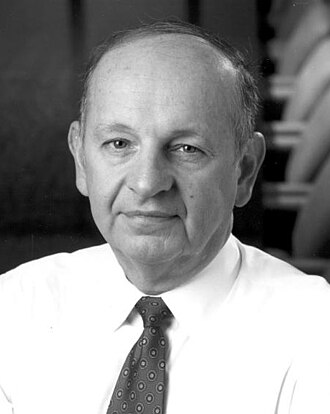
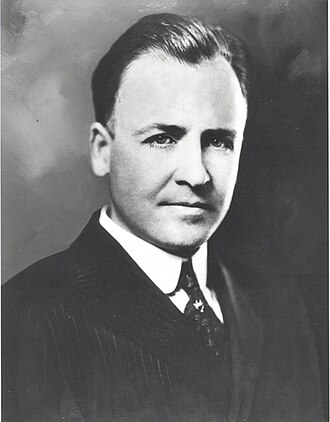
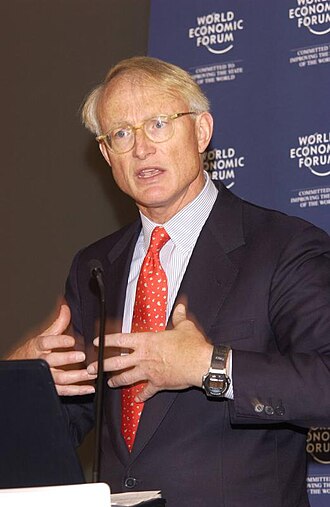
图:IEEE Global History Network, © 2009 IEEE · CC BY-SA 3.0 · Wikimedia Commons
乔治·哈利·海尔迈耶1936—2014
George H. Heilmeier
American engineer and businessman (1936-2014)
乔治·哈利·海尔迈耶,美国工程师和商人。他因液晶显示器的研究而著名。他入选美国发明家名人堂,他发明了LCD演示器。
摘自维基百科「乔治·哈利·海尔迈耶」,CC BY-SA 4.0
- 出生
- 1936 年 5 月 22 日,费城
- 逝世
- 2014 年 4 月 22 日,普莱诺
- 国籍
- 美国
- 学科
- 工程与发明、博物与综合
- 职业
- 发明家、作家、非虚构文学作家、工程师
- 母校
- 宾夕法尼亚大学工程与应用科学学院、普林斯顿大学、Abraham Lincoln High School
- 工作单位
- RCA、德州仪器
研究领域
所获奖项(12)
- 1976IEEE David Sarnoff Award
- 1985IEEE Frederik Philips Award
- 1986IEEE创始人奖章
- 1991美国国家科学奖章
- 1993IRI奖章
- 1996约翰·斯科特奖
- 1997IEEE 荣誉奖章
- 1999约翰·弗里茨奖章
- 2005Kyoto Prize in Advanced Technology
- 2006Edwin H. Land Medal
- 2009美国发明家名人堂
- 2012查尔斯·斯塔克·德雷珀奖
学会与院士
百科正文
生平
2014年4月22日去世,享年77岁。
以上内容摘自维基百科「乔治·哈利·海尔迈耶」,按 CC BY-SA 4.0 使用,去掉了参考文献、外部链接等尾部小节,公式改写成了纯文本。全文、配图和出处见原文。
英文维基百科补充中文条目比较短,下面是英文条目「George H. Heilmeier」的原文
George Harry Heilmeier (May 22, 1936 – April 21, 2014) was an American engineer, manager, and a pioneering contributor to liquid crystal displays (LCDs), for which he was inducted into the National Inventors Hall of Fame. Heilmeier's work is an IEEE Milestone.
Biography
Heilmeier was born in Philadelphia, Pennsylvania, graduated from Abraham Lincoln High School there, received his BS in Electrical Engineering from the University of Pennsylvania in Philadelphia, and his M.S.E., M.A., and Ph.D. degrees in solid state materials and electronics from Princeton University.
Dr. Heilmeier, the son of a janitor, was the first member of his family to finish high school. His daughter, Beth Jarvie, said “it was the Christian character of my dad” as well as his ability to put his head down and push forward with the work at hand that played major roles in his contributions.
In 1958 Heilmeier joined RCA Laboratories in Princeton, New Jersey, where he worked on parametric amplification, tunnel diode down-converters, millimeter wave generation, ferroelectric thin film devices, organic semiconductors and electro-optic effects in molecular and liquid crystals. In 1964 he discovered several new electro-optic effects in liquid crystals, which led to the first working liquid crystal displays based on what he called the dynamic scattering mode (DSM).
Heilmeier spent much of the 1970s in the United States Department of Defense. In 1970–71, he served as a White House Fellow and special assistant to the Secretary of Defense, performing long-range research and development planning. In 1971 he was appointed Assistant Director for Defense Research and Engineering, Electronic and Physical Sciences, overseeing all research and exploratory development in electronics and the physical sciences. In 1975 he was named Director of the Defense Advanced Research Projects Agency (DARPA) and initiated major efforts in stealth aircraft, space-based lasers, space-based infrared technology, and artificial intelligence.
In December 1977 Heilmeier left government to become vice president at Texas Instruments; in 1983 he was promoted to Chief Technical Officer. From 1991 to 1996, he was president and CEO of Bellcore (now Telcordia), ultimately overseeing its sale to Science Applications International Corporation (SAIC). He served as the company's chairman and CEO from 1996 to 1997, and afterwards as its chairman emeritus.
Heilmeier had received numerous awards, held 15 patents, and was a member of the National Academy of Engineering, the Defense Science Board, and the National Security Agency Advisory Board. He served on the board of trustees of Fidelity Investments and of Teletech Holdings, and the Board of Overseers of the School of Engineering and Applied Science of the University of Pennsylvania. He died of a stroke in 2014 at the age of 77.
Heilmeier's Catechism
A set of questions credited to Heilmeier that anyone proposing a research project or product development effort should be able to answer.
What are you trying to do? Articulate your objectives using absolutely no jargon.
How is it done today, and what are the limits of current practice?
What's new in your approach and why do you think it will be successful?
Who cares? If you're successful, what difference will it make?
What are the risks and the payoffs?
How much will it cost?
How long will it take?
What are the midterm and final "exams" to check for success?
Selected awards
- 1976 IEEE David Sarnoff Award, IEEE
- 1990 C&C Prize
- 1991 National Medal of Science, US
- 1992 National Academy of Engineering Founders Award, US
- 1993 IRI Medal from the Industrial Research Institute, US
- 1993 Vladimir Karapetoff Eminent Members' Award, Eta Kappa Nu
- 1996 John Scott Award, City of Philadelphia
- 1997 IEEE Medal of Honor, IEEE
- 1999 John Fritz Medal, American Association of Engineering Societies
- 2005 Kyoto Prize in advanced technology, Inamori Foundation
- 2006 Edwin H. Land Medal
- 2012 Charles Stark Draper Prize, National Academy of Engineering
以上内容摘自英文维基百科「George H. Heilmeier」,按 CC BY-SA 4.0 使用,去掉了参考文献、外部链接等尾部小节,公式改写成了纯文本。全文、配图和出处见原文。
同一学科、同时代的科学家

同一学科的科学家
更多 ›