格物
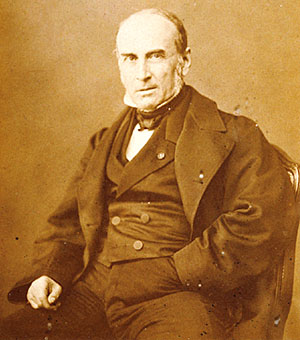
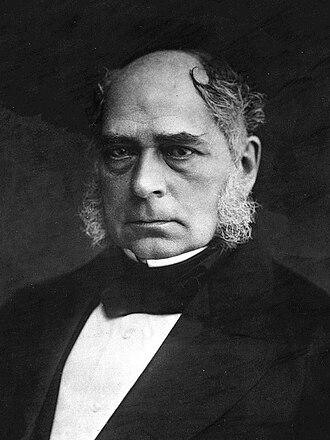
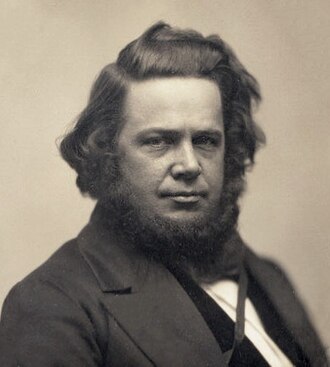
图:作者不详 · Public domain · Wikimedia Commons
- 出生
- 1806 年 4 月 11 日,拉里维耶尔-圣索沃尔
- 逝世
- 1882 年 4 月 5 日,圣叙尔比斯广场
- 国籍
- 法国
- 学科
- 工程与发明
- 职业
- 经济学家、工程师、政治人物、社会学家
- 母语 / 工作语言
- 法语
- 母校
- 巴黎综合理工学院、国立巴黎高等矿业学校
研究领域
主要贡献
代表成就
所获奖项(2)
- 1856Montyon Science Award
- 1867荣誉军团大军官勋章
学会与院士
百科正文
简历
勒·普雷出生于法国,父亲是一名海关职员。他受教育于巴黎综合理工大学和巴黎高等矿业学院。1834年,他被任命为矿业统计常设委员会主席。1840年,他成为首席工程师和巴黎高等矿业学院的冶金教授。其后,拿破仑三世看中并任命他承办1855年世界博览会。 翌年,拿破仑三世任命他为国家顾问(参赞),职责包括治理众多工业。他也被任命为1867年世界博览会的总监,参议员并被授予大官员勋章。
勒·普雷花了接近25年游历欧洲,收集了大量关于工人阶级的社会经济状况的材料。1855年,他出版的《欧洲工人》(Les Ouvriers Européens)为一系列共36篇针对不同业界的典型家庭的预算进行的调查专论。这部著作由经科学院授予蒙蒂雍奖。
1856年,勒·普雷建立了一个国际社会经济学术团体。这个团体主要致力于推进社会研究。1881年,该团体创办名为《社会改革》(La Réforme Sociale)的杂志 (双周刊)。
最初是无神论者的他后来逐渐信教。1864年,他发表了一篇保卫基督教、反对达尔文主义和怀疑主义的散文。1879年,在他离世的前3年,他转而信仰罗马天主教。
以上内容摘自维基百科「勒·普雷」,按 CC BY-SA 4.0 使用,去掉了参考文献、外部链接等尾部小节,公式改写成了纯文本。全文、配图和出处见原文。
英文维基百科补充中文条目比较短,下面是英文条目「Pierre Guillaume Frédéric le Play」的原文
Pierre Guillaume Frédéric le Play (French: [pjɛʁ ɡijom fʁedeʁik lə plɛ]; April 11, 1806 – April 5, 1882) was a French engineer, sociologist and economist.
Life
The son of a custom-house official, Le Play was educated at the École Polytechnique and the École des Mines. He took an interest in sociological questions even as a young man at the École des Mines, befriending a follower of the socialist thinker Saint-Simon. In the late 1820s, Le Play undertook an immense walking tour of Germany investigating its mines. In 1830, a laboratory accident seriously damaged Le Play's left hand and left him disabled for life. While he was recovering in Paris, he was a witness to the events of the July Revolution, and thereafter resolved himself to studying the issues that plagued French society.
In 1834, he was appointed chairman of the permanent committee of mining statistics. He spent the remainder of the 1830s traveling the backroads of Europe as a mining expert, and conducting empirical studies on the state of mines and their workers. In 1840, he became engineer-in-chief and professor of metallurgy at the École des Mines, and was made inspector in 1848. In the 1840s he also became the manager of a mining company in the Ural Mountains. During this time he also met with many of France's leading thinkers and politicians, including Félix Dupanloup, Alphonse de Lamartine, Charles Montalembert, Adolphe Thiers, and Alexis de Tocqueville, to discuss social issues.
Thought
Le Play's essay, Social Reform in France, expounds the basis of his thinking and provides his recommendations to heal the divisions within French society. Le Play situated himself within the French Counter-Enlightenment and Counter-Revolutionary tradition by criticising many of the social trends that were the result of the Enlightenment and the French Revolution. Le Play was critical of the Enlightenment idea that man was by nature good, and that moral progress inevitably followed from material progress. He also opposed theories of political and racial determinism. He believed that societies, like human beings, are truly free, and that a society that uses its capacities to overcome the human propensity for evil would flourish and those that did not would decay. He looked to the past to glean examples of how this could be done, and he especially held up the Middle Ages as the exemplar for social relations. For this reason he opposed the French Revolution's uncritical rejection of the past, especially France's Christian past.
Le Play also believed strong families played a key role in the health of a society, and he placed particular emphasis on the role of mothers and women. Social Reform in France makes two key points about the family: the first is that social progress is tied to support for homeownership and family inheritance.
Legacy
Le Play's work was further developed by his many disciples: Adolphe Focillon (1823–1890), Émile Cheysson (1836–1910), Alexis Delaire (1836–1915), Henri de Tourville (1842–1903), Claudio Jannet (1844–1894), Edmond Demolins (1852–1907), Paul de Rousiers (1857–1934), Gabriel Olphe-Galliard (1870–1947), the Belgian Victor Brants (1854–1917) and the Canadian Léon Gérin.
After an eclipse between the 1940s and the 1960s Le Play's methods resurfaced when the "history of the family" became a new field of interest in social science. In Britain, Peter Laslett who worked within the Cambridge Group for the History of Population and Social Structure used le Play's methods at the end of the 1960s to study family structures from census and property transmission data, describing particularly the nuclear family structure which Le Play had not worked on.
At about the same time in France, legal history academics working on customary law were the first to re-apply Le Play's methods in scientific research. In the early 1970s, a growing number of ethnologists and historians joined this trend, especially those within the historical anthropology school: André Burguière, Emmanuel Le Roy Ladurie. In a 1989 book which became a reference in its field, ethnologist Georges Augustins reshaped Le Play's family types classification.
以上节选摘自英文维基百科「Pierre Guillaume Frédéric le Play」,按 CC BY-SA 4.0 使用,去掉了参考文献、外部链接等尾部小节,公式改写成了纯文本。篇幅所限,较长的小节只摘了开头一部分,有的小节没有收;全文、配图和出处见原文。