格物
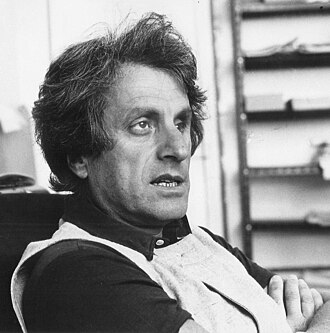
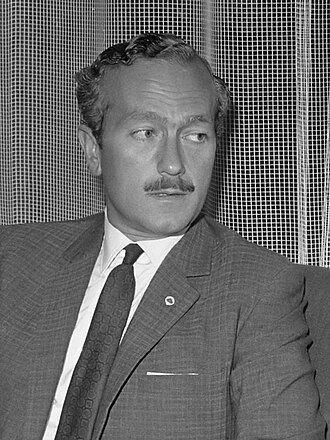
图:The Friends of Xenakis (permission link) · CC BY 2.5 · Wikimedia Commons
- 出生
- 1922 年 5 月 29 日,布勒伊拉
- 逝世
- 2001 年 2 月 4 日,巴黎
- 国籍
- 法国、希腊
- 学科
- 工程与发明
- 职业
- 作曲家、建筑师、工程师、音乐教育家
- 母语 / 工作语言
- 法语、英语、现代希腊语
- 母校
- 雅典国家技术大学
- 工作单位
- 格雷沙姆学院(1975—1978)、印第安纳大学布卢明顿分校(1967—1972)
师承
师从1
博士生1
学生4
来自 Wikidata 的「博士导师」「师从」「博士生」「学生」记录,可能不全。
所获奖项(4)
- 1995Commander of the National Order of Merit
- 1997京都艺术与哲学奖
- —honorary doctor of the University of Sydney
- —Honorary Member of the International Society for Contemporary Music
学会与院士
百科正文
生平
生于罗马尼亚,先是学习建筑学和工程学,后来参加了二战中的希腊抵抗运动以及后来的希腊内战,在战场上面部负伤毁容,一只眼睛失明。1947年赴巴黎,师从众多著名作曲家,尤其是梅西安。又作为建筑师与勒·柯布西耶合作,参与了1958年布鲁塞尔世博会的场馆设计工作。2001年在巴黎去世。泽纳基斯现在主要以先锋派作曲家知名,他的音乐创作受到偶然音乐和电子音乐等现代音乐理念影响,但大部分作品仍由传统乐器演出。他创作的特点是把各种数学概念和理论引入音乐,但在音乐表达上也注重与希腊文化传统的联系。
以上内容摘自维基百科「伊阿尼斯·泽纳基斯」,按 CC BY-SA 4.0 使用,去掉了参考文献、外部链接等尾部小节,公式改写成了纯文本。全文、配图和出处见原文。
英文维基百科补充中文条目比较短,下面是英文条目「Iannis Xenakis」的原文
Giannis Klearchou Xenakis (also spelled for professional purposes as Yannis or Iannis Xenakis; Greek: Γιάννης "Ιάννης" Κλέαρχου Ξενάκης, pronounced [ˈʝanis kseˈnacis]; 29 May 1922 – 4 February 2001) was a Romanian-born Greek-French avant-garde composer, music theorist, architect, performance director and engineer.
After 1947, he fled Greece, becoming a naturalised citizen of France eighteen years later. Xenakis pioneered the use of mathematical models in music such as applications of set theory, stochastic processes and game theory and was also an important influence on the development of electronic and computer music. He integrated music with architecture, designing music for pre-existing spaces, and designing spaces to be integrated with specific music compositions and performances.
Among his most important works are Metastaseis (1953–54) for orchestra, which introduced independent parts for every musician of the orchestra; percussion works such as Psappha (1975) and Pléïades (1979); compositions that introduced spatialization by dispersing musicians among the audience, such as Terretektorh (1966); electronic works created using Xenakis's UPIC system; and the massive multimedia performances Xenakis called polytopes, that were a summa of his interests and skills.
Among the numerous theoretical writings he authored, the book Formalized Music: Thought and Mathematics in Composition (French edition 1963, English translation 1971) is regarded as one of his most important publications. As an architect, Xenakis is primarily known for his early work under Le Corbusier: the priory of Sainte-Marie de La Tourette, on which the two collaborated, and the Philips Pavilion at the 1958 Brussels World's Fair (Expo 58), where Xenakis was the chief designer.
Life
1922–47: early years
Giannis Klearchou Xenakis was born in Brăila, Romania—which at the time had a large Greek community, as the eldest son of Greek parents; Klearchos Xenakis, a businessman from Kymi, Euboea who was managing director of an English export-import agency and one of the richest men in the city, and Fotini Pavlou from Lemnos, a pianist who also spoke German and French. His two younger brothers were Jason, who became a philosophy professor in the United States and Greece, and Kosmas, an architect, urban planner and artist.
His parents were both interested in music, and it was Pavlou who encouraged the young child to learn more about it: the young Giannis was given a flute by his mother, and the family visited the Bayreuth Festival several times, due to his father's interest in opera. Her early death in 1927, when Xenakis was five years old, was a traumatic experience that, in his own words, "deeply scarred" the future composer. She had previously been infected from measles and died after giving birth to a stillborn daughter.
He was subsequently educated by a series of English, French, and German governesses, and then, in 1932, sent to Greece to study at the Anargyrio-Korgialenio boarding school on the Aegean island of Spetses. He excelled in both academics and athletics and sang in the school's boys' choir, where the repertoire included works by Palestrina, and Mozart's Requiem, which Xenakis memorized in its entirety.
It was also at the Spetses school that Xenakis studied notation and solfège, being introduced to the music of Ludwig van Beethoven and Johannes Brahms and became enamoured of Greek traditional and church music. At the same time, he discovered the writer Homer and had a habit of visiting museums.
In 1938, after graduating from the school, Xenakis moved to Athens to prepare for entrance exams at its National Technical University, also studying Ancient Greek. He was encouraged by his friends and family to do so due to his interests in physics and mathematics. Although he intended to study architecture and engineering, he also took lessons in harmony and counterpoint with Aristotelis Koundouroff. In 1940, he successfully passed the exams, but his studies were cut short by the Greco-Italian War, which began with the Italian invasion on 28 October 1940. Although Greece eventually won the war, it was not long before the German army joined the Italians in the Battle of Greece, in April 1941.
This led to the Axis occupation of Greece during World War II, which lasted until late 1944, when the Allies began their drive across Europe, forcing the Axis forces to withdraw.
以上节选摘自英文维基百科「Iannis Xenakis」,按 CC BY-SA 4.0 使用,去掉了参考文献、外部链接等尾部小节,公式改写成了纯文本。篇幅所限,较长的小节只摘了开头一部分,有的小节没有收;全文、配图和出处见原文。