格物
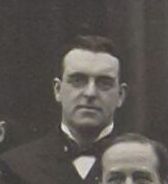
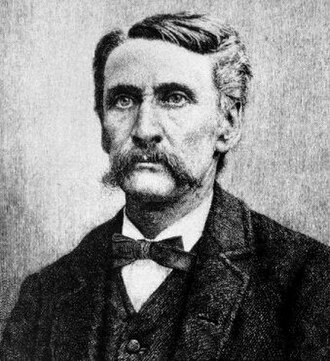
图:Bibliothèque nationale de France · Public domain · Wikimedia Commons
Arthur Robert Hinks1873—1945
British astronomer (1873–1945)
Arthur Robert Hinks, CBE, FRS was a British astronomer and geographer.
摘自英文维基百科「Arthur Robert Hinks」(英文维基百科,暂无中文条目),CC BY-SA 4.0
- 出生
- 1873 年 5 月 26 日,伦敦
- 逝世
- 1945 年 4 月 14 日,罗伊斯顿
- 国籍
- 英国
- 学科
- 天文学、博物与综合
- 职业
- 天文学家、地理学家
- 母语 / 工作语言
- 英语
- 母校
- 剑桥大学三一学院
研究领域
所获奖项(7)
- 1910勒孔特奖章
- 1912英国皇家天文学会金质奖章
- 1938维多利亚勋章
- 1943卡勒姆地理奖章
- —英国皇家学会院士
- —大英帝国司令勋章
- —皇家地理学会会员
学会与院士
百科正文
本条目暂无中文维基百科条目,下面是英文维基百科原文。
As an astronomer, he is best known for his work in determining the distance from the Sun to the Earth (the astronomical unit) from 1900 to 1909: for this achievement, he was awarded the Gold Medal of the Royal Astronomical Society and was elected a fellow of the Royal Society. His later professional career was in surveying and cartography, an extension of his astronomical interests.
Astronomical career
Early work
Hinks was educated at Whitgift School and Trinity College, Cambridge, where he graduated Bachelor of Arts in 1895.
Measurement of the solar parallax
Although Hinks had originally intended to measure stellar parallax, and produced an ambitious plan to do so in conjunction with Henry Norris Russell, an even more fundamental opportunity arose with the discovery in 1898 of 433 Eros. It soon became apparent that Eros was a near-Earth asteroid, and would be passing very close to the Earth in late 1900 – early 1901. The closest approach was about 30 million miles (48 million kilometres), or about 125 times the distance from the Earth to the Moon, a stone's-throw in astronomical terms. With Eros passing so close to the Earth, it would be possible to measure its parallax to high precision, and so calculate the solar parallax or, in other terms, the distance from the Sun to the Earth (now known as the astronomical unit, a name that was coined at about this time).
An international effort to obtain accurate observations of Eros was put in place under the co-ordination of Maurice Loewy, then director of the Paris Observatory. Hinks was an enthusiastic, even zealous member of the team from the start, and was responsible for the observations from Cambridge Observatory. In total, no fewer than fifty-eight observatories were involved. Hinks spent three months observing Eros from dusk until dawn in 1900/01 – or rather, trying to observe Eros: the weather in Cambridge was unusually wet that winter, and Hinks only had half a dozen cloud-free nights during the whole period. Fortunately he was using a photographic telescope, and was able to obtain some 500 exposures, as results from more traditional visual methods (meridian line or micrometre measurements) would have been far less conclusive.
Hinks published the Cambridge results in November 1901, but this was far from the end of the task. The results from all the participating observatories had to be collated and analysed, a monumental feat which initially fell to Loewy in Paris. An additional problem was that it was not clear how the different measurement uncertainties should be treated, especially as different observatories used different methods to calculate the apparent position of Eros. Hinks also participated in this initial period, publishing a comparison of his Cambridge results with those from the Lick Observatory on Mount Hamilton, California, and from the Goodsell Observatory near Minneapolis, Minnesota. However Hinks became increasingly concerned about the systematic errors in several of the results, and published his own provisional result for the solar parallax in 1904, based on photographic observations from nine observatories.
Geographical career
In 1903, Hinks undertook a course in surveying at the School of Military Engineering in Chatham in Kent. At the time, there was no National Service (conscription) in the United Kingdom, and it is possible that he did the course to gain a profession to support his young family (he had been married for four years, and his son Roger was born in 1903), after eight years in a poorly paid junior post in astronomy. The same year, he was promoted to senior assistant at the Cambridge Observatory and appointed secretary of the Royal Astronomical Society.
Hinks gained his first full academic post in 1908, a lectureship in surveying and cartography at the Cambridge School of Geography (part of the University of Cambridge, as was the Observatory) funded by the Royal Geographical Society (RGS). In 1911, he was elected a fellow of the Society, becoming assistant secretary in 1912/1913 and succeeding John Scott Keltie as secretary in 1915. As secretary of the RGS, he also acted as editor of the Geographical Journal: he held both posts until his death in 1945. During the First World War, Hinks prepared maps and did other geographical work for the General staff. Hicks also provided reports on the boundary treaties put in place after the war, and on the implementation of the Treaty of Versailles, particularly the Upper Silesia plebiscite.
Hinks was involved in the organisation of the expeditions to observe the total solar eclipse in May 1919 from Príncipe off the west coast of Africa and from Sobral in Brazil, during which his nemesis from Cambridge, Eddington, would provide one of the first proofs of Einstein's theory of general relativity.
Hink's most controversial role was as joint secretary of the Mount Everest Committee, a joint body of the RGS and the Alpine Club dedicated to organising an ascent of the world's highest mountain. The initial 1921 British Mount Everest reconnaissance expedition suggested a route to the top from the Tibetan side, and a second expedition was sent out in 1922 to try to reach the summit. The 1922 expedition never made it to the summit, despite three attempts and, on the second attempt led by George Mallory, an avalanche killed seven sherpas. However George Finch and Capt. Geoffrey Bruce set a new altitude record, climbing to 8326 metres (27,316 feet) on the second summit attempt.
Another expedition was organised for 1924. However Hinks vetoed Finch's inclusion on the expedition, despite his altitude record during the 1922 expedition, ostensibly because he was divorced and had accepted money for lectures. The true reason was that Finch was Australian, and Hinks was determined that the first person to reach the summit should be British. Mallory (who had also given paid lectures about the 1922 expedition) initially refused to return to Everest without Finch, but was eventually persuaded by members of the British royal family, at Hinks' request.
Awards
- 1910: Prix Leconte of the French Academy of Sciences
- 1911: Fellowship of the Royal Geographical Society (FRGS)
- 1912: Gold Medal of the Royal Astronomical Society
- 1913: Fellowship of the Royal Society (FRS)
1913: Gresham Professor of Astronomy, appointed by the City of London Corporation, a post he would hold until 1941
- 1920: Commander of the Order of the British Empire (CBE)
- 1938: Victoria Medal of the Royal Geographical Society
- 1943: Cullum Geographical Medal of the American Geographical Society
2003: The Hinks Dorsum, a ridge on 433 Eros, is named in honour of Hinks and his association with the asteroid by the International Astronomical Union
以上节选摘自英文维基百科「Arthur Robert Hinks」,按 CC BY-SA 4.0 使用,去掉了参考文献、外部链接等尾部小节,公式改写成了纯文本。篇幅所限,较长的小节只摘了开头一部分,有的小节没有收;全文、配图和出处见原文。
同一学科、同时代的科学家

同一学科的科学家
更多 ›