格物
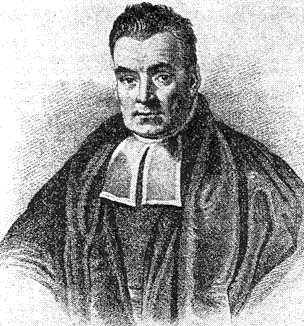
图:作者不详 · Public domain · Wikimedia Commons
- 出生
- 1702 年,伦敦
- 逝世
- 1761 年 4 月 17 日,皇家坦布里奇韦尔斯
- 国籍
- 大不列颠王国
- 学科
- 数学、博物与综合
- 职业
- 数学家、统计学家、神职人员、哲学家
- 母语 / 工作语言
- 英语
- 母校
- 爱丁堡大学
研究领域
主要贡献
代表成就
本站收录的发现与发明
以他 / 她命名
所获奖项(1)
- 1742英国皇家学会院士
学会与院士
百科正文
英文维基百科补充中文条目比较短,下面是英文条目「Thomas Bayes」的原文
Thomas Bayes ( BAYZ; c. 1701 – 7 April 1761) was an English statistician, philosopher and Presbyterian minister who is known for formulating a specific case of the theorem that bears his name: Bayes' theorem.
Bayes never published what would become his most famous accomplishment; his notes were edited and published posthumously by Richard Price.
Biography
Thomas Bayes was the son of London Presbyterian minister Joshua Bayes, and was possibly born in Hertfordshire. He came from a prominent nonconformist family from Sheffield. In 1719, he enrolled at the University of Edinburgh to study logic and theology. On his return around 1722, he assisted his father at the latter's chapel in London before moving to Tunbridge Wells, Kent, around 1734. There he was minister of the Mount Sion Chapel, until 1752.
He is known to have published two works in his lifetime, one theological and one mathematical:
Divine Benevolence, or an Attempt to Prove That the Principal End of the Divine Providence and Government is the Happiness of His Creatures (1731)
An Introduction to the Doctrine of Fluxions, and a Defence of the Mathematicians Against the Objections of the Author of The Analyst (published anonymously in 1736), in which he defended the logical foundation of Isaac Newton's calculus ("fluxions") against the criticism by George Berkeley, a bishop and noted philosopher, the author of The Analyst
Bayes was elected as a Fellow of the Royal Society in 1742. His nomination letter was signed by Philip Stanhope, Martin Folkes, James Burrow, Cromwell Mortimer, and John Eames.
Bayes' theorem
Bayes's solution to a problem of inverse probability was presented in An Essay Towards Solving a Problem in the Doctrine of Chances, which was read to the Royal Society in 1763 after Bayes's death. Richard Price shepherded the work through this presentation and its publication in the Philosophical Transactions of the Royal Society of London the following year. This was an argument for using a uniform prior distribution for a binomial parameter and not merely a general postulate. This essay gives the following theorem (stated here in present-day terminology). ((n+1)!)/(S!(n-S)!)r^(S)(1-r)^(n-S) dr for 0≤ r≤ 1, where S=X₁+⋯ +Xₙ.
Thus, for example, (公式略)
This is a special case of the Bayes' theorem.
In the first decades of the eighteenth century, many problems concerning the probability of certain events, given specified conditions, were solved. For example: given a specified number of white and black balls in an urn, what is the probability of drawing a black ball? Or the converse: given that one or more balls has been drawn, what can be said about the number of white and black balls in the urn? These are sometimes called "inverse probability" problems.
Bayes's Essay contains his solution to a similar problem posed by Abraham de Moivre, author of The Doctrine of Chances (1718).
In addition, a paper by Bayes on asymptotic series was only published posthumously.
Bayesianism
Bayesian probability is the name given to several related interpretations of probability as an amount of epistemic confidence – the strength of beliefs, hypotheses etc. – rather than a frequency. This allows the application of probability to all sorts of propositions rather than just ones that come with a reference class. "Bayesian" has been used in this sense since about 1950. Since its rebirth in the 1950s, advancements in computing technology have allowed scientists from many disciplines to pair traditional Bayesian statistics with random walk techniques. The use of the Bayes' theorem has been extended in science and in other fields.
Bayes himself might not have embraced the broad interpretation now called Bayesian, which was in fact pioneered and popularised by Pierre-Simon Laplace; it is difficult to assess Bayes's philosophical views on probability, since his essay does not go into questions of interpretation. There, Bayes defines probability of an event as "the ratio between the value at which an expectation depending on the happening of the event ought to be computed, and the value of the thing expected upon its happening" (Definition 5).
以上节选摘自英文维基百科「Thomas Bayes」,按 CC BY-SA 4.0 使用,去掉了参考文献、外部链接等尾部小节,公式改写成了纯文本。篇幅所限,较长的小节只摘了开头一部分,有的小节没有收;全文、配图和出处见原文。
同一学科、同时代的科学家
同一学科的科学家
更多 ›