格物
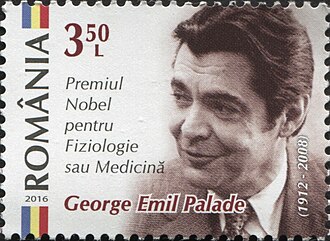
图:Post of Romania · Public domain · Wikimedia Commons
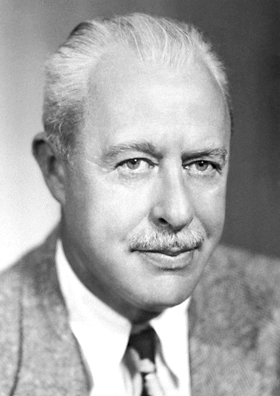
乔治·埃米尔·帕拉德1912—2008
George Emil Palade
医生, 罗马尼亚
乔治·埃米尔·帕拉德,出生于罗马尼亚雅西的美国细胞生物学家。由于对细胞胞器功能与构造的研究,而与阿尔伯特·克劳德及克里斯蒂安·德·迪夫共同获得诺贝尔生理学或医学奖。
摘自维基百科「喬治·埃米爾·帕拉德」,CC BY-SA 4.0
- 出生
- 1912 年 11 月 19 日,雅西
- 逝世
- 2008 年 10 月 7 日,德尔马
- 国籍
- 美国、罗马尼亚
- 学科
- 物理学、化学、生物学、医学、工程与发明、博物与综合
- 职业
- 医生、细胞生物学家、化学家、发明家
- 母语 / 工作语言
- 英语、罗马尼亚语
- 母校
- 布加勒斯特大学、Bogdan Petriceicu Hasdeu National College
- 工作单位
- 耶鲁大学、圣迭戈加利福尼亚大学
研究领域
师承
博士生2
学生1
来自 Wikidata 的「博士导师」「师从」「博士生」「学生」记录,可能不全。
所获奖项(13)
- 1966拉斯克基础医学研究奖
- 1967盖尔德纳国际奖
- 1970路易莎·格罗斯·霍维茨奖
- 1972Dickson Prize in Science
- 1974诺贝尔生理学或医学奖
- 1981E·B·威尔森奖章
- 1984英国皇家学会外籍会员
- 1984honorary doctorate from University of Paris-XI
- 1985Schleiden Medal
- 1986美国国家科学奖章
- 2007罗马尼亚之星勋章
- —斯特林教席
- —维也纳大学荣誉博士
学会与院士
百科正文
英文维基百科补充中文条目比较短,下面是英文条目「George Emil Palade」的原文
George Emil Palade (Romanian pronunciation: [ˈdʒe̯ordʒe eˈmil paˈlade]; November 19, 1912 – October 7, 2008) was a Romanian-American cell biologist. In 1974 he was awarded the Nobel Prize in Physiology or Medicine along with Albert Claude and Christian de Duve. The prize was granted for his innovations in electron microscopy and cell fractionation which together laid the foundations of modern molecular cell biology, the most notable discovery being the ribosomes of the endoplasmic reticulum – which he first described in 1955.
Palade also received the U.S. National Medal of Science in Biological Sciences for "pioneering discoveries of a host of fundamental, highly organized structures in living cells" in 1986, and was previously elected a Member of the U.S. National Academy of Sciences in 1961. In 1968 he was elected as an Honorary Fellow of the Royal Microscopical Society (HonFRMS) and in 1984 he became a Foreign Member of the Royal Society (ForMemRS).
Education and early life
George Emil Palade was born on November 19, 1912, in Iași, Romania. His paternal family, the Palade, was a boyar family of Greek descent, probably originally from Thessaloniki, with Palade's father being a professor of philosophy at the University of Iași. His mother, Constanța Cantemir, was a high school teacher, descended on her father's side from the Cantemir family and on her mother's side from the family of Dimitrie Iosepide, which was likewise of Greek descent.
Religiously, Palade adhered to Greek Orthodox Christianity. He received his M.D. in 1940 from the Carol Davila School of Medicine in Bucharest.
Career and research
Palade was a member of the faculty at University of Bucharest until 1946, when he went to the United States to do postdoctoral research. While assisting Robert Chambers in the Biology Laboratory of New York University, he met Professor Albert Claude. He later joined Claude at the Rockefeller Institute for Medical Research.
In 1952, Palade became a naturalized citizen of the United States. He worked at the Rockefeller Institute (1958–1973), and was a professor at Yale University Medical School (1973–1990), and University of California, San Diego (1990–2008). At UCSD, Palade was Professor of Medicine in Residence (Emeritus) in the Department of Cellular & Molecular Medicine, as well as a Dean for Scientific Affairs (Emeritus), in the School of Medicine at La Jolla, California.
In 1970, he was awarded the Louisa Gross Horwitz Prize from Columbia University, together with Renato Dulbecco (winner of the 1975 Nobel Prize in Physiology or Medicine) "for discoveries concerning the functional organization of the cell that were seminal events in the development of modern cell biology", related to his previous research carried out at the Rockefeller Institute for Medical Research. His Nobel lecture, delivered on December 12, 1974, was entitled: "Intracellular Aspects of the Process of Protein Secretion", published in 1992 by the Nobel Prize Foundation, He was elected an Honorary member of the Romanian Academy in 1975. He received the Golden Plate Award of the American Academy of Achievement in 1975. In 1981, Palade became a founding member of the World Cultural Council.
In 1985, he became the founding editor of the Annual Review of Cell and Developmental Biology.
In 1988 he was also elected an Honorary Member of the American-Romanian Academy of Arts and Sciences (ARA).
Palade was the first Chairman of the Department of Cell Biology at Yale University. Presently, the Chair of Cell Biology at Yale is named the "George Palade Professorship".
Palade was known for his support and mentorship with young scientists and that colleagues of his saw him regularly engaged with graduate students at conferences and encouraged innovative experimental approaches that would be normally been seen as un-regular. Including the use of electron microscopy in the secretory pathway research.
At the Rockefeller Institute for Medical Research, Palade used electron microscopy to study the internal organization of such cell structures as ribosomes, mitochondria, chloroplasts, the Golgi apparatus, and others. His most important discovery was made while using an experimental strategy known as a pulse-chase analysis.
Personal life
He married Irina Malaxa (born in 1919, the daughter of industrialist Nicolae Malaxa) on June 12, 1941. The couple had two children: Georgia (born in 1943) and Theodore (born in 1949). After his wife died in 1969, Palade married Marilyn Farquhar, a cell biologist at the University of California, San Diego.
以上节选摘自英文维基百科「George Emil Palade」,按 CC BY-SA 4.0 使用,去掉了参考文献、外部链接等尾部小节,公式改写成了纯文本。篇幅所限,较长的小节只摘了开头一部分,有的小节没有收;全文、配图和出处见原文。
同年获同一奖项
同一学科、同时代的科学家


同一学科的科学家
更多 ›