格物
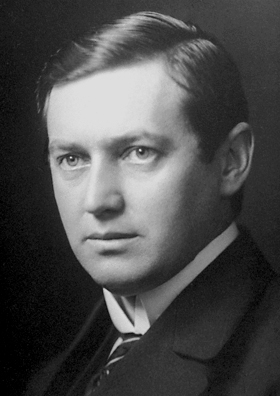
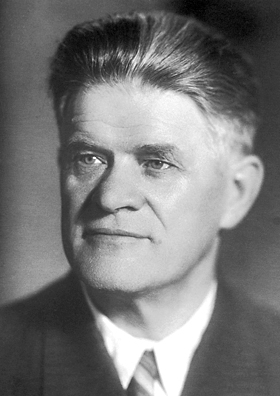
图:The Nobel Foundation · Public domain · Wikimedia Commons
盖欧尔格·冯·贝凯希1899—1972
Georg von Békésy
物理学家, 匈牙利
格奥尔格·冯·贝凯希,匈牙利语名贝凯希·哲尔吉,是一位出生在布达佩斯的匈牙利生物物理学家。
摘自维基百科「格奥尔格·冯·贝凯希」,CC BY-SA 4.0
- 出生
- 1899 年 6 月 3 日,布达佩斯
- 逝世
- 1972 年 6 月 13 日,火奴鲁鲁
- 国籍
- 匈牙利、美国
- 学科
- 物理学、化学、生物学、工程与发明、博物与综合
- 职业
- 物理学家、神经学家、化学家、自传作者
- 母语 / 工作语言
- 匈牙利语、英语
- 母校
- 罗兰大学(博士,1923 年)、伯恩大学(1921 年)
- 工作单位
- 哈佛大学、罗兰大学、夏威夷大学
研究领域
所获奖项(5)
- 1937Silver Leibniz medal
- 1955Howard Crosby Warren Medal
- 1961诺贝尔生理学或医学奖
- 1969honorary doctor of Semmelweis University
- —ASA Gold Medal
学会与院士
百科正文
1961年,他被授予了诺贝尔生理学或医学奖,以表彰其对哺乳动物听觉器官中耳蜗所发挥的功能的研究。
以上内容摘自维基百科「格奥尔格·冯·贝凯希」,按 CC BY-SA 4.0 使用,去掉了参考文献、外部链接等尾部小节,公式改写成了纯文本。全文、配图和出处见原文。
英文维基百科补充中文条目比较短,下面是英文条目「Georg von Békésy」的原文
Georg von Békésy (Hungarian: Békésy György, pronounced [ˈbeːkeːʃi ˈɟørɟ]; 3 June 1899 – 13 June 1972) was a Hungarian-American biophysicist.
By using strobe photography and silver flakes as a marker, he was able to observe that the basilar membrane moves like a surface wave when stimulated by sound. Because of the structure of the cochlea and the basilar membrane, different frequencies of sound cause the maximum amplitudes of the waves to occur at different places on the basilar membrane along the coil of the cochlea. High frequencies cause more vibration at the base of the cochlea while low frequencies create more vibration at the apex.
He concluded that his observations showed how different sound wave frequencies are locally dispersed before exciting different nerve fibers that lead from the cochlea to the brain.
In 1961, he was awarded the Nobel Prize in Physiology or Medicine for his research on the function of the cochlea in the mammalian hearing organ.
In his last publication A. James Hudspeth and his research team – based on "a groundbreaking technological advancement" – ultimately established that also in mammals frequency analysis in the inner ear is accomplished by tuned hairs cells. This process occurs without a traveling wave (surface wave) on the basilar membrane, and the inner ear theory of Békésy was thus disproved.
Biography
Békésy was born on 3 June 1899 in Budapest, Hungary, as the first of three children (György 1899, Lola 1901 and Miklós 1903) to Sándor Békésy (1860–1923), an economic diplomat, and to his mother Paula Mazaly.
The Békésy family was originally Reformed but converted to Catholicism. His mother, Paula Mazaly (1877–1974) was born in Szagolyca (now Čađavica, Croatia). His maternal grandfather was from Pécs. His father was born in Kolozsvár (now Cluj-Napoca, Romania).
Békésy went to school in Budapest, Munich, and Zürich. He studied chemistry in Bern and received his PhD in physics on the subject: "Fast way of determining molecular weight" from the University of Budapest in 1926.
He then spent one year working in an engineering firm. He published his first paper on the pattern of vibrations of the inner ear in 1928. He was offered a position at Uppsala University by Róbert Bárány, which he declined because of the hard Swedish winters.
Before and during World War II, Békésy worked for the Hungarian Post Office (1923 to 1946), where he did research on telecommunications signal quality. This research led him to become interested in the workings of the ear. In 1946, he left Hungary to follow this line of research at the Karolinska Institute in Sweden.
Research
Békésy developed a method for dissecting the inner ear of human cadavers while leaving the cochlea partly intact. By using strobe photography and silver flakes as a marker, he was able to observe that the basilar membrane moves like a surface wave when stimulated by sound. Because of the structure of the cochlea and the basilar membrane, different frequencies of sound cause the maximum amplitudes of the waves to occur at different places on the basilar membrane along the coil of the cochlea. High frequencies cause more vibration at the base of the cochlea while low frequencies create more vibration at the apex.
Békésy concluded from these observations that by exciting different locations on the basilar membrane different sound wave frequencies excite different nerve fibers that lead from the cochlea to the brain. He theorized that, due to its placement along the cochlea, each sensory cell (hair cell) responds maximally to a specific frequency of sound (the so-called tonotopy). Békésy later developed a mechanical model of the cochlea, which confirmed the concept of frequency dispersion by the basilar membrane in the mammalian cochlea.
Awards
Békésy's honours include:
The Denker Prize in Otology (1931), The Leibniz Medal of the Berlin Academy of Sciences (1937), The Guyot Prize for Speech and Otology of Groningen University (1939), The Academy Award of the Budapest Academy of Science (1946), Shambough Prize in Otology (1950).
Honorary doctorates (M.D.) were conferred on him by the University of Munster (1955), Bern (1959), Padua (1962), Buenos Aires (1968), Cordoba (1968), Hawaii (1969) and Semmelweiss University, Budapest (1969).
以上节选摘自英文维基百科「Georg von Békésy」,按 CC BY-SA 4.0 使用,去掉了参考文献、外部链接等尾部小节,公式改写成了纯文本。篇幅所限,较长的小节只摘了开头一部分,有的小节没有收;全文、配图和出处见原文。
同一学科、同时代的科学家


同一学科的科学家
更多 ›