格物
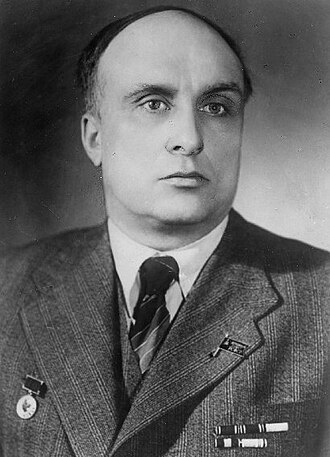
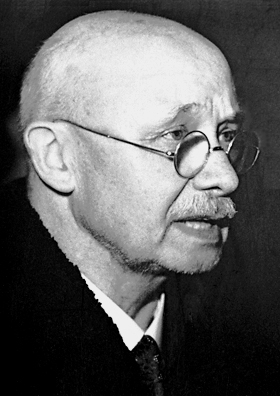
图:作者不详 · Public domain · Wikimedia Commons
亚历山大·尼古拉耶维奇·涅斯梅亚诺夫1899—1980
Alexander Nesmeyanov
Soviet chemist specializing in organometallic chemistry
亚历山大·尼古拉耶维奇·涅斯梅亚诺夫,苏联化学家。苏联科学院院长。英国皇家学会外籍院士。
摘自维基百科「亚历山大·涅斯梅亚诺夫」,CC BY-SA 4.0
- 出生
- 1899 年 8 月 28 日,莫斯科
- 逝世
- 1980 年 1 月 17 日,莫斯科
- 国籍
- 俄罗斯帝国、苏联
- 学科
- 化学
- 职业
- 化学家
- 母语 / 工作语言
- 俄语、英语
- 母校
- 莫斯科国立大学(1922 年)
- 工作单位
- 莫斯科国立大学(1948—)、涅斯梅亚诺夫有机元素化合物研究所(1954—)、莫斯科国立精细化工大学(1938—)、俄罗斯科学院有机化学研究所(1939—1954)、俄罗斯科学院(1951—1961)
研究领域
师承
博士生6
来自 Wikidata 的「博士导师」「师从」「博士生」「学生」记录,可能不全。
所获奖项(28)
- 1942State Stalin Prize, 1st degree
- 1943State Stalin Prize, 1st degree
- 1944列宁勋章
- 1945列宁勋章
- 1949红旗劳动勋章
- 1953列宁勋章
- 1959列宁勋章
- 1961罗蒙诺索夫金质奖章
- 1961英国皇家学会外籍会员
- 1962罗蒙诺索夫金质奖章
- 1964doctor honoris causa from the University of Paris
- 1966列宁奖
- 1966honorary doctor of the University of Bordeaux
- 1967列宁勋章
- 1969列宁勋章
- 1969镰刀与槌子奖章
- 1969Order of Cyril and Methodius
- 1969社会主义劳动英雄
- 1972Jubilee Medal "50 Years of the Mongolian People's Revolution"
- 1974十月革命勋章
- 1977门捷列夫金奖
- 1979列宁勋章
- 1979镰刀与槌子奖章
- 1979社会主义劳动英雄
- —1941-1945年大卫国战争中忘我劳动奖章
- —保卫莫斯科奖章
- —1941—1945年伟大卫国战争战胜德国奖章
- —莫斯科建城八百周年纪念奖章
学会与院士
百科正文
生平
1899年9月9日生于莫斯科。1922年毕业于莫斯科大学,后留校工作。1930年至1934年在苏联科学院肥料和农药研究所工作。1934年在苏联科学院有机化学研究所工作。1935年起任教授。1939年当选为苏联科学院通讯院士,1943年入选正式院士。1939年至1954年任苏联科学院有机化学研究所所长。1948年至1951年担任莫斯科国立大学校长。
1951年2月,谢尔盖·瓦维洛夫去世后,他当选为苏联科学院院长。应本人要求,他于1961年5月19日辞去了苏联科学院院长的职务。1950年至1962年连续当选苏联最高苏维埃代表。
1980年1月17日在莫斯科去世。安葬于新圣女公墓。
研究
涅斯梅亚诺夫在金属有机化合物方面的化学研究上取得了丰硕成果。他所创造的可以使有机物质与一系列金属化合的“重氮化方法”尤其著名。
中文译本
涅斯米扬诺夫. 《放射性同位素及其应用》. 国防工业出版社. 1960年.
涅斯米扬诺夫; 别里科夫. 《未来的食物》. 由王秉饮,李学建翻译. 科学普及出版社. 1983年.
以上内容摘自维基百科「亚历山大·涅斯梅亚诺夫」,按 CC BY-SA 4.0 使用,去掉了参考文献、外部链接等尾部小节,公式改写成了纯文本。全文、配图和出处见原文。
英文维基百科补充中文条目比较短,下面是英文条目「Alexander Nesmeyanov」的原文
Alexander Nikolayevich Nesmeyanov (Russian: Александр Николаевич Несмеянов; 9 September [O.S. 28 August] 1899 – 17 January 1980) was a Soviet chemist and academician (1943) specializing in organometallic chemistry.
Biography
He was born in Moscow. He had two brothers Vasily (1904) and Andrei (1911) and a sister Tatyana (1908) (two born sisters died in infancy). His father (Nikolai Vasilyevich Nesmeyanov), graduated with excellence Vladimir Gymnasium, and then the Faculty of Law of Moscow University. He became interested in enlightenment and was working as a public teacher in the village of Bushov (Tula province) for 10 years. He had married in 1898 and worked at the Moscow city government, then he was a director Bakhrushinsky orphanage in Moscow (1901 – 1917). Alexander's mother, Lyudmila Danilovna (1878 – 1958), was a multi-talented teacher. At ten years Alexander became a vegetarian, and in 1913 he stopped eating fish. It was not easy to follow this conviction, especially in the famine years of 1918 – 1921, when roach and herring were an essential food product. He had become interested in various branches of biology: entomology, hydrobiology, ornithology and from the age of thirteen became interested in chemistry.
Scientific activity
Alexander Nikolayevich was one of the greatest organic chemists of the 20th century. He organised a number of fundamental works on the theory of the structure and reactivity of organic compounds. He created a new discipline lying on the border of inorganic and organic chemistry, which was called "chemistry of organoelement compounds". Also he has researched the production of synthetic food, the creation of new drugs and the synthesis of a number of technical materials.
Nesmeyanov's diazomethod (Nesmeyanov's reaction)
Studying the decomposition of double salts of aryldiazonium halides with mercury halides by copper powder, in 1929 Nesmeyanov proposed a new method for obtaining arylmercury halides. Later, the diazo method was extended to the synthesis of organometallic compounds of thallium, germanium, tin, lead, arsenic, antimony, and bismuth.
Recognition
Alexander Nikolayevich's work on the chemistry of organoelement compounds brought him fame and recognition not only in the Soviet Union, but also in the world. He was elected an honorary member of several dozen foreign national academies and scientific societies.
Awards and prizes
Stalin Prize first degree (1943) - for research in the field of organometallic compounds, the results of which were published in 1941 and 1942 in a series of articles: “On the interaction of diazoacetic ether with tin chloride and ferric chloride”, “From the field of organomercuric compounds ”, “On the reaction of nitroso compounds with nitric oxide” and in the monograph “Synthetic methods in the field of organometallic compounds of mercury” (1942)
Lenin Prize (1966) - for a cycle of research in the field of organoelement compounds
Twice Hero of Socialist Labour (1969, 1979)
Gold medal named after D. I. Mendeleev (1977) - for a series of works in the field of organometallic compounds and obtaining food from non-traditional sources
V Mendeleev Reader
Main works
Nesmeyanov A.N. D.I. Mendeleev's Periodic Table of Elements and Organic Chemistry. Series: Reports at the plenary session/ VIII Mendeleev Congress on General and Applied Chemistry. Moscow: Publishing House Acad. Sciences of the USSR, 1959.
Nesmeyanov A.N. Ed. acad. A. V. Topchiev Selected Works. Moscow: Publishing House Acad. Sciences of the USSR, 1959.
Ioffe S.T. and Nesmeyanov A.N. Ed. A. N. Nesmeyanova and К. A. Kocheshkova Magnesium, beryllium, calcium, strontium, barium. Series: Methods of elemental organic chemistry. Moscow: Publishing House Acad. Sciences of the USSR, 1963.
Nesmeyanov A.N. and Sokolik R.A. Ed. A. N. Nesmeyanova and К. A. Kocheshkova Bor. Aluminum. Gallium. Indium. Thallium. Series: Methods of elemental organic chemistry. Moscow: Publishing House Acad. Sciences of the USSR, 1964.
Makarova L.G. and Nesmeyanov A.N. Ed. A. N. Nesmeyanova and К. A. Kocheshkova Mercury. Series: Methods of elemental organic chemistry. Moscow: Publishing House Acad. Sciences of the USSR, 1965.
以上节选摘自英文维基百科「Alexander Nesmeyanov」,按 CC BY-SA 4.0 使用,去掉了参考文献、外部链接等尾部小节,公式改写成了纯文本。篇幅所限,较长的小节只摘了开头一部分,有的小节没有收;全文、配图和出处见原文。
同一学科、同时代的科学家


同一学科的科学家
更多 ›