格物
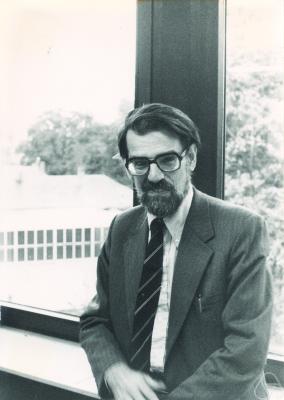
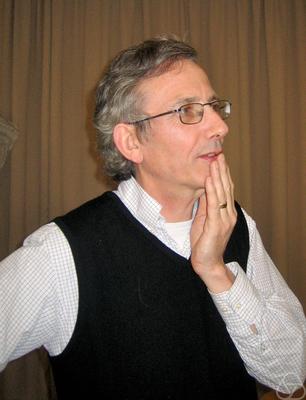
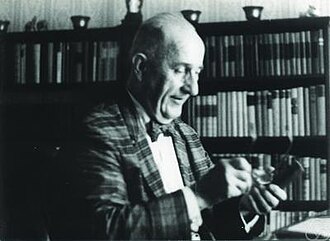
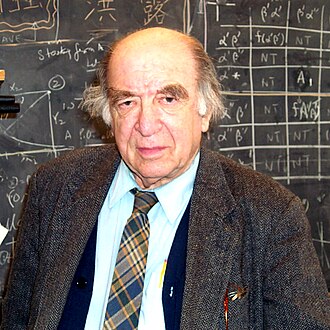
图:Konrad Jacobs, Erlangen, Copyright is with MFO · CC BY-SA 2.0 de · Wikimedia Commons
- 出生
- 1923 年 6 月 2 日,剑桥
- 逝世
- 2016 年 3 月 12 日,图森
- 国籍
- 美国
- 学科
- 数学、计算机科学、博物与综合
- 职业
- 经济学家、数学家、大学教师、统计学家
- 母语 / 工作语言
- 英语
- 母校
- 哈佛大学、普林斯顿大学(哲学博士,1953 年)、菲利普斯埃克塞特学院
- 工作单位
- 兰德公司、加州大学洛杉矶分校
研究领域
师承
博士导师1
博士生11
来自 Wikidata 的「博士导师」「师从」「博士生」「学生」记录,可能不全。
所获奖项(7)
- 1944铜星勋章
- 1967Fellow of the Econometric Society
- 1981冯·诺伊曼理论奖
- 2012诺贝尔经济学奖
- 2013金鹅奖
- 2013美国数学会会士
- —Distinguished Fellow of the American Economic Association
学会与院士
百科正文
职业生涯
劳埃德·沙普利1923年6月2日出生在马萨诸塞州剑桥市,其父是杰出的天文学家哈罗·沙普利。他是哈佛的学生,1943年在中国成都的陆军航空队当中士,因破译苏联的天气代码获得了铜星勋章。战争结束后,他回到哈佛,1948年获数学学士学位。在兰德公司工作一年后,他去了普林斯顿大学,在那里他于1953年获得了博士学位。他的论文和博士后研究工作延续了弗朗西斯·伊西德罗·埃奇沃思的思想,引入了沙普利值和博弈论的核心解决方案。毕业后,他留在普林斯顿大学一段时间,1954年至1981年在兰德公司工作。自1981年以来,他一直在加州大学洛杉矶分校教授。
以上内容摘自维基百科「劳埃德·沙普利」,按 CC BY-SA 4.0 使用,去掉了参考文献、外部链接等尾部小节,公式改写成了纯文本。全文、配图和出处见原文。
英文维基百科补充中文条目比较短,下面是英文条目「Lloyd Shapley」的原文
Lloyd Stowell Shapley (; June 2, 1923 – March 12, 2016) was an American mathematician and Nobel Memorial Prize-winning economist. He contributed to the fields of mathematical economics and especially game theory. Shapley is generally considered one of the most important contributors to the development of game theory since the work of von Neumann and Morgenstern. With Alvin E. Roth, Shapley won the 2012 Nobel Memorial Prize in Economic Sciences "for the theory of stable allocations and the practice of market design."
Life and career
Lloyd Shapley was born on June 2, 1923, in Cambridge, Massachusetts, one of the sons of astronomers Harlow Shapley and Martha Betz Shapley, both from Missouri. He attended Phillips Exeter Academy and was a student at Harvard when he was drafted in 1943. He served in the United States Army Air Corps in Chengdu, China and received the Bronze Star decoration for breaking the Soviet weather code.
After the war, Shapley returned to Harvard and graduated with an A.B. in mathematics in 1948. After working for one year at the RAND Corporation, he went to Princeton University where he received a Ph.D. in 1953 based on the thesis "Additive and non-additive set functions". His thesis and post-doctoral work introduced the Shapley value and the core solution in game theory. Shapley defined game theory as "a mathematical study of conflict and cooperation." After graduating, he remained at Princeton for a short time before going back to the RAND corporation from 1954 to 1981. In 1950, while a graduate student, Shapley invented the board game So Long Sucker, along with Mel Hausner, John Forbes Nash, and Martin Shubik. Israeli economist and Nobel Laureate Robert Aumann considered Shapley to be "the greatest game theorist of all time."
From 1981 until his death, Shapley was a professor at the University of California, Los Angeles (UCLA), serving at the time of his death as a professor emeritus there, affiliated with the Mathematics and Economics departments. He died on March 12, 2016, in Tucson, Arizona, after suffering from a broken hip, at the age of 92.
Shapley was an expert Kriegspiel player, and an avid baseball fan.
Contribution
Along with the Shapley value, stochastic games, the Bondareva–Shapley theorem (which implies that convex games have non-empty cores), the Shapley–Shubik power index (for weighted or block voting power), the Gale–Shapley algorithm for the stable marriage problem, the concept of a potential game (with Dov Monderer), the Aumann–Shapley pricing, the Harsanyi–Shapley solution, the Snow–Shapley theorem for matrix games, and the Shapley–Folkman lemma & theorem bear his name. According to The Economist, Shapley "may have thought of himself as a mathematician, but he cannot avoid being remembered for his huge contributions to economics". The American Economic Association noted that Shapley was "one of the giants of game theory and economic theory".
Besides, his early work with R. N. Snow and Samuel Karlin on matrix games was so complete that little has been added since. He has been instrumental in the development of utility theory, and it was he who laid much of the groundwork for the solution of the problem of the existence of Von Neumann–Morgenstern stable sets. His work with M. Maschler and B. Peleg on the kernel and the nucleolus, and his work with Robert Aumann on non-atomic games and on long-term competition have all appeared in economic theory.
Shapley argued with his sons about whether he should accept the Nobel Prize at all. He opined that his father, the astronomer Harlow Shapley, deserved it more. His sons persuaded him to accept it and accompanied him to Stockholm.
Awards and honors
- Bronze Star, U.S. Army Air Corps, 1944
- Procter Fellow, Princeton University, 1951–52
- Fellow, Econometric Society, 1967
- Fellow, American Academy of Arts and Sciences, 1974
- Member, National Academy of Sciences, 1978
- John von Neumann Theory Prize, 1981
- Honorary Ph.D., Hebrew University of Jerusalem, 1986
- Fellow, INFORMS (Institute for Operations Research and the Management Sciences), 2002
- Distinguished Fellow, American Economic Association, 2007
- Fellow, American Mathematical Society, 2012
- Sveriges Riksbank Nobel Memorial Prize in Economic Sciences, 2012
- Golden Goose Award, 2013
以上内容摘自英文维基百科「Lloyd Shapley」,按 CC BY-SA 4.0 使用,去掉了参考文献、外部链接等尾部小节,公式改写成了纯文本。全文、配图和出处见原文。
同一学科、同时代的科学家




同一学科的科学家
更多 ›